

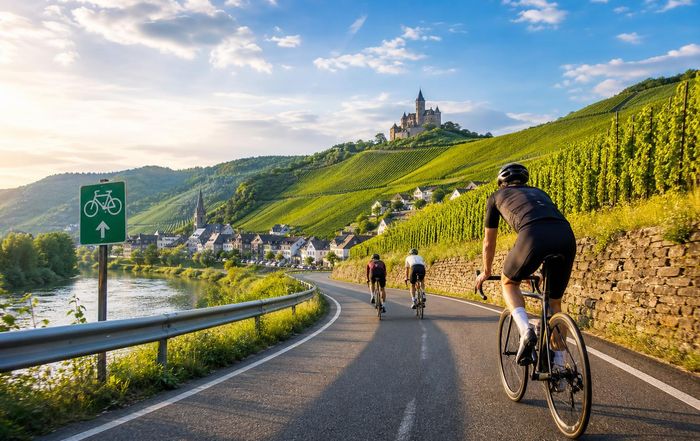
Cycling in Germany: Popular Routes and a Deep-Rooted Training Culture
Germany's relationship with the bicycle runs far deeper than weekend leisure rides. From Olympic track programs to everyday commuters and endurance amateurs logging thousands of kilometers a year, the country has built a cycling ecosystem where performance culture, infrastructure, and landscape all intersect. For athletes and active travelers, that combination makes Germany one of Europe's most compelling places to ride, whether the goal is structured training or an immersive point-to-point tour.
This overview focuses on two things many readers care about most: where to ride and how Germany's training culture actually works in practice. It looks at iconic road and gravel routes, key regions, and the habits, clubs, and systems that shape how German cyclists train, race, and recover.
Why Germany is a serious cycling destination
Germany's cycling appeal starts with geography. The country spans the flat North Sea and Baltic coasts, rolling central uplands, and low mountain ranges like the Black Forest and Bavarian Alps. For riders, that means everything from pan-flat endurance routes and windy coastal intervals to sustained climbs over 1,000 meters. The national and regional governments have invested heavily in cycling infrastructure, with an extensive network of signposted long-distance routes (Radfernwege), urban bike lanes, and rail connections that allow bikes on many regional trains.
Organizations such as the German Cyclists' Association ADFC and the German Cycling Federation BDR have pushed for both everyday cycling and high-performance sport, while Germany's federal transport ministry BMVI (now part of the Federal Ministry for Digital and Transport) has funded cycling highways and safety initiatives. That institutional support sits alongside a dense club system and a thriving endurance sports culture, which together shape how riders train. For athletes traveling to Germany, this means access to well-maintained routes, predictable signage, and a culture that generally understands cyclists, especially in regions where cycling and tourism are closely linked.
For readers interested in broader performance and training topics, many of the principles seen in German cycling culture-structured progression, club-based coaching, and data-informed training-mirror trends covered in our training and performance sections. Germany just offers them at scale, embedded in real-world infrastructure.
Iconic long-distance cycling routes
Germany's long-distance cycling routes are a defining feature of the riding experience. Many follow rivers or historic trade corridors, with surfaces that range from smooth tarmac to compact gravel. They are particularly attractive for endurance riders who want to combine training blocks with multi-day touring.
One of the most popular is the Danube Cycle Path (Donauradweg), which starts in Donaueschingen in the Black Forest and follows the Danube eastward. While Austria often gets the spotlight, the German section offers a mix of gentle gradients and quiet roads that are ideal for base miles and tempo work, especially in spring and early summer. The Moselle Cycle Route (Mosel-Radweg), running between France, Luxembourg, and Germany along the Moselle River, is another favorite: terraced vineyards, riverside towns, and rolling profiles make it perfect for steady-state endurance rides. Tourism boards across these regions, coordinated in part by Germany's National Tourist Board Germany Travel, actively promote cycling, and many accommodations are bike-friendly by design.
For those seeking a coast-to-coast experience, the North Sea Cycle Route and the Baltic Sea Cycle Route offer long, often windy stretches ideal for time-trial-style efforts and group pacelines. The Elbe Cycle Route (Elberadweg), one of the best-known river routes in central Europe, is frequently ranked highly by the ADFC and blends cultural stops like Dresden and Hamburg with long stretches of quiet riding. While these routes are often marketed to leisure tourists, many competitive riders use sections of them as training corridors because they offer consistent gradients, low traffic, and easy navigation-factors that matter just as much as elevation gain when planning structured sessions.
The density of long-distance paths also makes Germany appealing for multi-sport athletes and fitness-focused travelers. Riders planning broader active itineraries can connect cycling days with hikes or runs, themes that fit naturally with our fitness and lifestyle coverage. The country's rail network, coordinated by Deutsche Bahn bahn.de, allows bikes on many regional trains (with reservations and fees varying by route), which makes point-to-point riding logistically easier than in many countries.
Regional hotspots: from the Alps to the coast
Beyond the nationally signposted routes, several regions stand out as training hubs with distinct riding styles and demands. In the south, Bavaria and Baden-Württemberg are prime territory for riders who want real climbing. The Allgäu region and the Bavarian Alps offer sustained ascents, high-altitude passes, and technical descents similar in character, if not altitude, to classic Alpine training grounds in Austria, Switzerland, and Italy. Towns such as Garmisch-Partenkirchen and Oberstdorf serve as gateways to mountainous terrain where professional and elite amateur riders regularly train. The proximity to ski resorts and outdoor sports infrastructure means accommodation and services are accustomed to performance-oriented visitors.
To the west, the Black Forest (Schwarzwald) is a playground of steep climbs, dense forests, and quiet roads. Routes like the ascent to the Feldberg peak are staples of local training plans and feature in regional races and gran fondos. The area's mix of short, punchy climbs and longer efforts is ideal for riders preparing for hilly one-day races or stage races. Local tourism bodies and route planners, often coordinated with state-level transport ministries such as Baden-Württemberg's transport authority vm.baden-wuerttemberg.de, have signposted loops for different fitness levels.
Further north, regions like the Harz Mountains and Thuringian Forest offer mid-mountain terrain that is more accessible from cities like Hanover, Leipzig, and Berlin. These areas are popular for training camps and club weekends because they combine challenging profiles with relatively affordable accommodation. On the other end of the spectrum, the North German Plain and coastal areas in Schleswig-Holstein, Lower Saxony, and Mecklenburg-Vorpommern provide flat, open routes where wind becomes the defining training variable. Time-trial specialists and triathletes often use these regions to practice aero positions and pacing strategies, echoing practices seen in international triathlon hubs discussed by organizations like World Triathlon triathlon.org.
Urban centers such as Berlin, Hamburg, Munich, and Cologne might not be classic "cycling destinations," but they are home to large club communities and provide quick access to training loops. For example, Berlin riders often head to the surrounding Brandenburg countryside for long, flat rides, while Munich-based cyclists can be in the foothills of the Alps within an hour. The integration of bikes into urban transport planning-monitored and supported by groups such as European Cyclists' Federation ecf.com-helps urban riders maintain consistent training volume by making commuting rides safer and more predictable.
Road, gravel, and MTB: how surfaces shape training
Germany's cycling culture is not limited to smooth tarmac. The explosion of gravel and off-road riding has been particularly visible in regions with forested networks and disused farm roads. The country's extensive forestry and agricultural tracks, many of which are legal to ride, create vast unofficial gravel networks that locals use for both training and exploration. Events like gravel marathons and long-distance bikepacking races have grown rapidly, mirroring trends seen internationally and covered by endurance-focused media such as CyclingTips [cyclingtips.com] (now integrated into other platforms) and Velo velo.com.
Mountain biking is well established in areas such as the Black Forest, Harz, and Bavarian Forest, with bike parks and trail centers providing technical terrain for downhill and enduro riders. The International Cycling Union (UCI) uci.org has sanctioned events in Germany across multiple disciplines, and national-level MTB races feed into the high-performance pipeline. For endurance athletes, incorporating gravel and MTB sessions into training plans is common, especially in winter, when off-road riding allows for lower-traffic, lower-speed sessions that reduce crash risk on wet or icy roads.
The variety of surfaces influences how riders structure their training weeks. Many German cyclists will use paved roads for interval sessions where power targets and cadence are critical, while reserving gravel or forest tracks for long endurance rides, technical skills, or bad-weather days. This multi-surface approach also reflects broader training principles we explore in our training coverage: varying stimulus, managing load, and balancing specificity with enjoyment. It also underscores how German infrastructure-paved radwege, forest tracks, and MTB trail centers-offers a diverse toolkit for building cycling fitness across disciplines.
Club culture, coaching, and the pathway from hobby to high performance
A defining feature of German cycling is the strength of its club system. Local sports clubs (Sportvereine) are embedded in communities across the country, and many include cycling sections that cater to beginners, ambitious amateurs, and youth riders. These clubs often affiliate with the German Cycling Federation BDR, which coordinates national leagues, licensing, and development programs. Unlike in some countries where cycling is more individualistic, group rides, club races, and shared training plans are central to how many Germans ride.
This structure creates a clear pathway from casual participation to competitive racing. Youth programs introduce children to bike handling, basic tactics, and safety, often through closed-circuit races or skills sessions. Talented riders can progress into regional squads and eventually national teams, supported by sports schools and performance centers. Germany's Olympic track and road programs, overseen by the German Olympic Sports Confederation DOSB, draw heavily from this club ecosystem, which emphasizes systematic training and long-term athlete development.
For adult amateurs, clubs provide access to experienced coaches, group interval sessions, and organized participation in events like marathons and gran fondos. Many riders supplement this with digital tools-power meters, smart trainers, and training apps such as Zwift zwift.com or TrainerRoad trainerroad.com-to follow structured programs during the winter or when time is limited. This blend of community-based riding and data-driven training reflects broader global trends in endurance sports, but Germany's club culture arguably makes it more accessible and socially embedded than in many markets.
The emphasis on structure resonates with athletes who want to improve performance without sacrificing balance. Typical German training plans, whether for road racing, cyclocross, or MTB, often follow periodization principles widely recognized in sports science: base phases with high volume and low intensity, build phases with more threshold and VO2max work, and taper periods before key events. For readers looking to adapt similar approaches, the concepts align closely with frameworks covered in our performance and health content, where recovery, nutrition, and injury prevention are treated as core components of athletic progress.
Training habits: seasons, weather, and everyday life
Germany's temperate climate strongly influences training patterns. Winters, especially in the south and east, can be cold, wet, and occasionally snowy, making outdoor riding less appealing or, at times, unsafe. In response, many cyclists shift to indoor training from November through February, using smart trainers and virtual platforms to maintain intensity and structure. This indoor season is often used for targeted interval work, strength training, and technique drills such as cadence variations or pedal stroke efficiency.
When conditions allow, winter outdoor rides tend to focus on endurance at lower intensities, with riders choosing routes that avoid icy descents and shaded forest roads. Commuting by bike, encouraged by policy initiatives and infrastructure improvements highlighted by organizations like the European Cyclists' Federation ecf.com, also provides low-intensity volume for many riders who combine performance goals with everyday transport. As days lengthen in spring, training volume and intensity ramp up, and club rides become more frequent, often featuring structured interval segments or rotating pacelines to simulate race efforts.
Nutrition and recovery habits also reflect a performance-oriented culture. German sports science institutions, including universities like German Sport University Cologne dshs-koeln.de, contribute research on endurance physiology, hydration, and carbohydrate periodization that filters into coaching practices and media coverage. Riders preparing for long-distance events often adopt evidence-based strategies: fueling early and consistently, practicing race-day nutrition in training, and managing sleep and stress alongside physical load. This holistic approach aligns with broader wellness trends we examine in our health coverage, where mental health and sustainable habits are treated as integral to long-term athletic performance.
For many German cyclists, training is woven into daily routines rather than confined to isolated "workouts." Early-morning rides before work, lunch-break interval sessions, and extended weekend rides are common patterns, especially in metropolitan regions with strong cycling communities. The culture around this is generally pragmatic rather than glamorous: performance goals coexist with jobs, families, and social obligations, which may be one reason club structures and group accountability are so valued.
Events, races, and the social side of German cycling
Events play a crucial role in shaping training culture by providing clear targets and social milestones. Germany hosts a spectrum of cycling events, from UCI-sanctioned professional races to mass-participation marathons and charity rides. The Eschede-Hannover, Cyclassics Hamburg, and various city-based gran fondos have attracted both elite and amateur riders over the years, though the calendar evolves as organizers and sponsors change. These events often feature multiple distance options, closed or partially closed roads, and timing chips, giving recreational riders a race-like experience without the full demands of licensed competition.
Cyclocross and winter races are particularly popular in some regions, providing off-season intensity and technical challenges. Local leagues, coordinated by regional cycling federations under the BDR umbrella, allow riders to compete regularly without extensive travel. Mountain bike marathons in the Black Forest, Bavarian Forest, and Harz regions combine endurance and technical skills, while gravel events and ultra-distance rides tap into the growing adventure segment of the sport. International governing bodies like the UCI uci.org have also expanded their gravel and endurance calendars, with Germany occasionally hosting qualifying events or series rounds.
Beyond formal races, social rides, "Stammtisch" meetups, and club evenings are central to the culture. Many cycling clubs maintain regular social gatherings where training plans, equipment choices, and race experiences are discussed with a level of detail that will be familiar to endurance athletes worldwide. This social infrastructure makes the sport more inclusive, especially for newcomers who might otherwise find performance cycling intimidating. It also reinforces safe riding norms, such as group etiquette, signaling, and traffic awareness, which are crucial given Germany's mix of urban density and rural roads.
For international visitors, joining a local club ride or participating in an open gran fondo can be one of the most effective ways to experience German cycling culture from the inside. It offers a window into how riders train, support each other, and balance ambition with community-values that resonate with the broader themes of sport and society explored in our culture and social sections.
Safety, regulations, and practical considerations
Germany's regulatory environment is generally cyclist-friendly but also quite specific, and understanding the basics is important for anyone planning serious training or touring. Traffic rules for cyclists are codified in the national road traffic regulations (Straßenverkehrs-Ordnung), and enforcement can be strict in urban areas. Riders are typically required to use designated bike lanes where marked, obey traffic signals, and equip bikes with lights and reflectors for low-light conditions. While helmet use is not legally mandatory for adults, it is strongly recommended by health and safety authorities such as the German Road Safety Council dvr.de and international bodies like the World Health Organization who.int.
From a training perspective, this means riders often plan intervals and high-intensity sessions on quieter rural roads, dedicated cycle paths, or closed circuits to minimize interactions with traffic and junctions. Many clubs and coaches emphasize route planning as a core skill: knowing where to execute uninterrupted efforts, where to ride in groups, and which roads to avoid at peak times. For visitors, local tourist offices and cycling organizations like the ADFC adfc.de can provide up-to-date maps, route suggestions, and information about temporary construction or detours.
Germany's healthcare system and emergency services are robust, and in most regions, response times are good. However, riders training in remote mountain or forest areas are encouraged to ride with at least one partner, carry identification and emergency contacts, and use GPS devices or apps with offline maps. Weather can change quickly in mountainous regions, with storms and temperature drops even in summer, so layering and contingency planning are part of the standard training mindset. These risk-management habits mirror general endurance-sport best practices, and they align closely with safety themes we highlight in our world and environment sections, where climate, outdoor conditions, and sustainable access to nature are recurring topics.
How Germany's cycling model informs broader training culture
Germany's cycling landscape offers more than a set of scenic routes. It provides a case study in how infrastructure, club systems, and cultural attitudes can shape training behavior and athletic development. Long-distance cycle paths make it easy to accumulate safe endurance volume; mountainous regions and forested uplands provide natural laboratories for climbing and technical riding; and a dense calendar of events gives structure to the training year. Clubs, federations, and sports science institutions create pathways from casual participation to elite performance, while everyday commuting normalizes the bike as a practical tool, not just a sporting accessory.
For riders elsewhere, the lessons are not about copying Germany's exact routes or policies but understanding the principles behind them: building supportive communities, advocating for infrastructure that enables consistent training, and using local geography creatively to develop specific strengths. Whether an athlete is planning a training camp in the Black Forest, a multi-day tour along the Danube, or simply looking for ideas to improve their own environment, Germany's cycling culture offers a rich source of inspiration.
Readers who want to dive deeper into specific aspects-nutrition, cross-training, event preparation, or the broader social impact of cycling-will find related coverage across our fitness, training, health, performance, and culture sections. Together, they sketch a wider picture of how cycling, in Germany and beyond, continues to evolve as both a sport and a way of life.