

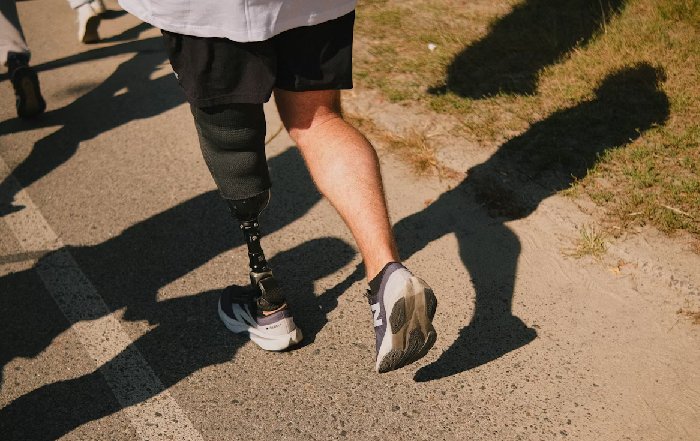
Innovations in Prosthetic Technology for Adaptive Athletes
Adaptive Sport at a Global Turning Point
Adaptive sport has moved from the margins of public consciousness into a central place in the global sports conversation, driven by rapid advances in prosthetic technology, rising media visibility, and a growing recognition that performance, inclusion, and innovation are deeply interconnected. Around the world, from the United States and United Kingdom to Germany, Japan, and South Africa, elite and recreational adaptive athletes are no longer viewed only through a medical or charitable lens; they are increasingly recognized as pioneers whose demands are reshaping engineering, sports science, and even the ethics of competition. For readers of SportyFusion, who follow developments across sports, technology, health, and business, the evolution of prosthetic technology offers a powerful case study in how performance-driven innovation can transform both human potential and the structure of global sport.
The modern prosthetic landscape for athletes is the result of converging trends: breakthroughs in materials science, advances in robotics and sensor technology, more sophisticated training methodologies, and a new generation of athletes and coaches who expect equipment to be as customizable and data-rich as the most advanced running shoe or cycling power meter. Organizations such as World Para Athletics and the International Paralympic Committee are updating rules and classification systems in response, while research institutions like MIT and ETH Zurich push the boundaries of what a prosthetic limb can do in real-world sport environments. At the same time, major brands and startups are racing to serve a growing market that spans elite Paralympians, military veterans, and everyday fitness enthusiasts looking to return to running, cycling, climbing, or team sports after limb loss.
From Passive Limbs to High-Performance Systems
The shift from traditional, largely passive prostheses to highly engineered performance systems has been one of the defining changes of the last decade. Earlier generations of prosthetic limbs were primarily designed for basic mobility and safety, with limited focus on the complex demands of sprinting, jumping, cutting, or landing. Today, high-performance running blades, carbon-fiber feet, and multi-axial ankle systems are engineered with the same rigor and data-driven optimization used in Formula 1 or aerospace.
Carbon fiber remains a central material, valued for its strength-to-weight ratio and energy return characteristics. Manufacturers such as Össur and Ottobock have developed specialized sport feet and blades that are tuned for different events, from 100-meter sprints to marathon distances, integrating nuanced stiffness profiles and geometries that influence stride length, ground contact time, and force distribution. Readers who follow performance trends on SportyFusion's performance channel will recognize that the conversation has shifted from whether adaptive athletes can participate to how finely their equipment can be optimized for specific biomechanical and tactical demands.
Parallel to these developments, research published and discussed through platforms such as the Journal of Biomechanics and the British Journal of Sports Medicine has helped clarify how prosthetic stiffness, alignment, and mass distribution affect both performance and injury risk. Learn more about contemporary sports science perspectives on adaptive performance by exploring resources from World Athletics and the American College of Sports Medicine, which have increasingly incorporated adaptive athletes into their guidelines and conference programs.
Smart Prosthetics: Sensors, Robotics, and Real-Time Feedback
The most transformative developments since 2020 have come from the integration of sensors, microprocessors, and robotics into sport-specific prosthetic systems. Microprocessor-controlled knees and ankles, initially developed for everyday mobility, are being adapted for running, skiing, and court sports, where real-time adjustments in resistance or damping can improve stability and efficiency. These systems rely on accelerometers, gyroscopes, and force sensors to interpret gait patterns and ground reaction forces, allowing the device to respond dynamically to terrain changes or acceleration.
Research centers such as the MIT Media Lab and the Johns Hopkins Applied Physics Laboratory have pioneered powered prosthetic legs that use actuators to actively generate torque at the ankle and knee, moving beyond passive energy storage to true robotic assistance. While powered legs are still rarely seen in elite competition due to weight, regulatory, and reliability constraints, their use in training and rehabilitation is expanding, offering new possibilities for strength conditioning and gait retraining. Readers interested in the broader context of human-machine integration can look to resources from IEEE Spectrum and the Robotics Institute at Carnegie Mellon University, which regularly cover advances in wearable robotics and exoskeletons that intersect with sport.
Wearable technology has also become deeply integrated with prosthetic use. Athletes now routinely pair prosthetic devices with GPS watches, inertial measurement units, and muscle-activity sensors to track performance metrics and refine technique. Platforms like Garmin Connect and Strava have expanded accessibility features, making it easier for adaptive athletes to analyze data and share training logs with coaches and peers. On SportyFusion's training section, the intersection of data analytics and adaptive performance has become a recurring theme, reflecting a broader shift across global sport toward quantified, evidence-based preparation.
Neural Interfaces and the Promise of Intuitive Control
One of the most compelling frontiers in 2026 is the development of neural interfaces that allow prosthetic limbs to be controlled more intuitively through signals from the nervous system. While full, seamless mind-controlled sport prostheses remain a long-term vision, significant progress has been made in decoding muscle and nerve signals to drive complex movements, particularly in upper-limb prosthetics used for adaptive rowing, climbing, and ball sports.
Research institutions such as the Cleveland Clinic, University of Pittsburgh, and Imperial College London have demonstrated systems in which electrodes placed on residual muscles or implanted near nerves transmit signals that can be translated into multi-joint movements of a robotic hand or arm. Learn more about these breakthroughs in neuroprosthetics through resources from the National Institutes of Health and the European Commission's Horizon Europe research programs, which have invested heavily in brain-computer interface and neuroengineering initiatives.
For lower-limb athletes, the most immediate applications of neural interfaces involve improved proprioception and feedback. Experimental systems are exploring ways to send sensory information from the prosthetic foot or knee back to the user through vibration or direct nerve stimulation, enhancing balance, agility, and confidence during high-speed movements. While such systems are still largely in clinical or pilot phases, they point toward a future in which adaptive athletes can experience more natural, responsive interactions with their equipment, reducing the cognitive load of controlling the prosthesis and allowing greater focus on tactics, pacing, and competition.
Biomechanics, Injury Prevention, and Performance Longevity
As performance levels rise, the biomechanical demands placed on adaptive athletes have become more intense, and the need for evidence-based injury prevention strategies has never been greater. High-performance prosthetics can enable remarkable speed and power, but they also alter loading patterns on the spine, hips, and intact limbs, sometimes increasing the risk of overuse injuries, joint degeneration, and muscle imbalances if not carefully managed.
Sports science institutes such as the Australian Institute of Sport, English Institute of Sport, and German Sport University Cologne have invested in motion-capture labs and force-plate systems to study the unique mechanics of running, jumping, and cutting with prosthetic limbs. Learn more about contemporary biomechanical research through resources from ScienceDirect and the National Strength and Conditioning Association, which provide technical insights into how training programs can be adapted to the needs of athletes using lower- and upper-limb prostheses.
On SportyFusion's fitness and health channels, these developments are particularly relevant to recreational athletes seeking safe pathways back to sport after amputation or limb difference. Coaches and clinicians now emphasize integrated programs that combine prosthetic fitting and alignment, targeted strength and flexibility work, neuromuscular training, and load monitoring. Technologies such as force-sensing insoles, wearable EMG systems, and AI-driven movement analysis apps are increasingly used to identify asymmetries, refine technique, and adjust training volumes before small issues become major injuries.
Regulation, Fairness, and the Ethics of Advantage
The rapid evolution of prosthetic technology has raised complex ethical and regulatory questions that resonate across the global sports ecosystem. Governing bodies such as World Athletics, the International Paralympic Committee, and national federations in the United States, United Kingdom, Germany, Japan, and elsewhere have had to grapple with how to define "unfair advantage" in a world where equipment can be tuned with extraordinary precision. Debates over maximum allowable limb lengths, energy return thresholds, and the comparability of prosthetic-assisted performance to biological limbs have become central to classification and eligibility disputes.
Ethical analysis from organizations such as the World Anti-Doping Agency and research centers like the University of Oxford's Ethox Centre has highlighted the tension between inclusion, innovation, and the preservation of a level playing field. Learn more about contemporary sports ethics discussions through resources from UNESCO and the Centre for Sport and Human Rights, which examine how technology, disability rights, and commercial interests intersect in modern sport. These debates are not limited to elite competition; they also influence how schools, community leagues, and corporate wellness programs design inclusive policies for adaptive participation.
For a platform like SportyFusion, which engages with the ethical dimensions of sport as seriously as performance metrics, the regulatory landscape around prosthetic technology is a crucial area of focus. Questions about who gets access to cutting-edge devices, how classification systems treat different forms of limb loss or limb difference, and how to balance safety with freedom to innovate are central to the trustworthiness and legitimacy of adaptive sport as it continues to grow in visibility and commercial value.
Access, Equity, and the Economics of Innovation
While elite-level prosthetic technology has advanced rapidly, access remains uneven across regions and income levels. High-performance sport prostheses can cost tens of thousands of dollars, and insurance or public health systems in many countries still classify them as "non-essential" or "recreational," limiting coverage. This creates significant disparities between athletes in wealthier nations such as the United States, Germany, Canada, and Australia, and those in parts of Africa, South America, and Asia where funding and specialist expertise are scarce.
Nonprofit organizations such as The Challenged Athletes Foundation, Limbs International, and Motivation UK have stepped in to bridge some of these gaps, providing grants, equipment, and coaching support to athletes worldwide. Learn more about global efforts to expand access through resources from the World Health Organization, which has published guidelines on assistive technology provision and highlighted prosthetics as a key component of universal health coverage. On SportyFusion's world and social sections, these disparities are often framed not only as a sports issue but as a matter of social justice and inclusive development.
At the same time, the business landscape around adaptive sport is changing. Major sportswear and equipment brands, including Nike, Adidas, and Puma, have launched or expanded adaptive product lines, while smaller startups focus exclusively on prosthetic innovation, 3D-printed sockets, or sport-specific components. Venture capital and impact investors are showing increased interest in assistive technology, recognizing both the commercial potential and the reputational value of supporting inclusive performance. Learn more about sustainable and inclusive business practices through resources from the World Economic Forum and Harvard Business Review, which have profiled assistive tech ventures as part of broader coverage on ESG and social impact investing.
For readers following the business and jobs environment on SportyFusion's business and jobs channels, this growth translates into new career opportunities in engineering, prosthetics, sports medicine, data science, and inclusive product design. Universities in Europe, North America, and Asia are launching specialized programs in prosthetics and orthotics, human-computer interaction, and sports engineering, preparing a workforce that can support the expanding ecosystem of adaptive sport.
Cultural Impact, Representation, and Media Narratives
Beyond technology and economics, innovations in prosthetic design have reshaped cultural narratives around disability, performance, and identity. High-profile adaptive athletes from the United States, United Kingdom, Brazil, China, and other regions have become global ambassadors for a new vision of athleticism, appearing in major advertising campaigns, streaming documentaries, and video games. Learn more about the shifting representation of disability in media and culture through resources from The Guardian, BBC Sport, and ESPN, which now feature regular coverage of para sport events and athlete profiles.
Platforms like SportyFusion's culture and lifestyle sections have played a role in normalizing the image of prosthetics not as purely medical devices but as expressions of personal style and performance identity. Custom finishes, bold colors, and even integrated LED lighting or artwork have turned prosthetic limbs into visible symbols of resilience and individuality, particularly among younger athletes in Europe, Asia, and North America. At the same time, there is growing caution against framing adaptive athletes solely through narratives of inspiration, with many advocates emphasizing respect for their expertise, training discipline, and tactical sophistication.
The gaming and esports world has also embraced adaptive representation, with developers collaborating with organizations like SpecialEffect and AbleGamers to design accessible controllers and avatars that reflect a wider range of bodies and movement styles. Readers interested in this crossover can explore SportyFusion's gaming coverage, where adaptive controllers, virtual reality rehabilitation tools, and inclusive game design are increasingly prominent topics.
Sustainability and the Environmental Footprint of Prosthetics
As sustainability becomes a central concern across the global sports industry, the environmental impact of prosthetic manufacturing and disposal has come under greater scrutiny. High-performance components often rely on carbon fiber, titanium, and advanced polymers that are energy-intensive to produce and difficult to recycle. With adaptive sport participation growing in Europe, Asia, North America, and beyond, the cumulative environmental footprint of prosthetic production is no longer negligible.
Research groups and companies are beginning to explore more sustainable materials and circular design principles, including modular components that can be repaired or upgraded rather than discarded, and recycling programs for worn-out devices. Learn more about sustainable design and circular economy approaches through resources from the Ellen MacArthur Foundation and the United Nations Environment Programme, which have highlighted assistive technology as an emerging area for green innovation. On SportyFusion's environment section, these developments are framed as part of a broader shift toward responsible performance, where environmental stewardship and athletic excellence are seen as mutually reinforcing rather than conflicting goals.
For many adaptive athletes, sustainability is not an abstract concept; it intersects with daily experience when devices need to be replaced frequently due to growth, training wear, or sport-specific demands. Initiatives that extend product lifespans, enable refurbishment, or support equipment-sharing programs in lower-income regions can therefore deliver both environmental and social benefits, aligning with the values of a generation of athletes and fans who expect sport to contribute positively to global challenges.
What is the Road Ahead for Integration, Inclusion, and Human Potential
Looking toward the late 2020s, the trajectory of prosthetic technology for adaptive athletes appears set to remain one of rapid, multidisciplinary innovation. Advances in AI-driven gait optimization, lightweight energy-dense batteries, soft robotics, and bio-integrated sensors are likely to converge, creating devices that are lighter, more responsive, and more seamlessly integrated with the human body. Learn more about these broader technology trends through resources from Nature, Science, and MIT Technology Review, which regularly report on breakthroughs in materials science, bioengineering, and human-machine interfaces that will shape the next generation of adaptive equipment.
For SportyFusion and its readers across sports, technology, lifestyle, and social impact, the story of prosthetic innovation is fundamentally about expanding the boundaries of what is possible for athletes of all abilities. It is about recognizing the expertise of adaptive athletes as co-creators of technology, not merely end users; about building systems of coaching, healthcare, and business that treat access to performance tools as a matter of equity; and about ensuring that the rapid pace of change is guided by robust ethical frameworks and a commitment to inclusion.
As adaptive athletes from North America, Europe, Asia, Africa, and South America prepare for future Paralympic Games, world championships, and grassroots events, their prosthetic equipment will continue to evolve, but so too will the expectations placed on federations, brands, policymakers, and media platforms. The challenge for the global sports community is to harness the power of innovation in ways that enhance Experience, Expertise, Authoritativeness, and Trustworthiness, ensuring that technological progress translates into real-world opportunity and recognition for athletes everywhere. In that sense, the innovations in prosthetic technology unfolding in 2026 are not only changing how adaptive athletes run, jump, and compete; they are reshaping the very definition of performance in the modern sporting world.