

Smart Clothing Innovations for Active Living :)
The New Fabric of Performance
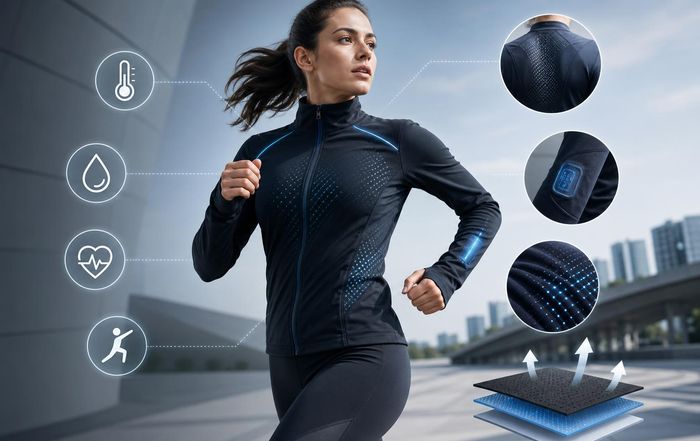
Smart clothing has moved decisively from experimental concept to practical reality, reshaping how athletes, fitness enthusiasts and health-conscious professionals train, recover and live. In this evolving landscape, SportyFusion has positioned itself at the intersection of performance, culture and technology, examining how connected textiles, embedded sensors and intelligent design are redefining active living across global markets from the United States and Europe to Asia-Pacific and Africa. What began as simple step-tracking wearables has matured into an integrated ecosystem of garments capable of monitoring biometric data, optimizing movement, preventing injury and even supporting mental wellbeing, aligning closely with the broader shift toward holistic performance that underpins platforms such as the World Health Organization's guidance on physical activity and health and the U.S. Centers for Disease Control and Prevention's recommendations on active lifestyles.
For a readership that navigates sport, fitness, business and culture simultaneously, the evolution of smart clothing is not merely a technology story; it is a narrative about new competitive advantages, changing consumer expectations and the redefinition of what it means to be "in shape" in a hyper-connected world. On SportyFusion's fitness hub at sportyfusion.com/fitness.html, this transformation is increasingly reflected in coverage that treats apparel as a performance tool every bit as critical as training methodologies or nutrition strategies.
From Wearables to Wearable Fabrics
The first generation of wearables, led by companies such as Fitbit and Garmin, focused on devices worn on the wrist or chest, providing heart rate, step counts and basic sleep tracking. By contrast, the 2026 wave of smart clothing embeds sensing capability directly into fabrics, enabling more precise and context-rich data capture. Research from institutions like MIT Media Lab and the University of Cambridge has helped advance conductive yarns, flexible printed circuits and textile-based electrodes, allowing garments to measure metrics such as muscle activation, breathing patterns and localized temperature with unprecedented granularity; readers can explore some of the underlying material science through open resources from organizations such as MIT's research news.
This shift from device to fabric matters because it aligns more naturally with how athletes and active individuals already behave. Rather than adding another gadget, smart clothing transforms existing apparel categories-compression tights, base layers, sports bras, socks, jerseys-into intelligent platforms that capture data without demanding additional effort. On SportyFusion's performance section at sportyfusion.com/performance.html, this integration is increasingly framed as a move toward "ambient performance analytics," where measurement becomes a frictionless background function of daily life and training, supporting both elite competitors in Germany, Japan or the United States and recreational runners in Brazil, South Africa or Thailand.
Biometric Monitoring as a Second Skin
One of the most significant advances in 2026 smart clothing is the refinement of biometric monitoring that behaves like a second skin. Textile-integrated electrodes and optical sensors now capture multi-lead electrocardiogram signals, respiratory rate, oxygen saturation and even localized muscle fatigue indicators, while remaining washable and generally comfortable for extended wear. Companies such as Hexoskin, OMsignal and Under Armour's connected apparel initiatives, alongside research collaborations with Nike and Adidas, have contributed to a new standard in physiological fidelity that rivals medical-grade devices in controlled conditions, a trend that aligns with the broader movement toward remote monitoring in healthcare, as seen in guidance from bodies like the U.S. Food and Drug Administration, whose digital health resources on wearable technologies have influenced regulatory expectations.
For SportyFusion's global audience, this evolution has clear implications. In high-intensity sports environments-from Premier League training centers in the United Kingdom to Bundesliga academies in Germany and rugby programs in South Africa-coaches increasingly rely on smart compression garments to monitor player load, cardiac strain and heat stress in real time, using dashboards that aggregate data at team and individual levels. For recreational users in Canada, Australia or Singapore, similar garments now connect seamlessly with mainstream platforms such as Apple Health and Google Fit, providing early warning indicators of overtraining, irregular heart rhythms or dehydration risk, and reinforcing the preventive health narrative that underpins SportyFusion's health coverage at sportyfusion.com/health.html.
Movement Intelligence and Injury Prevention
Beyond vital signs, the most strategically important frontier for smart clothing in active living is movement intelligence. Embedded inertial measurement units, stretch sensors and pressure-sensitive fibers now allow garments to track joint angles, limb acceleration, impact forces and asymmetries with a degree of precision that was previously confined to motion-capture labs and high-end biomechanics facilities. Organizations such as FIFA and the International Olympic Committee have highlighted the role of data-driven training in reducing injury risk, and resources like the American College of Sports Medicine's position stands on exercise and injury illustrate how evidence-based guidelines are increasingly informing product design.
In 2026, smart tights and shirts are being used in football academies in Spain and Italy, basketball programs in the United States and China, and winter sports training centers in Norway, Sweden and Switzerland to detect early signs of dangerous load patterns, such as knee valgus angles associated with ACL injuries or impact profiles correlated with stress fractures. At the consumer level, yoga and Pilates clothing that provides haptic feedback when posture deviates from optimal alignment is gaining traction in markets like Japan, South Korea and the Netherlands, enabling real-time micro-corrections without constant instructor supervision. On SportyFusion's training vertical at sportyfusion.com/training.html, these developments are increasingly discussed as part of a broader "coaching augmentation" trend, where smart garments act as digital assistants to human coaches, combining continuous data capture with contextual expertise.
Smart Textiles, Sustainability and Circular Design
As smart clothing becomes more pervasive, the environmental implications of embedding electronics into textiles have moved to the forefront of strategic discussion. Consumers in Europe, North America and Asia-Pacific are increasingly aware of the fashion industry's ecological footprint, informed by analyses from organizations like the Ellen MacArthur Foundation, whose work on circular fashion has influenced both regulators and brands. The challenge for smart apparel lies in reconciling the need for sensors, batteries and connectivity with growing expectations around recyclability, durability and responsible sourcing.
Leading sportswear companies such as Adidas, Puma and Lululemon, along with technology players like Google and Microsoft, are investing in modular electronics that can be easily detached from garments at end of life, as well as in biodegradable conductive materials and low-impact production methods. In markets such as France, the United Kingdom and the European Union more broadly, extended producer responsibility regulations are encouraging smart clothing brands to design for disassembly and material recovery from the outset. SportyFusion's readers, who follow sustainability issues closely through the platform's environment coverage at sportyfusion.com/environment.html, are increasingly evaluating products not only on performance metrics but also on lifecycle impact, prompting brands to publish more transparent environmental data and to align with frameworks such as the UN Environment Programme's sustainable fashion initiatives.
Connected Athletes and the Data Ecosystem
Smart clothing does not exist in isolation; it is part of a broader data ecosystem that spans smartphones, cloud platforms, coaching apps and, increasingly, AI-driven analytics engines. The integration of garment-captured metrics with training plans, nutrition logs and sleep data enables a level of personalization that would have been impractical only a few years ago. Companies like Strava, TrainingPeaks and Whoop have built communities around performance data, while technology giants such as Apple, Samsung and Huawei are embedding support for textile-based sensors into their health platforms, as reflected in developer resources and consumer guidance available on sites like Apple's health features overview.
For SportyFusion's audience, this convergence means that an athlete in Canada, a cyclist in Italy and a CrossFit enthusiast in Brazil can all leverage smart clothing to feed continuous, high-resolution data into personalized coaching systems that adapt training volume, intensity and recovery protocols in real time. At the same time, it raises strategic questions about data governance, cross-platform interoperability and the role of open standards versus proprietary ecosystems. On SportyFusion's technology channel at sportyfusion.com/technology.html, coverage increasingly explores how protocols like Bluetooth Low Energy, edge computing architectures and privacy-preserving machine learning are shaping the user experience of smart apparel and influencing where value accrues in the broader sports technology stack.
Business Models, Brands and Market Dynamics
The commercial landscape of smart clothing in 2026 is characterized by a blend of established sportswear brands, specialist startups and cross-industry collaborations. Traditional apparel leaders such as Nike, Adidas, Under Armour and Decathlon are partnering with sensor manufacturers, semiconductor companies and cloud providers to deliver integrated solutions, while younger firms like Sensoria, Myant and Athos focus on niche segments ranging from connected socks to rehabilitation garments. Analysts from organizations such as McKinsey & Company and Deloitte have highlighted smart apparel in their reports on the future of the sports industry, noting that recurring revenue models, data-driven services and performance insights are becoming as important as the garments themselves.
In leading markets such as the United States, the United Kingdom, Germany, Japan and South Korea, subscription-based offerings that bundle smart clothing with coaching content, analytics dashboards and community features are gaining traction, particularly among serious amateurs and semi-professional athletes. At the same time, emerging markets in Southeast Asia, Africa and South America are seeing localized innovations, such as heat-adaptive smart fabrics for tropical climates and low-bandwidth data solutions that function reliably in constrained connectivity environments. SportyFusion's business-focused readers, who track these developments via sportyfusion.com/business.html, are increasingly attentive to how brand positioning, pricing strategies and regional partnerships influence adoption trajectories and create opportunities for new entrants in the broader sports, fitness and wellness value chain.
Jobs, Skills and the Future of Work in Sports Technology
The rise of smart clothing is also reshaping talent requirements and career paths across the sports and fitness industries. Where traditional apparel design emphasized aesthetics, fit and material performance, the new paradigm demands fluency in electronics, firmware, data science and user experience design. Universities in countries such as the Netherlands, Sweden, Singapore and Australia are launching interdisciplinary programs that combine textile engineering, computer science and sports science, while professional organizations like the IEEE are publishing standards and educational resources on wearable and body area networks.
For professionals and job-seekers who follow SportyFusion's careers coverage at sportyfusion.com/jobs.html, this transition translates into new roles such as smart textile engineer, sports data analyst, biometric product manager and ethical AI strategist within both established brands and startups. Coaches and trainers across North America, Europe and Asia are also upskilling to interpret data from smart garments, integrating insights into daily practice while maintaining the human connection that remains central to athlete development. As the boundary between physical and digital performance narrows, organizations that invest in continuous learning and cross-functional collaboration are better positioned to capture value from smart clothing innovations, while those that treat technology as a bolt-on risk being left behind.
Ethics, Privacy and Trust in Intelligent Apparel
As with any technology that collects intimate biological and behavioral data, smart clothing raises complex questions about privacy, consent and ethical use. Garments that monitor heart rhythms, stress responses or movement patterns can reveal sensitive information about health status, emotional state and even potential injury vulnerabilities, which has significant implications in high-stakes contexts such as professional sports contracts, insurance underwriting or workplace wellness programs. Regulatory frameworks such as the European Union's General Data Protection Regulation (GDPR) and emerging data protection laws in regions including Brazil, South Africa and parts of Asia provide baseline safeguards, while organizations like the Electronic Frontier Foundation and Future of Privacy Forum offer guidance on responsible data practices.
For SportyFusion, which addresses ethical questions explicitly through sportyfusion.com/ethics.html, the core issue is how to ensure that smart clothing enhances autonomy and wellbeing rather than enabling surveillance or coercion. Teams, employers and brands must implement transparent data policies, clear opt-in mechanisms and meaningful controls that allow individuals to decide what is collected, how it is used and with whom it is shared. Independent auditing, robust cybersecurity practices and the separation of performance analytics from contract negotiations or insurance decisions are emerging as best practices in markets like the United States, the United Kingdom and the European Union. Trust will be a decisive differentiator; companies that embed privacy-by-design principles and communicate them clearly are likely to enjoy stronger loyalty from athletes and consumers who increasingly view data stewardship as part of brand identity.
Culture, Lifestyle and the Mainstreaming of Smart Apparel
Beyond elite sport and high-performance training, smart clothing is gradually permeating everyday culture and lifestyle choices. In urban centers from New York and Toronto to Berlin, Paris, Tokyo and Seoul, connected athleisure garments are being worn in offices, co-working spaces and social settings, blurring the lines between gym attire and daily wear. Influencers, musicians and creatives are collaborating with brands to produce limited-edition smart collections that combine performance features with cultural narratives, reflecting trends explored on SportyFusion's culture and lifestyle pages at sportyfusion.com/culture.html and sportyfusion.com/lifestyle.html.
In parallel, smart sleepwear and recovery garments are entering the wellness mainstream, aligning with the growing recognition of sleep and stress management as critical components of health and performance, a perspective reinforced by resources from organizations such as the National Sleep Foundation, whose guidance on sleep and athletic performance resonates with SportyFusion's holistic coverage. In regions like Scandinavia, where outdoor activity is woven into national identity, climate-adaptive smart layers are being adopted for hiking, skiing and cycling, while in rapidly urbanizing countries such as China, India and Malaysia, connected apparel is becoming part of the broader smart city narrative, integrating with public health initiatives and urban mobility platforms.
Gaming, Esports and Cognitive Performance Wear
An emerging and perhaps less expected frontier for smart clothing in active living is the gaming and esports sector, where cognitive performance, reaction time and ergonomic health are paramount. Esports organizations in South Korea, the United States, Denmark and China are experimenting with garments that monitor posture, micro-movements and physiological stress during extended gaming sessions, providing feedback to reduce musculoskeletal strain and optimize focus. Companies in the human-computer interaction space are exploring haptic shirts and vests that provide tactile feedback synchronized with gameplay, enhancing immersion while also offering new training modalities for competitive gamers, a convergence that SportyFusion examines regularly through sportyfusion.com/gaming.html.
These innovations underscore a broader shift in how "active living" is defined. As cognitive and fine-motor performance gain recognition alongside traditional measures of strength and endurance, smart clothing designed for desk-bound professionals, coders, traders and gamers becomes part of the same continuum as gear for runners, cyclists and footballers. Resources from organizations like the World Economic Forum, which explores the future of work and digital wellbeing, highlight how extended screen time and sedentary habits are prompting interest in garments that encourage micro-movement, support posture and signal when breaks are needed, bridging the gap between traditional fitness and the realities of modern knowledge work.
Integrating Smart Clothing into Everyday Active Living!
Looking toward the second half of the decade, the trajectory of smart clothing suggests deeper integration, greater personalization and a more seamless relationship between physical garments, digital services and human goals. Advances in low-power electronics, energy harvesting and biodegradable materials are likely to reduce the trade-offs between functionality, comfort and sustainability, while progress in AI and edge computing will enable more on-garment processing, reducing latency and dependence on constant connectivity. For SportyFusion's global readership, spanning athletes, coaches, executives, technologists and enthusiasts across North America, Europe, Asia, Africa and South America, the key question is not whether smart clothing will become ubiquitous, but how to harness it intentionally.
On this site the reporting increasingly emphasizes that the value of smart apparel lies not in raw data but in meaningful insight, actionable guidance and alignment with individual priorities-whether that means shaving seconds off a marathon time, preventing workplace burnout, extending a professional sports career or simply enjoying an active, healthy lifestyle well into later decades. Organizations that combine technical excellence with ethical stewardship, user-centric design and genuine respect for the cultures and communities they serve will shape the next chapter of active living, turning smart clothing from a novelty into an indispensable, trusted companion in the daily pursuit of performance and wellbeing.