

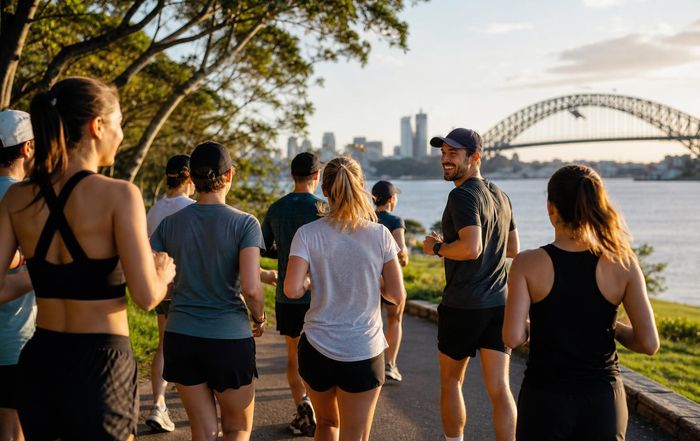
Community Running Clubs in Australia: Why People Really Join
Across Australian cities, suburbs, and regional towns, community running clubs meet before dawn on beaches, after work in city parks, and on dusty country roads. Some members are chasing personal bests; others are just trying to jog for 10 minutes without stopping. Yet they keep showing up, week after week. Understanding why people join these clubs reveals as much about community and wellbeing as it does about sport.
This fit article looks at what draws Australians into local running groups, how these clubs are organised, what they offer beyond fitness, and what to consider if you are thinking about joining one yourself.
From parkrun to clubland: how community running is organised
Australia's running scene is a mix of formal clubs, informal crews, and free grassroots events. At one end are long-established athletics clubs affiliated with Athletics Australia and state bodies such as Athletics NSW and Athletics Victoria, which sit under the national sport system overseen by Sport Australia at the Australian Sports Commission. These clubs often have structured coaching, access to track facilities, and pathways into competition, from local meets through to national championships. At the other end are casual "crews" organised via social media, meeting outside a café or surf club with no membership fees and minimal rules beyond "turn up and be kind."
In between sits a huge ecosystem of community-focused running groups that combine regular social runs, basic coaching, and participation in local fun runs and charity events. Many of these clubs are connected, directly or indirectly, to the global parkrun movement, which offers free, weekly, timed 5 km events across Australia. Parkrun's emphasis on inclusivity-walkers welcome, prams welcome, dogs on leads welcome-has become a template for many local clubs that want to be open to all ages and abilities rather than only to competitive athletes.
This layered ecosystem is supported by event organisers and sponsors. Major city marathons and half marathons, such as those promoted through World Athletics and large commercial organisers, attract serious runners, but they also provide annual goals for thousands of club members. Meanwhile, health and research bodies such as the Australian Institute of Health and Welfare and Healthdirect Australia increasingly highlight physical activity and social connection as pillars of public health, reinforcing the role that local clubs can play in everyday wellbeing.
For readers interested in broader training and performance ideas that feed into this ecosystem, the training section at sportyfusion.com/training and the dedicated sports hub offer additional context on how endurance communities organise and progress.
The pull of belonging: social connection and identity
Ask regulars at a suburban running club why they keep coming back, and many will talk less about pace and more about people. Community running groups create a recurring social appointment anchored by shared effort. Members chat before the warm-up, debrief during cool-downs, and linger over coffee afterwards. For newcomers to a city, parents emerging from the isolation of early childcare, or workers who spend long hours behind screens, that predictable, low-pressure social time can be invaluable.
Social psychologists have long noted that belonging to a group with shared goals strengthens identity and motivation. In running clubs, this plays out in small but powerful ways: a new member being remembered by name, an experienced runner dropping back to pace someone through their first 5 km, or a club rallying around a member raising funds for a cause. For many, the club becomes not just a place to exercise but part of their social fabric, comparable to a local football team, surf lifesaving club, or community choir.
This sense of identity is often expressed visually too. Club singlets and T-shirts appear at local fun runs, parkruns, and big city events, turning an individual endeavour into a collective presence. Members talk about "we" rather than "I"-"we're doing the Gold Coast half this year" or "we meet at the oval on Tuesdays"-signalling that the club has become part of how they describe themselves. For those who may not have seen themselves as "sporty" at school, a welcoming running club can provide a fresh, adult sporting identity grounded in participation rather than selection.
For readers interested in the broader cultural side of sport and how identity is built around active communities, the culture section and lifestyle coverage on sportyfusion.com explore similar themes across different activities and subcultures.
Health, fitness, and the appeal of structured accountability
Health is an obvious reason to start running, but the structure of a community club often determines whether a person continues. Public health guidelines promoted by bodies such as the World Health Organization and the Australian Department of Health and Aged Care recommend at least 150 minutes of moderate-intensity aerobic activity per week for adults, with additional strength work. Many Australians struggle to meet that target alone, but a club that meets two or three times per week, with varied sessions and social accountability, makes the prescription more achievable.
Clubs provide a schedule-intervals on Tuesday, hills on Thursday, a longer easy run on the weekend-that removes the decision fatigue of planning workouts. Members know that if they show up at 6:00 pm, a session will be ready, tailored to different paces. This predictability supports habit formation, which research in behavioural science consistently shows is more important than short bursts of enthusiasm. When motivation dips, the knowledge that others will notice an absence can be enough to get someone out the door.
The health benefits go beyond cardiovascular fitness. Regular running is associated with improved mental health outcomes, including reductions in symptoms of mild to moderate depression and anxiety, according to research often summarised by organisations like Beyond Blue and Black Dog Institute. The social dimension of clubs amplifies these effects: members have people to talk to, laugh with, and share small victories and frustrations. For shift workers or people with stressful jobs, that combination of physical exertion and informal peer support can be a powerful buffer against burnout.
On the performance side, structured community environments often introduce runners to concepts such as periodisation, recovery, and strength training, which are covered in more detail in SportyFusion's performance and fitness sections. While not every club offers formal coaching, even basic guidance-like alternating hard and easy days or incorporating rest weeks-helps reduce injury risk and improves progress compared with ad-hoc solo running.
Coaching, learning, and the pathway from beginner to racer
Many Australian community running clubs are led by accredited coaches or experienced volunteer leaders who draw on frameworks provided by Athletics Australia, state institutes of sport, or continuing education from bodies such as the Australian Institute of Sport. Even when the environment is casual, that knowledge can make a meaningful difference in how beginners are introduced to running and how experienced athletes fine-tune their training.
For newcomers, a club can demystify the basics: appropriate footwear, warm-up routines, how to pace the first kilometre, and how to distinguish normal training discomfort from potential injury. Some clubs run dedicated beginner programs-often eight to twelve weeks long-aimed at taking participants from walking to comfortably running 5 km, sometimes timed to culminate in a local fun run or parkrun. This structured progression, combined with peer support, often feels less intimidating than starting alone with an online plan.
For more experienced runners, clubs can provide interval sessions, tempo runs, and race-specific programs geared towards popular events such as city marathons, trail ultras, or track seasons. Informal mentoring is common: someone who has run multiple marathons shares pacing strategies; a trail specialist explains nutrition and gear for long events; a former track athlete helps refine running form. These conversations, which happen on the move or over coffee, complement more formal resources available from high-performance bodies like World Athletics or national sport science institutes.
Importantly, many community clubs also normalise rest and cross-training. Members might be encouraged to integrate strength work, cycling, or swimming, and to listen to early signs of overload rather than pushing through every niggle. This more holistic approach aligns with modern sports medicine guidance promoted by organisations such as Sports Medicine Australia, and it helps explain why runners who join clubs are often able to sustain participation over many years rather than burning out in a single training cycle.
Readers who want to dive deeper into evidence-based training principles can find broader context in SportyFusion's health coverage, which often links physical activity to long-term wellbeing and injury prevention.
Inclusivity, diversity, and the changing face of running
Historically, organised distance running in Australia-like in many countries-was male-dominated and performance-oriented. Over the past two decades, however, participation trends have shifted significantly. Women now make up a large proportion of entrants in many major road races, and community clubs increasingly position themselves as inclusive spaces for all genders, ages, body types, and cultural backgrounds.
This shift is reflected in initiatives such as women-only beginner groups, family-friendly session times, and collaborations with local councils and health services to encourage participation among groups who may face barriers to sport. Organisations like parkrun and various state health departments have highlighted stories of older adults, people with chronic conditions, and migrants using community running as a way to build social networks and confidence in new environments. Some clubs also work with Indigenous organisations or local Elders to acknowledge Country and connect running with broader conversations about land, culture, and health.
At the same time, there is growing awareness of the need for psychological safety and ethical conduct in community sport. National frameworks such as the National Integrity Framework promoted by Sport Integrity Australia emphasise child safeguarding, member protection, and inclusive behaviour across all codes, including athletics and running. Community clubs increasingly adopt codes of conduct, clear complaint processes, and education around issues such as harassment and discrimination, aligning with broader discussions of ethics and fairness that are also explored in SportyFusion's ethics section.
Despite these advances, inclusivity is a work in progress. Some runners still find club environments intimidating, particularly if most members are already fast or know each other well. The most successful clubs tend to be those that explicitly welcome all paces, normalise walking intervals, and celebrate non-time-based achievements-such as attending consistently for a month, returning after injury, or completing a first event-alongside podium finishes.
Events, charity, and connection to the wider community
Community running clubs rarely exist in isolation; they are woven into a broader network of local events, charities, and civic life. Many clubs adopt one or more annual events as collective goals: a city marathon, a coastal half marathon, a trail race in the hinterland, or a local 10 km fun run. Training blocks are built around these dates, and the events themselves become social weekends, with group travel, shared accommodation, and post-race gatherings.
Charity and cause-related participation are also prominent. Clubs might form teams for fundraising runs supporting organisations such as Cancer Council Australia, Heart Foundation, or mental health charities like Beyond Blue. Members raise money through sponsorship pages, organise bake sales or raffles, and use their training journey to spark conversations about the underlying issues. This adds a layer of meaning to the miles, particularly for those who have personal connections to the causes involved.
At a local level, clubs often volunteer at community events-manning water stations, pacing back-of-the-pack runners, or helping with logistics at parkruns and school cross-country carnivals. This reciprocity strengthens relationships with councils, schools, and other community groups, and it reinforces the idea that running is not just something done for oneself but part of a shared civic culture. In some regional areas, the running club may be one of the few regular social and physical activity outlets for adults, sitting alongside netball, football, or surf lifesaving in the community calendar.
These outward-facing roles connect naturally to broader discussions about sport, community, and social responsibility that run through SportyFusion's world and social sections, where sport is often examined as a vehicle for social change as much as for performance.
Digital tools, technology, and the modern running club
Technology has reshaped how community running clubs in Australia recruit members, share information, and maintain engagement between sessions. Most clubs now rely on a mix of email newsletters, Facebook groups, Instagram accounts, and messaging apps to coordinate training times, share route maps, and celebrate member achievements. GPS-enabled watches and smartphone apps allow runners to upload their runs to platforms like Strava, where club groups and segments add a layer of friendly competition and visibility.
Wearable tech from companies such as Garmin, Apple, and Polar has also filtered into everyday club culture. Runners compare heart-rate zones, sleep data, and step counts, sometimes using these metrics to guide training intensity or recovery. While this can be motivating, it can also introduce new pressures or anxieties around numbers, particularly for perfectionist personalities. Thoughtful club leaders often encourage members to treat tech as a tool rather than a master, balancing data-driven insights with subjective feelings of fatigue, enjoyment, and stress.
Online coaching platforms and virtual events have further blurred the line between local and global communities. During periods of COVID-19 restrictions, many Australian clubs experimented with virtual challenges, Zoom strength sessions, and solo time trials uploaded to shared spreadsheets or apps. Some of those practices have persisted, especially for members in regional areas or with irregular work hours who cannot always attend in person. At the same time, the return to group running has highlighted the irreplaceable value of physical presence-a reminder that while technology can support, it does not fully substitute for shared miles on real roads and trails.
For fit people interested in the intersection of sport and innovation, SportyFusion's technology section and gaming and digital coverage explore how data, apps, and virtual platforms are reshaping active lifestyles well beyond running.
Barriers, risks, and how clubs are responding
Despite their benefits, community running clubs are not a universal solution. Several barriers can limit who joins and who stays. Time is a major constraint, particularly for parents, shift workers, and people in demanding jobs. Session times that suit some demographics may exclude others; early-morning runs are difficult for night-shift workers, while evening sessions can clash with family routines. Some clubs are responding by offering multiple time slots, child-friendly meet-ups, or flexible membership options that do not penalise irregular attendance.
Cost is another factor. While many community groups are free or low-cost, some charge membership fees to cover insurance, facility hire, or coaching. For people on tight budgets, especially in the context of broader cost-of-living pressures, even modest fees can be a deterrent. Partnerships with local councils, grants from health promotion agencies, or sponsorship from local businesses can help keep costs down, but they require administrative effort and know-how. National resources from bodies like Sport Australia and state sport departments can assist clubs in navigating governance, insurance, and funding, but smaller volunteer-run groups may still find the paperwork challenging.
Injury risk is an inherent part of any impact sport, and running is no exception. Beginners who increase volume too quickly, or experienced runners returning from layoffs, are particularly vulnerable to overuse injuries. Community clubs that emphasise gradual progression, cross-training, and access to qualified health professionals-physiotherapists, podiatrists, sports doctors-tend to see better long-term outcomes. Publicly accessible health information from sources like Healthdirect Australia can support this, but the on-the-ground culture of a club often matters most: whether rest is respected, whether members feel comfortable adjusting sessions, and whether "no pain, no gain" attitudes are challenged.
Finally, some people simply prefer solitude when they run. For them, the appeal of running lies in privacy, introspection, or flexible timing, and a club structure may feel constraining. The growth of community running does not negate the value of solo running; rather, it expands the menu of options. Many runners move fluidly between solo and group sessions, using clubs for hard workouts or social runs while keeping certain days for themselves.
Deciding whether a community running club is for you
For someone in Australia considering joining a community running club, the reasons others have joined can serve as a checklist for what to look for. Those seeking social connection might prioritise groups that emphasise coffee catch-ups, mixed-pace runs, and inclusive language in their communications. People focused on performance may look for clubs with accredited coaches, structured programs, and links to formal events or competitions. Individuals motivated by health and wellbeing may value clubs that openly welcome walkers, older adults, or those returning from illness or injury.
Trying a few different sessions is often the best way to assess fit. Many clubs offer trial periods or allow casual attendance without immediate membership. Paying attention to how leaders greet newcomers, how slower runners are treated, and how the group talks about bodies, pace, and goals can reveal whether the culture aligns with your values. For some, a large club with many pace groups and event options will feel energising; for others, a small local crew with a handful of regulars will feel more supportive.
Whatever the choice, the reasons people in Australia join community running clubs-connection, structure, learning, purpose, and joy in shared effort-reflect broader human needs that extend well beyond sport. On a cool morning at a coastal path or a hot evening around a suburban oval, the sight of a mixed group of runners moving together is a reminder that physical activity can be as much about belonging as about fitness. Whether you end up pinning on a race bib, volunteering at a water station, or simply jogging and talking once a week, community running offers multiple entry points into a more active, connected life.