

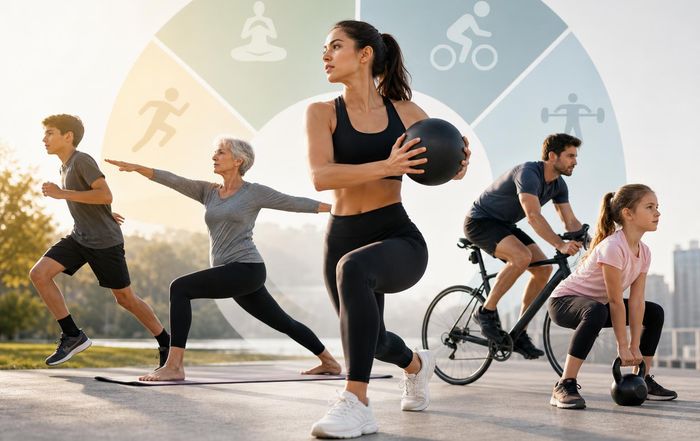
The Benefits of Cross-Training for All Ages in a High-Performance World
Cross-Training in 2026: A Global Shift in How People Move
Cross-training has moved from being a niche concept used by elite athletes to a mainstream, evidence-based approach embraced by people of all ages, professions and cultures, and nowhere is this evolution more visible than in the way the fit audience of SportyFusion approaches its daily routines, whether in United States, United Kingdom, Germany, Canada, Australia, Japan or emerging performance hubs across Asia, Africa and South America. As hybrid work patterns, digital fitness platforms and performance wearables proliferate, individuals are increasingly seeking training methods that are time-efficient, injury-resilient, mentally engaging and compatible with long-term health, and cross-training has emerged as a leading answer to that demand because it systematically combines different modes of exercise-strength, endurance, mobility, balance and skill work-into one coherent framework rather than relying on a single repetitive activity.
For online readers who follow the sports and new performance coverage on SportyFusion Sports and the health and recovery key insights on SportyFusion Health, the rise of cross-training is not simply another fitness trend, but a structural change in how athletes, professionals and families think about physical capacity across the lifespan, from school-age children to active older adults who want to preserve independence and quality of life. This article explores the benefits of cross-training for all ages through the lenses of experience, expertise, authoritativeness and trustworthiness, connecting current scientific understanding, real-world practice and the performance-driven culture that defines the SportyFusion community.
Defining Cross-Training: More Than Just Mixing Workouts
Cross-training is often misunderstood as the casual mixing of different workouts during the week, but in a performance and health context it is better defined as a strategic combination of complementary training modalities designed to develop multiple physical qualities simultaneously, while managing fatigue and minimizing overuse injuries. Instead of a runner only logging miles, a cross-training approach might integrate cycling, strength training, mobility work and low-impact conditioning, each chosen to reinforce the others and to build a more resilient, adaptable athlete, whether that athlete competes professionally or simply wants to walk, climb, play and work at a high level well into older age.
Organizations such as American College of Sports Medicine emphasize that adults should engage in both aerobic and muscle-strengthening activities each week, and cross-training is one of the most practical ways to meet these recommendations while keeping motivation high and boredom low. Readers can review the current physical activity guidelines through resources such as the World Health Organization physical activity recommendations and then use the diverse training ideas daily or regularly featured on SportyFusion Fitness to translate those guidelines into daily practice that feels engaging rather than prescriptive. In this sense, cross-training is not just an athletic strategy; it is a framework for sustainable movement across the lifespan.
Physiological Benefits: Building a Stronger, More Resilient Body
From a physiological standpoint, cross-training leverages the body's ability to adapt to varied stimuli, leading to more complete development of cardiovascular capacity, muscular strength, joint stability and neuromuscular coordination than any single training modality can typically provide on its own. When an individual alternates between activities such as running, swimming, strength training, yoga, cycling or court sports, different muscle groups and energy systems are stressed and then allowed to recover, which can enhance overall fitness while reducing repetitive strain on any one tissue or joint.
Research summarized by institutions such as Harvard T.H. Chan School of Public Health underscores that combining aerobic and resistance training improves markers of metabolic health more effectively than either mode alone, including blood pressure, insulin sensitivity and lipid profiles; readers can explore these relationships further through resources like Harvard's guidance on exercise and health. In performance-focused environments, such as football academies in Germany, endurance programs in Kenya or winter sport centers in Norway and Finland, coaches increasingly use cross-training blocks to maintain cardiovascular conditioning while reducing impact, particularly during heavy competition periods, and this philosophy has filtered into corporate wellness programs and community sports clubs worldwide.
For the SportyFusion active audience, which often seeks to balance high-level performance with demanding careers, the key physiological advantage of cross-training lies in its efficiency: a well-structured weekly plan might combine interval-based cycling for cardiovascular fitness, compound lifts for strength, Pilates for core stability and occasional team sports or martial arts for agility and reaction time, creating a robust physical base that supports both competitive sport and the everyday demands of modern life.
Psychological and Cognitive Advantages Across the Lifespan
Beyond the obvious physical benefits, cross-training offers notable psychological and cognitive advantages that are increasingly recognized in sports science and occupational health research, particularly as organizations in United States, Europe and Asia grapple with the long-term costs of burnout, stress and sedentary lifestyles. By varying training modalities, individuals can maintain higher levels of intrinsic motivation, reduce feelings of monotony and cultivate a more playful, exploratory relationship with movement, which in turn supports adherence to long-term exercise habits.
Studies from institutions such as Stanford University and University College London have highlighted that regular physical activity, especially when it challenges coordination and learning, is associated with improved executive function, memory and mood regulation, and cross-training naturally incorporates these elements by requiring the brain to adapt to different movement patterns and environments. Readers interested in the cognitive dimension of training can explore resources such as Stanford's research on exercise and brain health and then consider how their own routines, described and discussed on SportyFusion Lifestyle, might be adjusted to include more skill-based activities alongside traditional cardio or strength work.
For younger athletes balancing school or university demands, and for professionals in high-pressure sectors such as technology, finance or healthcare, these cognitive benefits are particularly valuable: rotating between endurance sessions, skill drills and mind-body practices such as yoga or tai chi can enhance focus, stress resilience and sleep quality, all of which contribute to better performance in both sports and work.
Injury Prevention and Longevity: Why Variety Protects the Body
One of the most compelling reasons for athletes and active individuals to embrace cross-training is its role in injury prevention and long-term joint health, an area where sports medicine experts across North America, Europe and Asia-Pacific have developed a strong consensus. Overuse injuries often arise when a single movement pattern or loading scheme is repeated excessively without adequate variation or recovery, leading to microtrauma in tendons, ligaments and cartilage; by distributing stress across different tissues and angles of movement, cross-training acts as a protective mechanism.
Organizations such as Mayo Clinic and Cleveland Clinic increasingly highlight cross-training in their guidance for patients recovering from common overuse conditions such as runner's knee, Achilles tendinopathy or shoulder impingement, recommending alternative low-impact activities that maintain cardiovascular fitness while injured structures heal. Interested readers can learn more about sports injury prevention and management through these medical resources and then apply that knowledge to the diverse training templates and recovery strategies discussed on SportyFusion Performance.
For older adults in Japan, Italy, Spain or Canada, where aging populations are reshaping healthcare systems, cross-training offers a practical way to preserve bone density, balance and muscle mass, all of which are critical for fall prevention and functional independence. Integrating resistance training, low-impact cardio such as walking or swimming, and balance-focused disciplines like tai chi or dance can significantly reduce the risk of fractures and mobility loss, demonstrating that cross-training is not only about maximizing athletic performance but also about sustaining quality of life.
Cross-Training for Children and Adolescents: Building Athletic Foundations
In youth sports, cross-training intersects with a broader movement away from early specialization and toward long-term athlete development models that prioritize broad motor skill acquisition, psychological well-being and enjoyment of sport. National governing bodies in United States, United Kingdom, Germany, Australia and Canada, including organizations such as USA Hockey and Australian Institute of Sport, now advise against narrow specialization before adolescence, emphasizing that exposure to multiple sports and movement patterns leads to more adaptable, creative and resilient athletes over time.
Parents and coaches who follow SportyFusion Training are increasingly aware that combining sports such as football, swimming, gymnastics and athletics during childhood builds a broad base of coordination, speed, strength and endurance that can later be channeled into any chosen discipline. Resources such as the Aspen Institute's Project Play provide detailed frameworks for age-appropriate multi-sport participation, aligning closely with the cross-training philosophy that underpins many modern youth academies in Europe and Asia.
From a health perspective, cross-training in childhood also reduces the risk of overuse injuries that have become more common with intensive year-round competition, such as stress fractures and growth-plate issues in young baseball pitchers or tennis players. By rotating activities seasonally and integrating structured rest, young athletes can enjoy sport, develop confidence and avoid burnout, which is critical for long-term participation and well-being.
Cross-Training for Working Adults: Performance Beyond the Field
For working adults in sectors as diverse as technology, manufacturing, creative industries and professional services, cross-training serves as a bridge between athletic performance and occupational performance, supporting energy management, resilience and productivity in an increasingly competitive global economy. As companies in United States, Singapore, Netherlands and South Korea expand their corporate wellness programs, they are moving beyond simple gym memberships toward more integrated models that include guided cross-training sessions, digital coaching and health education.
Business leaders tracking trends via SportyFusion Business recognize that employees who engage in regular, varied physical activity often report better concentration, reduced absenteeism and higher engagement, outcomes that are supported by research from institutions such as World Economic Forum and McKinsey & Company on the relationship between well-being and productivity. Readers interested in the economic dimension can learn more about sustainable business practices that incorporate health and performance as core strategic pillars rather than peripheral benefits.
From a practical standpoint, a cross-training approach for busy professionals might involve shorter, high-intensity interval sessions on some days, strength and mobility circuits on others, and weekend activities such as hiking, cycling or recreational team sports, allowing them to gain comprehensive fitness benefits without spending excessive time in any single mode of exercise. This flexibility is particularly valuable for those who travel frequently across regions such as Europe, Asia and North America, where access to equipment and facilities may vary but bodyweight strength, mobility drills and running remain universally available.
Cross-Training and Healthy Aging: Maintaining Independence and Vitality
As life expectancy rises in many countries, the concept of "health span"-the years lived in good health and functional independence-has become a central concern for policymakers, healthcare providers and individuals alike, and cross-training offers a powerful, adaptable tool for extending health span in older adults. By combining aerobic activity, strength training, flexibility work and balance exercises, older individuals can counteract age-related declines in muscle mass, bone density and neuromuscular control, reducing the risk of falls, fractures and chronic disease.
Public health agencies such as National Health Service (NHS) in the United Kingdom and Centers for Disease Control and Prevention (CDC) in the United States provide detailed guidelines for older adults that explicitly include both aerobic and muscle-strengthening activities, alongside balance training for those at risk of falls; readers can explore these recommendations through resources such as NHS guidance on exercise for older adults and then translate them into practical routines with the help of articles and programs highlighted on SportyFusion Health. In Japan, Sweden, Denmark and Singapore, where aging demographics are particularly pronounced, community-based cross-training programs that integrate walking groups, resistance bands, group classes and social activities have become models for other nations seeking to maintain active, engaged older populations.
For older readers of SportyFusion, the key message is that cross-training can be tailored to any level of ability and health status, with medical clearance and guidance from qualified professionals where necessary, and that a mix of moderate-intensity cardio, progressive strength work and gentle mobility can significantly improve daily function, mood and confidence, even for those who begin later in life.
Technology, Data and the Evolution of Cross-Training
The rapid growth of sports and health technology has transformed how cross-training is designed, monitored and refined, particularly for the tech-savvy audience that follows SportyFusion Technology and SportyFusion Gaming. Wearable devices from companies such as Garmin, Apple, Samsung and Polar now provide detailed data on heart rate variability, sleep quality, training load and recovery status, enabling individuals to adjust their cross-training plans dynamically rather than relying on static schedules.
Platforms such as Strava, Zwift and WHOOP have also fostered global communities where athletes from Brazil, South Africa, France, Italy and New Zealand can compare training sessions, share insights and receive feedback, making cross-training a more social and gamified experience. Readers can explore how digital tools are shaping the future of training and recovery through resources like MIT Technology Review's coverage of sports tech and then consider how to integrate these innovations into their own routines, while remaining mindful of privacy, data security and ethical considerations that are increasingly discussed on SportyFusion Ethics.
At the elite level, professional organizations and clubs-ranging from Premier League football teams in England to NBA franchises in United States and high-performance centers in China and South Korea-use advanced analytics, motion capture and machine learning to design individualized cross-training plans that optimize performance while managing injury risk. These methodologies gradually filter down to consumer apps and coaching platforms, offering recreational athletes access to sophisticated planning tools that would have been unavailable a decade ago.
Cultural Dimensions of Cross-Training: From Local Traditions to Global Practice
Cross-training is not only a physiological and technological phenomenon; it is also shaped by cultural traditions, social norms and regional preferences, elements that are central to the editorial focus of SportyFusion Culture and SportyFusion World. In Brazil and Spain, for example, football remains a dominant cultural force, but many players and fans now integrate strength training, futsal, beach workouts and yoga into their weekly routines, blending local passion with global performance practices. In India, Thailand and Malaysia, traditional martial arts and dance forms are increasingly incorporated into cross-training regimens for both fitness and cultural connection.
In Nordic countries such as Norway, Sweden, Finland and Denmark, outdoor activities like cross-country skiing, trail running and cycling are often combined with indoor strength and mobility work, reflecting a cultural emphasis on nature, resilience and seasonal adaptation. Resources such as OECD's studies on sports participation and culture provide a broader context for understanding how different societies integrate movement into daily life, while SportyFusion offers region-specific stories that highlight how cross-training is expressed in cities from New York and London to Berlin, Tokyo, Seoul and Cape Town.
By acknowledging and respecting these cultural variations, cross-training becomes more inclusive and sustainable, allowing individuals to incorporate traditional games, dances, martial arts or outdoor activities into their routines rather than feeling compelled to adopt a one-size-fits-all global model.
Brands, Careers and the Business of Cross-Training
The rise of cross-training has significant implications for sportswear, equipment, coaching and digital platforms, creating new opportunities and challenges for brands and professionals whose activities are closely followed on SportyFusion Brands and SportyFusion Jobs. Global companies such as Nike, Adidas, Puma, Under Armour and Lululemon have expanded their product lines to include versatile footwear, apparel and accessories designed to transition seamlessly between running, lifting, studio classes and outdoor activities, reflecting consumer demand for multi-purpose gear that supports cross-training lifestyles.
At the same time, boutique studios and digital platforms focusing on functional training, high-intensity interval training, Pilates, yoga and hybrid classes have proliferated in urban centers from Los Angeles and Toronto to Amsterdam, Zurich, Singapore and Sydney, offering specialized cross-training experiences tailored to different demographics and performance goals. Industry analyses from organizations such as International Health, Racquet & Sportsclub Association (IHRSA) and McKinsey & Company highlight that this diversification is reshaping the fitness labor market, creating new roles for coaches, physiotherapists, data analysts and product designers who understand cross-training principles and can translate them into compelling services and products; readers can explore these dynamics further through resources like McKinsey's insights on the sports and wellness economy.
For professionals considering careers in sports, health or performance technology, the ability to design, communicate and deliver cross-training solutions may become a key differentiator, and SportyFusion aims to support that journey by covering both the athletic and business sides of this evolving ecosystem.
Environmental and Social Considerations in a Cross-Training World
As cross-training encourages people to move in diverse environments-gyms, parks, trails, streets, courts and digital spaces-it inevitably intersects with environmental and social issues that are central to the mission of SportyFusion Environment and SportyFusion Social. Outdoor cross-training activities such as trail running, cycling and calisthenics in public parks can foster stronger connections to local ecosystems and communities, but they also raise questions about sustainable infrastructure, equitable access and the environmental footprint of sportswear and equipment production.
Organizations such as United Nations Environment Programme (UNEP) and Global Reporting Initiative (GRI) encourage sports brands, event organizers and municipalities to adopt more sustainable practices, from eco-friendly materials and circular product design to green building standards for facilities and low-carbon transportation options for participants; readers can learn more about sustainable business practices that intersect with the sports and fitness sector. Cross-training enthusiasts who choose active commuting, outdoor workouts and durable multi-purpose gear can play a small but meaningful role in reducing environmental impact, especially when these choices are scaled across large urban populations.
Socially, cross-training has the potential to be an equalizing force, as many of its components-walking, running, bodyweight strength, playground-style workouts-require minimal equipment and can be adapted to different abilities and economic contexts. Community initiatives in South Africa, Brazil, Mexico, India and Indonesia increasingly use multi-activity programs to engage youth, reduce crime and promote inclusion, demonstrating that cross-training is not only a tool for individual performance but also a platform for social cohesion and empowerment.
How SportyFusion Integrates Cross-Training into Its Editorial DNA
For SportyFusion, cross-training is more than a topic; it is a lens through which the platform connects sports, fitness, health, culture, technology, business and ethics for a global audience. Articles on SportyFusion Fitness provide practical guidance on designing balanced weekly routines, while SportyFusion Sports showcases how elite athletes from United States, United Kingdom, Germany, France, Italy, Spain, China, Japan and beyond use cross-training to extend careers and push performance boundaries. Features on SportyFusion Health and SportyFusion Lifestyle explore how varied movement supports mental well-being, sleep and stress management, and coverage on SportyFusion Technology examines the tools that make personalized cross-training more accessible than ever.
By weaving these perspectives together, SportyFusion aims to offer readers not just information but also a coherent framework for integrating cross-training into their lives, whether they are young athletes, working professionals, parents, coaches, entrepreneurs or older adults seeking to maintain independence. The platform's global outlook, spanning regions from North America and Europe to Asia-Pacific, Middle East and Africa, ensures that cross-training is presented in culturally relevant ways that respect local traditions while embracing innovation and scientific evidence.
Running Ahead = Cross-Training as a Lifelong Performance Strategy
As sports seasons unfold, the trajectory of cross-training points toward even deeper integration with digital health ecosystems, workplace design, urban planning and education systems, suggesting that the concept will continue to evolve from a training tactic into a holistic performance strategy for individuals and societies. Advances in wearable technology, personalized medicine and data analytics will enable more precise tailoring of cross-training plans to genetic profiles, injury histories and lifestyle constraints, while growing awareness of environmental and social issues will push brands and institutions to design programs that are not only effective but also sustainable and inclusive.
For the fit and healthy community that gathers around SportyFusion, the enduring value of cross-training lies in its adaptability and its alignment with human diversity: it recognizes that people at different ages, in different countries and with different goals require varied paths to health and performance, and it offers a flexible structure within which those paths can be explored, refined and enjoyed. Whether a reader is lacing up for a first 5K in Toronto, preparing for a marathon in Berlin, recovering from injury in Tokyo, leading a wellness initiative in Johannesburg or simply seeking more energy for family and work in New York or Singapore, cross-training provides a robust, evidence-informed foundation for moving better, feeling stronger and living more fully.
In this sense, the benefits of cross-training for all ages extend far beyond the gym or track: they shape how individuals experience their bodies, relate to their communities and navigate an increasingly demanding world, and SportyFusion remains committed to documenting, analyzing and inspiring that journey across every section of its evolving premium daily updated sports news site.