

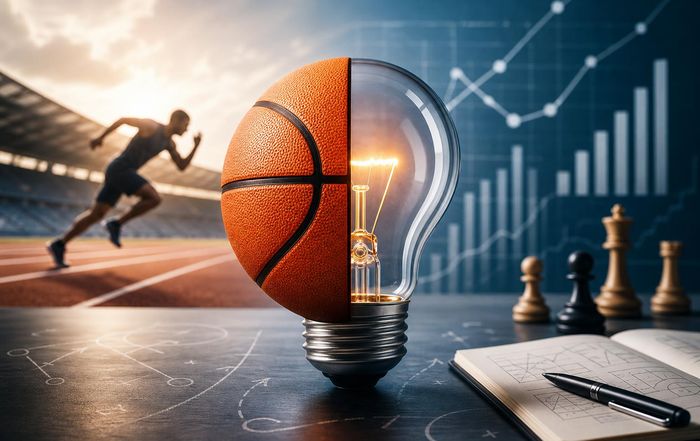
Business Innovation Inspired by Sports Performance
The New Playbook for Corporate Transformation
As global markets continue to evolve at unprecedented speed, business leaders are increasingly turning to the world of elite sport for models of resilience, adaptability and sustained high performance. The parallels between a championship team and a high-performing organization have long been acknowledged, but the depth of that connection has expanded dramatically in recent years, as advances in sports science, performance analytics and athlete wellbeing have begun to shape new standards for corporate management, innovation and culture. For SportyFusion.com, which sits at the independent news intersection of sport, fitness, health, culture and business, this convergence is not an abstract trend but a lived reality, reflected daily in how executives, entrepreneurs and performance-focused professionals approach their work and their lives.
The most forward-thinking companies in the United States, Europe, Asia and beyond are no longer asking whether there is something to learn from elite athletes; they are asking how quickly they can embed those lessons into leadership development, product design, organizational culture and strategy execution. From Silicon Valley technology firms redefining performance management to European manufacturing groups reengineering workflows around recovery and focus, the influence of sports performance is reshaping what it means to build a modern, innovative and trustworthy business. As global competition intensifies and stakeholder expectations rise, organizations are discovering that the disciplines that keep an athlete performing at world-class levels over a long career are remarkably similar to those that keep a company competitive across cycles of disruption.
High-Performance Culture: From Locker Room to Boardroom
The concept of a high-performance culture, once a buzzword in management literature, has acquired new depth through the lens of sport. Elite teams in leagues such as the NBA and the Premier League operate with a ruthless clarity about roles, feedback, accountability and shared purpose, and these principles are now informing corporate culture design in sectors ranging from finance to technology. Organizations that study how successful sports franchises align coaching staff, medical teams, analysts and players around a single performance narrative are better able to create coherent, values-driven cultures in which innovation can flourish.
In this context, high-performance culture is not about relentless pressure or unsustainable workloads; it is about creating conditions where individuals can bring their best selves to demanding environments, supported by clear expectations, continuous learning and psychological safety. Research highlighted by institutions such as Harvard Business School shows that teams with strong norms of trust and open communication outperform those that rely only on individual brilliance or hierarchical decision-making. Learn more about building resilient, trust-based team cultures on Harvard Business Review. For readers of SportyFusion, who are familiar with how locker-room dynamics can make or break a season, the translation of these dynamics into corporate settings is both intuitive and practical.
Data-Driven Strategy: Lessons from Sports Analytics
The analytics revolution that transformed professional sports over the past two decades has become a template for data-driven decision-making in business. When Major League Baseball teams first adopted advanced statistics to optimize lineups and tactics, the impact was initially controversial but ultimately undeniable; today, similar approaches in football, basketball and tennis have led to sophisticated models of player performance, injury risk and tactical effectiveness. Companies seeking to innovate are drawing on this example to build integrated data ecosystems that inform strategy, operations and customer engagement.
Organizations are increasingly using real-time dashboards, predictive analytics and scenario modeling, paralleling how performance analysts support coaches during live matches. Resources such as MIT Sloan School of Management's sports analytics programs illustrate how techniques pioneered on the field are being adapted to pricing, supply chain optimization and product development. Explore how analytics is changing decision-making on MIT Sloan. At the same time, businesses must navigate the ethical and privacy implications of pervasive data collection, a topic that resonates with sport fans who have watched debates over athlete tracking technologies and biometric monitoring. Thoughtful leaders are therefore not only embracing data but also establishing clear governance frameworks that protect individuals and build long-term trust.
For those interested in how data, performance and culture intersect, SportyFusion regularly explores these themes in its coverage of technology and innovation in sport, highlighting how the same tools that optimize training sessions can be used to enhance customer journeys, workforce planning and strategic foresight.
Coaching, Leadership and the Power of Feedback
Elite athletes do not reach the pinnacle of their sport alone; they are guided by coaches, performance directors and support staff who provide continuous, precise and often challenging feedback. This model has profound implications for leadership development in business, where traditional annual performance reviews and top-down communication are increasingly seen as inadequate. Companies that adopt a coaching mindset, inspired by high-performance sport, are creating more agile and responsive organizations in which learning is continuous and feedback is part of everyday work.
Leadership experts at institutions like INSEAD and London Business School have documented how coaching-based leadership, characterized by active listening, constructive challenge and individualized support, correlates with higher engagement and innovation. Learn more about coaching-centered leadership approaches on INSEAD Knowledge. In a similar vein, many organizations are developing internal "performance coaches" who help teams navigate complexity, manage energy and sustain focus over long projects, echoing the role that performance staff play in elite training environments.
For SportyFusion readers who follow athlete development, this shift in business feels familiar. Just as a coach adjusts training loads, tactical instructions and psychological support in response to an athlete's evolving needs, effective corporate leaders calibrate goals, resources and recognition to keep their teams in a productive performance zone. This philosophy is reflected in the platform's emphasis on training and continuous improvement, where sports-derived coaching principles are translated into practical guidance for professionals seeking to build sustainable careers.
Physical Health, Mental Wellbeing and Sustainable Performance
Perhaps the most powerful contribution of sports performance to business innovation lies in its holistic view of human capacity. High-level sport has increasingly embraced the understanding that physical conditioning, mental health, sleep, nutrition and recovery are inseparable components of long-term success. Organizations that once treated wellbeing as a peripheral benefit are now recognizing that sustainable innovation depends on the same integrated approach to human performance that keeps athletes competing at the highest level across multiple seasons.
Leading health authorities such as the World Health Organization and Centers for Disease Control and Prevention continue to emphasize the link between physical activity, mental health and productivity, which has significant implications for how businesses design work environments and employee support systems. Learn more about the connection between movement and wellbeing on the World Health Organization. In parallel, research by institutions like Stanford University and University College London has deepened understanding of how chronic stress and sleep deprivation impair decision-making, creativity and risk assessment, reinforcing the case for performance models that prioritize recovery as much as exertion.
Sport-inspired companies are therefore rethinking office design, meeting structures and workload patterns to align with human biorhythms and cognitive cycles, drawing on the same insights that guide training periodization in endurance sports or tournament scheduling in global competitions. For a community that values movement and health, SportyFusion curates insights on fitness and wellbeing and health-focused performance strategies, connecting the dots between training principles and workplace vitality in markets from North America and Europe to Asia-Pacific and Africa.
Team Dynamics, Diversity and Inclusion as Performance Drivers
Elite sports teams operate in high-pressure, multicultural environments where cohesion, role clarity and mutual respect are non-negotiable. The best teams in leagues from the English Premier League to the NBA and Bundesliga have demonstrated that diversity of background, playing style and perspective can be a powerful competitive advantage when supported by inclusive leadership and shared goals. Businesses facing global competition are drawing from this example to strengthen team dynamics and build inclusive cultures that unlock the full potential of their workforce.
Organizations are increasingly turning to research from bodies such as McKinsey & Company and Deloitte that links diverse leadership teams with stronger financial performance and greater innovation. Learn more about how diversity and inclusion drive business outcomes on McKinsey. At the same time, the global sports industry has grappled publicly with issues of discrimination, representation and equity, offering both cautionary tales and inspiring examples of change. Companies that study these developments are better equipped to avoid superficial approaches and instead embed inclusion into recruitment, development, promotion and everyday decision-making.
On SportyFusion, the intersection of sport, culture and society is a recurring theme, explored in depth in coverage of culture and identity in sport and social impact initiatives. For business leaders, understanding how athletes and teams navigate cultural differences, national identities and social responsibilities offers a rich source of insight into managing global teams and building brands that resonate across continents.
Innovation Ecosystems: From High-Performance Labs to Corporate R&D
High-performance training centers, such as those operated by national Olympic committees and leading football academies, have become laboratories of innovation where sports scientists, biomechanists, nutritionists, psychologists and technologists collaborate on marginal gains that can decide the outcome of major tournaments. This multidisciplinary, experiment-driven model is increasingly inspiring how companies structure research and development, innovation hubs and cross-functional project teams.
Organizations in technology, manufacturing, healthcare and consumer goods are studying the way high-performance labs design experiments, measure outcomes and rapidly iterate based on feedback, often in partnership with universities and research institutes. Institutions like ETH Zurich and Imperial College London have built strong ties with sports organizations to test wearable technologies, materials and recovery protocols, and these collaborations are generating knowledge that extends far beyond the playing field. Explore how applied research and innovation intersect on ETH Zurich.
For SportyFusion, which covers both sports performance and business innovation, this ecosystem perspective is central. The same mindset that drives a national cycling program to refine every aspect of equipment, posture and training is now guiding companies as they experiment with new business models, digital platforms and sustainability solutions. Crucially, this approach emphasizes not only breakthrough innovations but also the accumulation of small, compounding improvements that can transform competitiveness over time.
Technology, Wearables and the Quantified Organization
The rise of wearable technology, advanced sensors and performance-tracking platforms has transformed how athletes train, recover and prevent injury, and these tools are increasingly influencing workplace design and corporate innovation. Devices that monitor heart rate variability, sleep quality, movement patterns and cognitive load provide athletes and coaches with granular insights into readiness and fatigue; similar technologies are now being explored by organizations that want to better understand how work patterns affect health, engagement and productivity.
Companies are cautiously experimenting with voluntary, privacy-conscious programs that allow employees to track aspects of their wellbeing and performance, often in partnership with established health and technology providers. Platforms from firms like Garmin, Apple and WHOOP have set consumer expectations for data accuracy and user experience, and these benchmarks are informing enterprise solutions that integrate physical and cognitive performance data with workflow analytics. Learn more about the evolution of wearable performance technologies on Garmin or Apple.
At the same time, the ethical implications of such monitoring are substantial, echoing debates in elite sport about the ownership and use of biometric data. Thoughtful organizations are therefore engaging with frameworks from bodies such as the World Economic Forum, which has explored responsible data use, digital trust and workforce wellbeing. Insights on responsible digital transformation can be found on the World Economic Forum. For SportyFusion readers, who are accustomed to analyzing performance data in training apps and connected fitness platforms, this emerging "quantified organization" is a natural extension of the quantified athlete, but it demands strong governance, transparency and consent to maintain trust.
Global Talent Pipelines and the Transfer Market Mindset
The global nature of modern sport offers another instructive model for business innovation: talent identification, development and mobility. Football clubs in Europe and South America, basketball organizations in North America and Asia, and high-performance academies worldwide operate complex talent pipelines that scout young prospects, invest in long-term development and manage transfer markets with significant financial and strategic implications. Businesses facing skills shortages in fields such as artificial intelligence, cybersecurity and advanced manufacturing are looking to these systems for inspiration.
By treating talent as a strategic asset rather than a transactional resource, organizations are building more sophisticated approaches to recruitment, development and retention, often with a global lens. Reports from entities like the OECD and World Bank highlight the importance of skills mobility and lifelong learning in maintaining competitiveness, particularly in rapidly changing economies. Learn more about global skills and talent strategies on the OECD. In parallel, businesses are studying how sports organizations manage succession planning, leadership transitions and the integration of young talent into established teams, recognizing that innovation depends on a healthy mix of experience and fresh perspectives.
Within the SportyFusion community, where interest in jobs and careers in sport and performance-driven industries is strong, this talent-centric lens resonates deeply. The same commitment to coaching, feedback and long-term development that shapes an athlete's journey from academy to professional ranks can guide professionals navigating career transitions, international moves and new forms of work in the digital economy.
Sustainability, Ethics and the Reputation of Performance
As environmental, social and governance expectations intensify across global markets, the world of sport has become a highly visible arena for debates about sustainability, human rights and ethical conduct. Major events held in regions facing climate stress or political controversy, sponsorship deals involving fossil fuel companies or gambling firms, and concerns about athlete welfare have all highlighted the complex interplay between performance, profitability and responsibility. Businesses looking to innovate sustainably are paying close attention to how sports organizations manage these tensions, both as cautionary examples and as sources of best practice.
Leading global frameworks from bodies such as the United Nations Global Compact and OECD provide guidance on responsible business conduct, which many sports-related brands and organizations are now adopting. Learn more about sustainable business practices on the UN Global Compact. In parallel, industry groups and NGOs are developing standards for sustainable events, ethical sponsorships and inclusive participation, recognizing that fans, consumers and employees increasingly expect alignment between stated values and actual behavior.
For SportyFusion, which addresses environmental impact and ethical issues in sport and business, this dimension of performance is central to long-term trustworthiness. Innovation inspired by sports performance cannot be limited to speed, strength or efficiency; it must also encompass fairness, transparency and respect for people and the planet. Companies that internalize this broader definition of performance are better positioned to build resilient brands in markets from the United States and Canada to Germany, Japan, Brazil and South Africa.
A Future of Business Innovation Through a Sporting Lens?
Looking ahead to the late 2020s, the integration of sports performance principles into business is likely to deepen and diversify. As technologies such as artificial intelligence, virtual reality and advanced biomechanics continue to transform both elite sport and corporate operations, the opportunities for cross-pollination will expand. Virtual training environments used by Formula 1 teams and esports organizations may inform new models of remote collaboration and skills development; AI-driven tactical analysis in football may inspire more sophisticated scenario planning and risk management in financial services; and mental skills training used by Olympic athletes may shape new approaches to leadership resilience and crisis response.
For a totally unique fitness communities like SportyFusion, which bridges sports, lifestyle, business and technology, the task is to curate and interpret these developments for a global audience that spans continents and industries but shares a common interest in performance. Whether the reader is a startup founder in Singapore, a corporate executive in London, a performance coach in Toronto or a policy maker in Berlin, the lessons from sports performance offer a powerful framework for navigating uncertainty, building strong cultures and driving meaningful innovation.
Ultimately, the most significant insight that business can draw from sport is not a specific tactic or technology but a philosophy: performance is a long-term, multi-dimensional endeavor that demands clarity of purpose, disciplined practice, intelligent use of data, respect for human limits and a commitment to continuous learning. Organizations that adopt this philosophy, and adapt it thoughtfully to their own contexts, are more likely to thrive in a world where change is constant and expectations are high. As time progresses and new challenges emerge across global markets, the playbook of elite sport will remain an invaluable guide for leaders determined to compete with integrity, creativity and resilience.