

Germany's Sports Startups in 2026: How a Traditional Powerhouse Became a Global Innovation Hub
Germany entered 2026 with a sporting identity that is both deeply traditional and unmistakably future-oriented. For decades, the country has been associated with elite performance in football through the Bundesliga, world-class Olympic programs, and a grassroots club culture that permeates everyday life. Today, that same ecosystem is also nurturing a new generation of sports startups that blend engineering excellence, digital innovation, and sustainability in ways that are reshaping how athletes train, how fans consume sports, and how businesses invest in the industry. For the global audience of SportyFusion, which follows developments across fitness, culture, health, technology, business, and performance, Germany offers one of the clearest examples of how a mature sports nation can reinvent itself for the digital age.
These developments are not occurring in isolation. They are grounded in Germany's broader strengths in industrial design, data science, and regulation, as well as its position at the heart of the European market. Cities such as Berlin, Munich, Hamburg, Cologne, and Frankfurt have evolved into interconnected hubs where founders, athletes, investors, and governing bodies collaborate on next-generation solutions, from AI-driven performance analytics and connected fitness platforms to sustainable equipment, esports data, and immersive fan experiences. In 2026, Germany is no longer just a participant in the global sports technology race; it is one of the countries setting the pace.
A Mature Ecosystem for Sports Innovation
The German sports startup landscape has matured dramatically over the past decade, benefitting from an infrastructure that combines institutional support, private capital, and a culture that values both physical activity and technological rigor. Programs such as leAD Sports & Health Tech Partners, founded by the grandchildren of Adolf Dassler, continue to act as catalysts, connecting early-stage companies with mentors, pilot partners, and international investors. Alongside leAD, specialized accelerators and corporate innovation labs run by organizations like Adidas, Allianz, and Deutsche Telekom have helped turn promising prototypes into scalable businesses that serve markets well beyond Germany's borders.
Government policy has been an important enabler. The Federal Ministry for Economic Affairs and Climate Action and the Federal Ministry of the Interior and Community have integrated digitalization, sustainability, and health promotion into their sport-related agendas, creating funding programs and regulatory frameworks that reward responsible innovation. Germany's adherence to strict data protection rules such as the GDPR has compelled sports tech startups to build privacy and security into their platforms from the outset, which in turn strengthens their credibility when expanding into markets like the United States, the United Kingdom, and Asia. Readers who want to understand how these policy foundations intersect with ethics and governance in sport can explore the dedicated coverage in SportyFusion's ethics section.
Independent ecosystem builders have added further structure. Organizations such as SportsTechX provide market intelligence, mapping key players and investment flows, while the German Startups Association advocates for founder-friendly policies and a more competitive venture environment. Together, these actors have created a landscape in which German sports startups are not simply reacting to global trends but actively defining them, particularly in data analytics, connected fitness, and sustainable sports products. For those seeking a broader cultural lens on how sport and innovation intersect in Germany and beyond, SportyFusion's culture coverage offers valuable context.
Performance Analytics: From Elite Labs to Everyday Training
No segment illustrates Germany's strengths in engineering and applied science more clearly than athlete performance technology. Over the last few years, companies originally serving elite clubs have begun to filter their solutions down to semi-professional and amateur levels, embodying the idea that evidence-based training and injury prevention should not be reserved only for the top one percent of athletes.
A leading example is Kinexon, the Munich-based pioneer in real-time tracking and analytics. The company's sensor-based systems, which capture positional data, load metrics, and tactical patterns, have become standard tools for NBA franchises, NFL teams, and multiple Bundesliga clubs. By 2026, Kinexon's technology is no longer confined to match-day performance; it underpins integrated training environments where coaches, medical teams, and sports scientists share a single data backbone. The KINEXON Sports Cloud allows organizations to combine biometric data, GPS information, and contextual game metrics into one platform, enabling more precise load management and more informed return-to-play decisions. This approach aligns with research from institutions such as the German Sport University Cologne and the International Olympic Committee on injury prevention and long-term athlete health.
Crucially, Kinexon and similar companies are now targeting broader audiences, including academies, university programs, and ambitious amateur clubs across Germany, Europe, North America, and Asia. Lower-cost sensor packages and cloud-based subscriptions are making it possible for teams in the United States, the United Kingdom, Canada, and Australia to access analytics once limited to elite organizations. For SportyFusion readers interested in how performance data is changing training methods, the site's performance section provides ongoing analysis of these trends.
Another notable player at the grassroots end of the spectrum is Zone14, which uses AI-powered video analysis to deliver tactical and individual insights for amateur football. With a relatively simple camera setup, clubs can obtain automated heat maps, sprint statistics, and highlight compilations, enabling coaches in local leagues from Germany to the Netherlands, Scandinavia, and beyond to adopt a more analytical mindset. This democratization of performance intelligence reflects a broader transition in global sport: data literacy is becoming as important as physical conditioning, not only for professionals but also for coaches and players in community environments.
Digital Fitness and Health: Germany's Global Reach
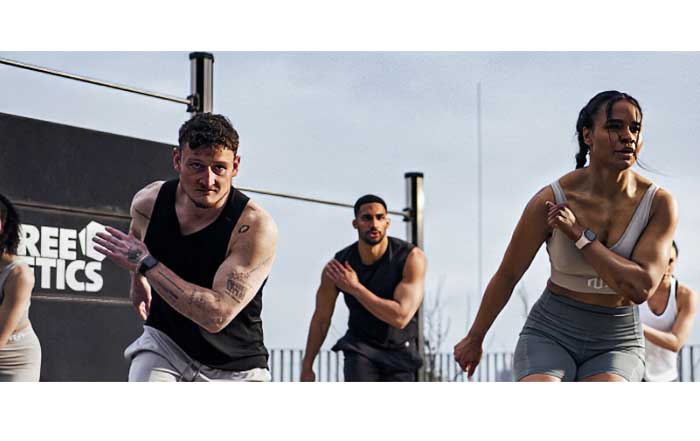
Parallel to team-based performance technologies, Germany has become a major exporter of digital fitness and health solutions aimed at individual consumers. The most visible example is Freeletics, headquartered in Munich, which has evolved from a bodyweight training app into a comprehensive digital coaching ecosystem. Leveraging AI to generate adaptive workout plans, nutritional guidance, and habit-forming routines, Freeletics serves millions of users across Europe, North America, and Asia-Pacific, with particularly strong adoption in markets like the United States, the United Kingdom, and Canada.
What differentiates Freeletics in 2026 is its integration of multiple dimensions of wellbeing. The platform now connects with mainstream wearables, incorporates mindfulness and recovery modules, and uses behavioral science to encourage long-term adherence rather than short-term intensity. This holistic approach resonates with a global audience that increasingly sees fitness as part of a broader lifestyle and longevity strategy rather than a purely aesthetic goal. It also positions the company as a credible counterpart to international players such as Apple Fitness+, Peloton, and Nike Training Club, especially among users who prefer equipment-light, flexible training formats. SportyFusion's fitness section regularly examines how such digital offerings are reshaping workout habits in regions from Europe to Asia and North America.
Health-oriented innovation also extends into hydration, nutrition, and recovery. AirUp, another Munich-based startup, has gained international attention with its scent-based hydration system, which uses aromatic pods to create the perception of flavor without added sugar or sweeteners. The approach aligns with nutritional guidance from organizations like the World Health Organization and the European Food Safety Authority regarding sugar reduction and healthy beverage consumption. For athletes and active consumers in countries such as Germany, the United States, and Japan, AirUp offers a way to maintain adequate fluid intake while avoiding the downsides of traditional sports drinks.
Recovery remains a central theme in modern performance culture, and Germany is home to companies that specialize in this domain. Blackroll, which began with simple foam rollers, now offers a suite of scientifically validated tools for myofascial release, mobility, and regeneration. Collaborations with physiotherapists, sports medicine experts, and institutions like Charité Universitätsmedizin Berlin have helped the company refine its product line and validate its claims. Similarly, younger ventures such as Inshoer are experimenting with recovery-focused footwear that optimizes circulation and joint relief after intense sessions, reflecting a widespread recognition that performance gains are inseparable from structured recovery. Readers interested in the intersection of health, training, and everyday wellbeing can explore SportyFusion's health coverage, which places these innovations in a broader medical and lifestyle context.
Fan Engagement, Media, and Esports: A New Digital Front Door
In an era where fans in the United States, Brazil, South Korea, and the United Kingdom can follow the same match in real time, digital platforms have become the primary gateway to sports culture. Germany has produced several companies that sit at the center of this transformation, connecting rights holders, media partners, and fans across continents.
OneFootball, based in Berlin, remains one of the most influential football media platforms in the world. By aggregating news, live scores, streaming content, and social features into a single app, it has become a daily touchpoint for millions of supporters from Europe to Asia and the Americas. The company's expansion into live rights, personalized notifications, and interactive features has turned it into a hybrid between a news outlet, a streaming service, and a social network. As consumption habits evolve among younger demographics in markets such as Germany, the United States, the United Kingdom, and Latin America, OneFootball's model illustrates how digital-native platforms can coexist with traditional broadcasters and league-owned services. For SportyFusion readers exploring how sport shapes and reflects global societies, the site's social section provides timely stories and analysis.
On a different but related front, Staige (formerly KameraOne) is using AI to bring professional-quality video production to amateur and semi-professional sports. Its automated camera systems can track the ball and key actions without human operators, allowing local clubs, youth academies, and school programs to stream matches at a fraction of the historical cost. This technology is particularly impactful in football-centric regions such as Germany, Spain, Italy, and the Netherlands, where community clubs are both social institutions and talent incubators. By enabling these organizations to share content with fans, families, and scouts, Staige contributes to a more inclusive sports media environment in which visibility is not limited to top-tier leagues.
Esports represents another major growth area in which German companies play a foundational role. Bayes Esports, headquartered in Berlin, provides official live match data for competitive gaming titles to media platforms, betting operators, and rights holders worldwide. By ensuring the integrity and accuracy of data for events organized by partners such as ESL FACEIT Group and DreamHack, Bayes Esports has become critical infrastructure for an industry that already attracts audiences comparable to major traditional sports, particularly among younger viewers in North America, Europe, and Asia. Meanwhile, organizations like GamerLegion are building competitive teams and community brands that give German and European fans a local identity in global esports ecosystems dominated by North American and Asian organizations. SportyFusion's gaming section tracks these developments as esports increasingly intersects with mainstream sports, entertainment, and sponsorship models.
Sponsorship, Business Models, and the Commercial Engine
Beneath the surface of performance and media innovation lies a complex commercial engine that determines how money flows through the sports ecosystem. German startups have been active in redesigning sponsorship, data monetization, and B2B services to better match the fragmented and digital-first nature of contemporary sport.
Sponsoo, based in Hamburg, has emerged as one of Europe's leading digital marketplaces for sports sponsorship. By connecting athletes, clubs, and event organizers with brands via a structured online platform, Sponsoo helps both sides navigate a sponsorship landscape that has become more data-driven and diversified. Grassroots teams in Germany, semi-professional clubs in the United Kingdom, and individual athletes in markets such as South Africa or Brazil can present their reach and audience demographics to potential sponsors in a transparent manner, while brands can identify cost-effective partnerships that align with their values and target segments. This model reflects broader shifts in marketing, where authenticity and niche communities often deliver better returns than purely global, top-down campaigns. Readers who follow the business side of sport can find deeper analysis in SportyFusion's business section.
Complementing these marketplace models are data and consulting firms that help rights holders and sponsors understand changing consumer behavior. Organizations like the FitTech Company in Munich act as connectors between fitness startups, investors, and corporate partners, organizing summits and research initiatives that map opportunities in digital health, connected equipment, and subscription models. Internationally recognized research from entities such as PwC's Sports Business practice and Deloitte's Sports Business Group underscores how critical these new revenue models are for clubs and leagues in Europe, North America, and Asia, especially as traditional broadcast deals face pressure from cord-cutting and changing viewer habits.
Investment trends underline the sector's momentum. Between 2020 and 2025, sports and fitness startups headquartered in Germany attracted hundreds of millions of euros in venture funding and strategic capital, with a significant portion directed toward AI-based platforms, connected hardware, and sustainability solutions. As of 2026, German funds are increasingly co-investing with international partners from the United States, the United Kingdom, and Singapore, enabling local startups to scale more rapidly into global markets. SportyFusion's news coverage frequently highlights such funding rounds and strategic alliances, providing readers with an up-to-date view of where capital is flowing.
Sustainability and Ethics: From Products to Infrastructure
Sustainability has become a central pillar of Germany's sports innovation narrative, reflecting both national climate goals and growing consumer expectations in Europe, North America, and Asia-Pacific. This commitment is visible across product design, supply chains, and infrastructure.
Companies like Vaude have long set benchmarks for environmentally responsible outdoor and sportswear, emphasizing recyclable materials, fair labor practices, and climate-neutral operations. While Vaude is no longer a startup in the strict sense, its collaborations with younger ventures and academic institutions demonstrate how established players can help accelerate a new generation of eco-conscious sports brands. Emerging companies such as Circular Sportswear, which focuses on fully recyclable performance apparel, and Tozero, active in battery recycling for energy-intensive applications, embody circular economy principles that are increasingly recognized by organizations like the Ellen MacArthur Foundation as essential for long-term sustainability.
Infrastructure is another frontier. Startups and engineering firms in Germany are working with clubs and municipalities to transform stadiums and arenas into energy-efficient, climate-resilient venues. Initiatives include solar panel installations, smart lighting systems, rainwater collection, and low-impact construction materials, aligning with guidelines from bodies such as the UN Environment Programme and the European Commission's climate policies. Ventures like Envopark specialize in sustainable event infrastructure, helping organizers reduce carbon footprints for tournaments and mass participation events. These efforts are particularly relevant for European competitions and international events hosted in Germany, but the underlying technologies are increasingly exported to markets in Asia, the Middle East, and North America. SportyFusion's environment section examines how sustainability strategies are reshaping sport at both elite and grassroots levels.
Ethical considerations extend beyond environmental impact. The integration of AI, biometric tracking, and fan data raises questions around privacy, consent, and fairness. German startups operate under stringent regulatory expectations, but many are also voluntarily adopting higher standards, consulting with legal experts, ethicists, and athlete unions to ensure that innovation does not come at the expense of individual rights. This emphasis on trustworthiness and accountability differentiates German companies in a global marketplace where not all jurisdictions enforce the same level of oversight. For readers wanting to understand how these ethical debates influence technology choices and policy, SportyFusion's ethics hub provides ongoing commentary.
Talent, Jobs, and Global Expansion
Behind every successful sports startup is a multidisciplinary workforce that combines expertise in software engineering, sports science, design, marketing, and operations. Germany's universities, including institutions like the Technical University of Munich and RWTH Aachen University, produce a steady stream of graduates in engineering and computer science, while specialized programs in sports management and sports medicine supply domain expertise. However, demand for talent in areas such as AI, biomechanics, and digital product management often exceeds local supply, prompting startups to recruit globally and offer flexible, hybrid work arrangements.
This competition for skilled professionals has implications for job seekers worldwide. Roles in product development, data science, sports marketing, and partnership management are increasingly open to candidates based in the United States, the United Kingdom, India, Southeast Asia, and other regions, provided they can operate within international teams and navigate cross-cultural dynamics. For SportyFusion's audience interested in career opportunities at the intersection of sport, technology, and business, the site's jobs section serves as a useful starting point for understanding what skills and profiles are in demand.
As these teams expand, so do the geographic footprints of German sports startups. Companies like OneFootball, Freeletics, Kinexon, and Bayes Esports now generate a substantial share of their revenue outside Germany, with active operations or partnerships in North America, the United Kingdom, the Nordic countries, the Middle East, and the Asia-Pacific region. This outward orientation is reinforced by Germany's reputation for engineering quality, regulatory compliance, and long-term reliability, attributes that appeal to leagues, federations, and corporate partners looking for stable collaborations. SportyFusion's world section frequently highlights how these German-born solutions are being adapted to local contexts in markets as diverse as Japan, South Africa, Brazil, and Singapore.
Outlook to 2030: Germany's Role in the Global Sports Innovation Map
Looking toward 2030, most signs point to Germany consolidating its position as one of the world's leading hubs for sports innovation, alongside regions such as Silicon Valley, London, Singapore, and parts of East Asia. Several structural trends support this trajectory. First, the continued integration of AI into every layer of sport-from predictive injury models and tactical simulations to personalized fan experiences and automated content production-plays to Germany's strengths in applied research and industrial implementation. Second, the alignment between sports startups and the country's broader climate and health agendas ensures that innovation is not only commercially viable but also socially and environmentally relevant.
Third, the convergence of sports with healthcare, lifestyle, and entertainment opens new markets that extend beyond traditional fans and athletes. As populations age in Europe, North America, and parts of Asia, there is growing demand for solutions that promote active longevity, mental wellbeing, and community engagement. German startups that can bridge elite sports science with accessible consumer products are well positioned to serve this need. SportyFusion's lifestyle section regularly explores how sport-inspired technologies are influencing daily routines, from office workers in London and New York to students in Berlin and Seoul.
Finally, the ethical and regulatory frameworks that shape German innovation-sometimes seen as constraints in the short term-are likely to become competitive advantages as global stakeholders increasingly value transparency, data protection, and sustainability. In this sense, the country's sports startups mirror the broader identity of the German economy: meticulous, quality-focused, and oriented toward long-term trust rather than short-lived disruption.
For SportyFusion and its global readership, Germany's evolution from traditional sports powerhouse to sports startup leader offers a compelling case study in how heritage and innovation can reinforce each other. Whether the topic is high-performance analytics, digital fitness, sustainable apparel, esports infrastructure, or new sponsorship models, German companies are helping to define what sport will look like in the next decade. Readers can continue to follow these developments across SportyFusion's dedicated sections on sports, technology, and training, as the site tracks how athletes, fans, and businesses around the world adapt to this rapidly changing landscape.
In 2026, the story of Germany's sports startups is ultimately a story about how people everywhere-whether in Germany, the United States, the United Kingdom, Asia, Africa, or South America-are rethinking what it means to play, train, recover, and connect through sport. By combining deep expertise, strong institutions, and a clear commitment to ethics and sustainability, Germany has positioned itself not just as a participant in this global transformation, but as one of its most credible and influential leaders.