

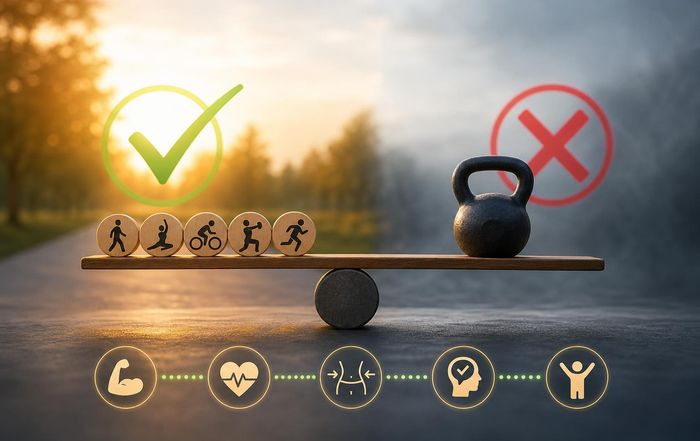
Why Exercise Consistency Beats Workout Intensity
The New Fitness Reality: From Hero Workouts to Habit Systems
The global fitness conversation has shifted decisively away from glorifying extreme, one-off efforts and toward building sustainable, repeatable routines that integrate exercise into daily life. For the happy and fit community around SportyFusion and its readers across North America, Europe, Asia, Africa and South America, this evolution is more than a trend; it is the foundation of long-term performance, health, and resilience in a world that is more demanding, more connected, and more data-driven than ever before. The old narrative that a few brutal workouts each week could compensate for long stretches of inactivity has been steadily dismantled by research from institutions such as Harvard T.H. Chan School of Public Health, which continues to show that regular, moderate activity confers greater cardiovascular and metabolic benefits than sporadic extremes, and by global health authorities like the World Health Organization, which emphasize weekly movement targets achievable only through consistency rather than intensity alone.
In this environment, consistency has become the strategic advantage for athletes, professionals, and organizations alike. For a platform like SportyFusion, which sits at the intersection of fitness, health, performance, and business, the message is clear: the individuals and teams who learn to prioritize reliable, sustainable training patterns over sporadic feats of intensity are the ones who will thrive in sport, in work, and in life.
The Science Behind Consistency: How the Body Adapts Over Time
Modern exercise science, as summarized by organizations such as the American College of Sports Medicine, has repeatedly demonstrated that the human body responds best to progressive, repeated stimuli that allow for adaptation rather than shock. When exercise is frequent but appropriately dosed, physiological systems including the cardiovascular network, neuromuscular pathways, and endocrine responses adjust gradually, leading to measurable improvements in endurance, strength, and recovery capacity. Readers who follow developments in global health policy can see this reflected in guidelines from the U.S. Centers for Disease Control and Prevention, which stress the importance of at least 150-300 minutes of moderate-intensity activity per week, a target that is inherently built on regularity rather than occasional maximal effort.
From a metabolic perspective, consistent training enhances insulin sensitivity, improves lipid profiles, and supports healthy blood pressure far more reliably than sporadic high-intensity bursts that are separated by long periods of sedentary behavior. Research aggregated through platforms like PubMed increasingly indicates that while high-intensity interval training can be an effective tool, its benefits are maximized only when integrated into a structured, week-by-week plan rather than used as a standalone, irregular strategy. For SportyFusion's growing audience of athletes, professionals, and performance-driven individuals, this means that the real competitive edge lies not in how hard one can push on a single day, but in how predictably and thoughtfully one can train across months and years.
Injury Risk, Recovery, and the Hidden Cost of Overdoing It
One of the most compelling arguments for exercise consistency over intensity comes from the field of sports medicine, where practitioners have long observed that injury patterns correlate strongly with spikes in training load. Organizations such as the National Institutes of Health and the National Health Service in the United Kingdom have highlighted how sudden increases in volume or intensity raise the risk of musculoskeletal injuries, stress fractures, and overuse syndromes, particularly in runners, strength athletes, and recreational competitors who attempt to compress weeks of missed activity into a handful of punishing sessions.
For sportyfusion.com readers who follow training and performance insights updated daily, the implication is straightforward: a moderate, consistently applied training plan not only builds capacity but also protects it. Recovery systems, including sleep quality, hormonal balance, and connective tissue resilience, respond much better to predictable workloads than to erratic surges of effort. Resources from Mayo Clinic and Cleveland Clinic have repeatedly emphasized that sustainable training must account for recovery days, deload weeks, and gradual progression to prevent the cumulative fatigue that often precedes significant injury. In high-performance environments, whether professional sport or executive leadership, the cost of time lost to preventable injuries or burnout can be far more damaging than any perceived gains from short-lived intensity.
Consistency, Mental Health, and Cognitive Performance
The mental health dimension of regular exercise has become impossible to ignore by 2026, particularly in a post-pandemic world where hybrid work, digital overload, and social fragmentation have reshaped daily life across regions from the United States and United Kingdom to Japan and South Africa. Studies synthesized by The Lancet and BMJ have shown that individuals who engage in consistent physical activity experience lower rates of depression and anxiety, better stress management, and improved cognitive function compared with those who exercise only intermittently, even if the latter group sometimes engages in more intense sessions.
For SportyFusion's global readership, which includes professionals in demanding sectors from technology to finance to creative industries, this has direct implications for productivity and decision-making. Regular, moderate exercise supports neuroplasticity, enhances blood flow to the brain, and stabilizes mood, all of which contribute to sharper thinking and more resilient leadership. Organizations such as McKinsey & Company and Deloitte have increasingly framed employee well-being and consistent movement as strategic business priorities, linking them to reduced absenteeism, stronger engagement, and improved innovation. Readers interested in how culture and sport intersect can explore these themes further through SportyFusion's culture and social sections, where the human side of performance is examined in depth.
Building Habit Systems: The Psychology of Showing Up
Behind the physiological benefits of consistency lies a powerful psychological engine: habit formation. Behavioral science research, popularized by authors such as James Clear and supported by institutions like Stanford University, has shown that lasting change is rarely the result of singular, heroic efforts and is instead built from small, repeatable actions that become automatic over time. In the fitness context, this means that the most successful athletes and everyday performers design routines that make it easier to start a workout than to skip it, often focusing on simple, low-friction triggers such as a fixed training time, a prepared gym bag, or a pre-committed appointment with a coach or training partner.
For the SportyFusion community, this approach aligns with a broader shift in how people across Europe, Asia, and the Americas think about health and lifestyle. Rather than chasing short-term transformations, readers are increasingly interested in building systems that support movement for decades, not months. Platforms such as Verywell Fit and Psychology Today have highlighted how even ten to fifteen minutes of daily exercise can, over time, reshape identity, reinforcing a self-concept as "someone who trains" rather than "someone who occasionally works out." This identity shift is crucial, because it makes adherence less dependent on motivation, which is inherently volatile, and more grounded in routine, which is inherently stable.
Global Perspectives: Cultural Approaches to Consistent Movement
Around the world, different cultures have long embraced movement as a daily practice rather than a specialized activity reserved for gyms or sports clubs. In Japan, for example, radio calisthenics and workplace stretching routines have historically embedded low-intensity, consistent movement into the workday, while in Scandinavian countries such as Sweden, Norway, and Denmark, the concept of "everyday exercise," including walking, cycling, and outdoor play, is woven into urban design and social norms. Urban planning case studies from OECD and World Economic Forum show that cities prioritizing active transport and green spaces see higher baseline levels of daily physical activity, even among non-athletes.
This global perspective is particularly relevant for SportyFusion's readers in regions like Germany, the Netherlands, and Singapore, where policy, infrastructure, and corporate culture are converging to support regular movement as part of a broader public health and productivity agenda. SportyFusion's original world and news sections increasingly cover how governments and businesses are investing in bike lanes, wellness incentives, and flexible work models that support consistent exercise. These developments underscore a key insight: consistency is not only an individual discipline but also a societal design choice, and countries that build environments supportive of daily movement are likely to see long-term gains in health, performance, and economic resilience.
Technology's Role: From Wearables to AI Coaching
By 2026, the convergence of sports science and technology has made it easier than ever to track, measure, and optimize consistent training. Wearables from companies such as Garmin, Apple, and WHOOP now provide continuous feedback on heart rate variability, sleep quality, and recovery status, enabling athletes and everyday users to adjust their training loads to maintain consistency without tipping into overtraining. Platforms like Strava and Nike Training Club have also refined their algorithms to encourage streaks, progressive plans, and community accountability rather than simply rewarding peak performances.
For SportyFusion, which covers technology, gaming, and sports, the intersection of data and discipline is a core editorial theme. Emerging AI coaching tools, informed by research from organizations like MIT and ETH Zurich, are increasingly capable of analyzing an individual's training history, biometric signals, and lifestyle constraints to recommend realistic, sustainable plans that prioritize adherence over ambition. Corporate wellness platforms, as reported by Forbes and Harvard Business Review, are integrating these tools to support employees in building consistent exercise habits, recognizing that the long-term benefits for engagement and performance far outweigh the cost of implementation.
Business, Brands, and the Economics of Sustainable Fitness
The shift from intensity to consistency is reshaping not only personal training philosophies but also the global fitness and sports business landscape. Leading brands such as Nike, Adidas, and Lululemon have increasingly positioned their products and services around long-term journeys rather than short-term transformations, emphasizing durability, comfort, and everyday performance over purely aesthetic or extreme-performance messaging. Industry analyses from Statista and Euromonitor International highlight how subscription-based training apps, hybrid gym memberships, and at-home equipment models are being designed to support daily use, with interfaces and content that encourage regular engagement instead of sporadic binges.
For SportyFusion's readers in business, entrepreneurship, and brands, this evolution presents both opportunities and responsibilities. Companies that align their offerings with sustainable, evidence-based approaches to health and fitness can build deeper trust with consumers, particularly in markets like the United States, Canada, and Australia, where wellness spending continues to rise. At the same time, there is growing scrutiny from regulators and consumer advocacy groups, including those documented by Federal Trade Commission in the United States and European Commission in the EU, around misleading claims and quick-fix marketing. Platforms like SportyFusion, with its emphasis on ethics and trustworthiness, play a crucial role in highlighting brands and initiatives that genuinely support consistent, long-term well-being rather than exploiting short-lived trends.
Careers, Performance, and the Competitive Edge of Reliability
In a global job market that is increasingly competitive and fluid, consistency in exercise is emerging as a differentiator in professional performance, not because employers are monitoring workouts, but because the habits that sustain regular training are the same habits that support reliable, high-quality work. Research from Gallup and World Economic Forum has linked physical well-being to higher engagement, lower burnout, and more stable productivity across industries, from high-tech sectors in South Korea and Singapore to financial centers in London, New York, and Frankfurt.
Readers exploring SportyFusion's jobs and business coverage will find that leading organizations now treat employee movement as a strategic asset, offering flexible hours, on-site or virtual training sessions, and incentives for consistent participation rather than one-off challenges. In elite sport, this philosophy is even more pronounced. High-performance programs in football, basketball, cycling, and athletics, as documented by bodies such as FIFA, UEFA, and the International Olympic Committee, now structure annual plans that manage load carefully across seasons, emphasizing reliability and availability over isolated peak performances that cannot be sustained. For professionals and athletes alike, the capacity to "show up" in a predictable, prepared state has become a competitive advantage that directly reflects the value of consistent training.
Environment, Ethics, and the Future of Sustainable Movement
The conversation around consistency in exercise is also intersecting with broader ethical and environmental questions that matter deeply to SportyFusion's audience in Europe, Asia, Africa, and the Americas. As awareness grows of the environmental impact of large-scale sporting events, fast-fashion activewear, and energy-intensive fitness facilities, there is a parallel movement toward integrating physical activity into everyday life in low-impact ways, such as active commuting, outdoor training, and community-based sport. Organizations like UN Environment Programme and Global Reporting Initiative are encouraging companies and cities to measure and reduce the environmental footprint of their wellness and sports initiatives, promoting models that support regular, accessible movement without excessive resource consumption.
SportyFusion's environment and social educational sections increasingly feature stories of cities in the Netherlands, New Zealand, and Brazil that are redesigning public spaces to encourage walking, cycling, and community sport, making consistency not only an individual choice but a socially supported norm. Ethical considerations also extend to inclusivity and access, as highlighted by organizations such as UNESCO and Human Rights Watch, which stress that opportunities for regular physical activity must be available across genders, ages, abilities, and socio-economic groups. In this context, the emphasis on consistency over intensity can be a powerful equalizer, because it values daily participation and progression over elite performance, opening the door for more people to benefit from movement throughout their lives.
How We Frame Consistency for a Global, Performance-Driven Audience?
For sportyfusion.com, the priority is to translate this global, research-backed understanding of exercise consistency into actionable insight for readers who care deeply about sport, fitness, health, culture, and performance. Across its verticals, from fitness and health to sports and world, the ace sports hub highlights stories of athletes, teams, and organizations that prioritize sustainable training structures, disciplined routines, and long-term development over short-lived intensity spikes. The editorial stance is grounded in the principles of experience, expertise, authoritativeness, and trustworthiness, drawing on reputable sources such as World Health Organization, Harvard Health Publishing, and leading sports science institutions, while also amplifying the lived experience of coaches, physiologists, and athletes from the United States, United Kingdom, Germany, Japan, South Africa, and beyond.
The evidence is overwhelming: consistency in exercise is not a compromise or a fallback for those who cannot handle intensity; it is the central strategy for unlocking human potential in sport, work, and everyday life. Intensity still has its place, particularly for advanced training cycles and competitive peaks, but it is only effective when built on a robust foundation of regular, sustainable movement. For SportyFusion's subs and readers, the challenge and opportunity are the same: to design lives, careers, and training plans where showing up, day after day, becomes the real measure of strength.