

Why Padel Is Gaining Fans Around the World
OMG Padel has gone from a niche racquet game played in a few Spanish-speaking countries to one of the fastest-growing sports on the planet. Courts are popping up in cities from Miami to Milan and Dubai to Copenhagen, major footballers and tennis stars are investing in clubs, and participation numbers are climbing sharply across Europe, the Middle East, and Latin America. For many active people, padel now sits alongside football, running, and gym training as a regular part of their week. Understanding why this hybrid of tennis and squash is suddenly everywhere requires looking not just at the rules of the game, but at how it fits into modern sports culture, business, and urban lifestyles.
What Exactly Is Padel?
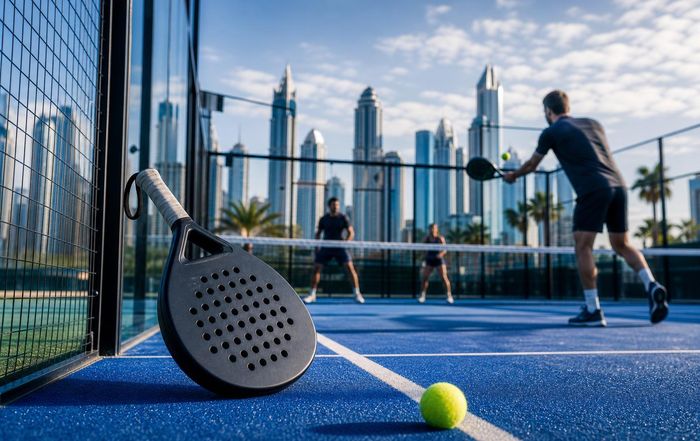
Padel is a racket sport typically played in doubles on an enclosed court about a third smaller than a tennis court. The court is surrounded by glass and mesh walls, and players can use the rebound off these walls in play, similar to squash. Serves are underarm, racquets are solid (with perforations) rather than strung like tennis racquets, and the ball is similar to a tennis ball but slightly lower in pressure. Scoring follows the traditional tennis system of 15-30-40 and best-of-three sets is standard.
The sport's modern form is generally traced back to Enrique Corcuera in Mexico in the late 1960s, but it was in Spain and Argentina that padel really took root. From there, it has spread across Europe and beyond. The International Padel Federation (FIP), the sport's global governing body, now counts dozens of member nations and oversees international competitions and rules. Professional tours such as Premier Padel and the APT Padel Tour have added structure, rankings, and media visibility, while national federations in countries like Spain, Italy, France, Sweden, and the UK are integrating padel into their existing tennis and racket-sport ecosystems.
For people used to traditional racket sports, the immediate impression is that padel feels familiar yet different. It has tennis-style rallies, squash-style use of walls, and a compact court that makes it easier to find playing partners and facilities in dense urban environments. That combination is central to its global rise.
Accessibility: A Sport Most People Can Actually Play
One of the most powerful drivers behind padel's growth is how accessible it is for beginners. Compared with tennis, which can require months of technical work before rallies feel satisfying, padel offers a much faster path to enjoyable play. The smaller court means less ground to cover, the walls keep the ball in play longer, and the solid racquet face makes it easier to make clean contact. Underarm serving also removes a major technical barrier that frustrates many new tennis players.
From a physical standpoint, padel is intense but less intimidating than some other racket sports. Movements tend to be short and explosive rather than long-distance sprints, which appeals to people who already do gym-based fitness work and want a complementary activity that challenges agility, reaction time, and coordination without requiring marathon-level endurance. Recreational players can get a serious workout while still maintaining social conversation between points, which reinforces its appeal as a lifestyle sport rather than a purely performance-focused discipline.
Accessibility is also financial and logistical. In many markets, padel courts can be booked by the hour at prices comparable to five-a-side football pitches, and because it is almost always doubles, the cost is split four ways. Clubs often rent racquets and balls, lowering the entry barrier further. National federations and sports ministries in several countries have highlighted padel as a way to increase physical activity in adults who may not be drawn to traditional team sports, aligning with broader health goals promoted by organizations such as the World Health Organization at who.int and national public-health agencies.
Social, Fun, and Addictive: The Culture Around the Court
Padel's social dimension may be its most distinctive feature. The doubles format, confined court, and long rallies create constant interaction between players. Communication, positioning, and shared strategy are essential, but the sport is also forgiving enough that mixed-ability groups can still have fun. This makes it a natural fit for corporate events, after-work leagues, and community clubs where social connection is as important as competition.
The atmosphere at many padel clubs resembles a hybrid of a boutique gym and a neighborhood café. Facilities often include lounges, co-working spaces, and casual dining, turning matches into social occasions rather than isolated training sessions. This aligns with broader lifestyle trends where exercise is integrated into a wider social routine-meeting friends, networking, or decompressing after work. For multi-sport athletes who already follow sports news and culture, padel offers a way to mix performance and community in one place.
From a psychological perspective, the sport generates frequent "small wins." Because rallies are longer and mistakes are less punishing than in tennis, new players experience more successful shots and points. Behavioral researchers who study exercise adherence, including groups associated with institutions like Harvard T.H. Chan School of Public Health at hsph.harvard.edu and Stanford Medicine at med.stanford.edu, have long emphasized the importance of enjoyment and early success in sticking with a physical activity. Padel's design seems to deliver exactly that, helping explain why many people quickly transition from curious first-timers to weekly regulars.
Urban Design, Limited Space, and the Rise of Compact Sports
Padel also fits neatly into the spatial realities of modern cities. A full-sized tennis court requires significant land, while a padel court is smaller and can be built indoors or outdoors, on rooftops, in converted warehouses, or in underused corners of larger sports complexes. For facility operators and investors, this means higher potential revenue per square meter, especially in dense urban areas where space is at a premium.
The sport's growth parallels other compact formats such as five-a-side football, 3x3 basketball, and urban climbing gyms. City planners and sports-business analysts have noted that these formats cater to time-poor, space-constrained populations seeking high-intensity, short-duration activities. Organizations like UN-Habitat at unhabitat.org and various urban-sport initiatives have documented how reimagining small spaces for active use can support healthier cities. Padel courts can be installed on top of parking structures, in repurposed industrial sites, or as modular units in multi-sport venues, giving municipalities and private developers flexible options.
From a business standpoint, this model looks attractive. Clubs can host leagues, coaching sessions, tournaments, and casual bookings throughout the day, often with digital booking systems and membership apps that appeal to tech-savvy users. Investors from outside traditional racket sports-ranging from real estate groups to hospitality brands-have entered the market, particularly in Europe and the Middle East. This convergence of sport, property, and hospitality has accelerated court construction and raised padel's visibility in urban landscapes.
The Professional Game and Celebrity Effect
While grassroots interest is essential, the global surge in padel has also been fuelled by professionalization and celebrity involvement. The International Padel Federation at fipadel.com has worked to standardize rules and oversee world championships, while professional tours have attracted sponsorship from major sportswear, equipment, and beverage companies. High-quality broadcasts, improved camera angles tailored to the enclosed court, and streaming partnerships have made elite padel more watchable and shareable than ever.
Football stars and other elite athletes have amplified the trend by investing in clubs or publicly endorsing the sport. These figures bring not just capital but also media attention and aspirational value. Their involvement reinforces padel's image as a modern, stylish activity that fits into a broader sports culture ecosystem, similar to how basketball courts, skate parks, and surf breaks carry cultural significance beyond the technical aspects of the sport itself.
For aspiring athletes, the professional scene provides a clear pathway: junior competitions, national circuits, and international events. For casual players, it offers role models and storylines to follow, from tactical innovations to rivalries between top pairs. Sports broadcasters such as Eurosport at eurosport.com and global outlets like ESPN at espn.com and BBC Sport at bbc.com have begun to cover major tournaments, further legitimizing padel on the world stage.
Health, Performance, and Cross-Training Benefits
From a performance and health perspective, padel offers a mix of aerobic and anaerobic demands. Players perform repeated short sprints, lateral movements, lunges, and jumps, interspersed with brief recovery periods between points. This intermittent pattern resembles high-intensity interval training, which research from organizations like the American College of Sports Medicine at acsm.org and Mayo Clinic at mayoclinic.org has linked to improvements in cardiovascular fitness, insulin sensitivity, and body composition.
Coordination, reaction time, and decision-making are also heavily involved. Players must read ball trajectories off walls, adjust footwork rapidly, and communicate constantly with their partner. Coaches often highlight how padel sharpens spatial awareness and anticipatory skills, which can transfer beneficially to other sports. For athletes in football, hockey, or basketball, padel can serve as low-impact cross-training that keeps them sharp in the off-season without the full-contact risk of their primary sport.
Injury risk does exist-particularly to the ankles, knees, and shoulders-but the underarm serve and smaller court can reduce some of the repetitive strain seen in high-level tennis. Proper warm-up, strength work, and technique coaching remain important, especially as participation ages broaden and more people take up the sport later in life. For many recreational players, padel fits into a balanced training week alongside gym sessions, running, or cycling, contributing to overall movement diversity and long-term athletic health.
Technology, Booking Apps, and the Digital Layer
Padel's rise has coincided with-and benefited from-the digital transformation of recreational sport. Booking a court, finding partners, and managing league fixtures have been streamlined by dedicated apps and platforms. In many cities, players can join WhatsApp or Telegram groups, or use specialized padel apps, to match with others at similar levels, reducing one of the main friction points in racquet sports: finding suitable opponents.
This digital layer dovetails with broader trends in technology and fitness. Wearable devices from companies like Garmin at garmin.com and Apple at apple.com can track heart rate, movement patterns, and workload during matches. Some clubs are experimenting with camera-based analytics and smart courts that capture statistics such as shot speed, rally length, and positional heat maps. While still emerging, these tools appeal to performance-oriented players and coaches who want data-driven feedback.
Social media has also played a significant role. Short, highlight-friendly rallies, trick shots off the glass, and dramatic smashes lend themselves to platforms like Instagram, TikTok, and YouTube. Influencers and coaches share drills, tips, and match clips, lowering the learning barrier for new players worldwide. This blend of real-world play and online content reinforces padel as both a participatory and spectator-friendly sport, especially among younger demographics who move fluidly between digital and physical spaces.
The Business Boom-and Growing Pains
The global padel boom has created a vibrant business ecosystem around court construction, equipment, coaching, and event management. Specialized manufacturers produce court structures, glass panels, artificial turf, and lighting systems. Major sportswear brands and newer padel-specific companies offer racquets, shoes, and apparel tailored to the sport's unique demands. Entrepreneurs are launching franchise-style clubs and negotiating partnerships with hotels, resorts, and residential developments that see padel as a value-adding amenity.
However, rapid growth brings risks. In some markets, there are concerns about overbuilding, with too many courts arriving too quickly relative to sustained demand. Operators must balance introductory offers and memberships with long-term financial sustainability, particularly in regions where padel is still unfamiliar to the general population. Analysts at outlets like Forbes at forbes.com and Financial Times at ft.com have noted parallels with earlier booms in fitness boutiques and indoor cycling studios, where early enthusiasm sometimes outpaced the underlying business fundamentals.
Regulation and governance are also evolving. National federations must coordinate with tennis bodies, local authorities, and international organizations to manage rankings, coaching certifications, and facility standards. Clear pathways for youth development, officiating, and safeguarding are needed as participation expands. For investors and club owners, understanding these regulatory frameworks and aligning with recognized bodies such as the International Padel Federation can help ensure credibility and long-term viability.
Environmental and Space-Use Considerations
As with any rapidly expanding sport, padel's environmental footprint is attracting attention. Courts typically use artificial turf, glass, steel, and lighting systems that consume energy and materials. In regions emphasizing sustainable development, questions are being raised about how to integrate padel into broader environment and climate goals.
Some operators are responding by using LED lighting, exploring recycled or lower-impact materials, and integrating solar panels or energy-efficient building designs. Organizations such as the International Olympic Committee at olympics.com and sustainability-focused groups in sport have highlighted the importance of responsible facility construction and lifecycle planning. Because padel courts can be modular and relocatable, they may offer advantages over more permanent concrete-heavy structures, but careful planning is still essential to avoid underused or abandoned facilities if local demand fluctuates.
Space-use planning is equally important. Municipalities need to weigh padel against other potential uses for scarce urban land, from playgrounds and green spaces to housing. Ideally, padel courts are integrated into multi-use complexes that serve diverse populations rather than displacing community resources. In some cities, rooftop installations and conversions of underutilized parking areas demonstrate how padel can coexist with other urban priorities when thoughtfully designed.
How Padel Fits into a Modern Active Lifestyle
For many people, padel's biggest selling point is how easily it fits into a busy, modern life. Matches typically last 60-90 minutes, can be scheduled after work or on weekend mornings, and provide a full-body workout combined with social interaction. This aligns with broader trends in performance and well-being, where athletes and recreational exercisers alike seek activities that tick multiple boxes at once: fitness, fun, friendship, and a sense of progress.
The sport also accommodates a wide age range. Juniors can start with softer balls and simplified rules, adults can play at varying intensity levels, and older participants can adapt their style to prioritize positioning and touch over raw power. Mixed-gender and mixed-ability matches are common at recreational level, which helps families and friend groups participate together. For those who already follow global world and news reporting of sport, padel offers another lens through which to experience international competition and cross-cultural connection.
As with any physical activity, balance matters. Integrating strength training, mobility work, and appropriate recovery can help players enjoy padel long term while minimizing injury risk. For multi-sport athletes, thoughtful scheduling prevents overload, especially when combining padel with high-impact running or field sports. But for many, the sport's very appeal is that it rarely feels like a chore. The combination of tactical depth, social energy, and constant action makes time on the court pass quickly.
Where Padel Might Go Next
Padel's future will depend on how it navigates several key questions: sustainable facility growth, coherent global governance, integration with school and university sports, and its relationship with established racket sports. Some tennis traditionalists worry about competition for court space and investment, while others see padel as a gateway that can bring new participants into the broader racket-sport family. In many clubs, the two coexist, with shared membership models and cross-promotion.
There is also the question of global reach. While the sport is booming in parts of Europe, the Middle East, and Latin America, large markets in North America, Asia, and Africa are still in earlier stages of adoption. Federations, brands, and media partners will need to tailor their approaches to local cultures, climates, and sporting traditions. If padel continues to position itself as inclusive, social, and adaptable, it has a strong chance of embedding itself in urban sports infrastructure worldwide.
For active sporty people deciding whether to give it a try, the calculus is simple. Padel is easy to start, hard to master, and designed around shared experience. It offers a bridge between competitive sport and social gathering, between fitness training and play. In an era when many are seeking meaningful, enjoyable ways to move more and connect with others, that combination goes a long way toward explaining why padel is gaining fans around the world-and why its glass-walled courts are likely to become an increasingly familiar sight in cities across the globe.