

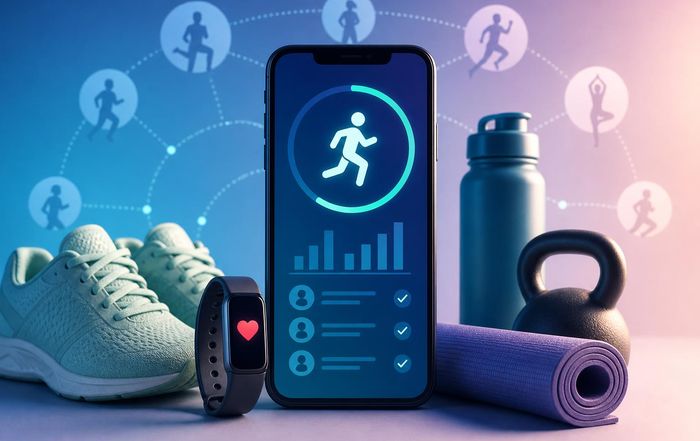
How Digital Fitness Challenges Boost Motivation
The New Competitive Arena: From Gyms to Global Digital Challenges
Digital fitness challenges have evolved from niche experiments into a central pillar of how millions of people across the United States, Europe, Asia and beyond structure their training, measure their progress and stay accountable to long-term health goals. What began as simple step-count competitions on early wearables has matured into a complex ecosystem of app-based leagues, corporate wellness tournaments, hybrid in-person and virtual races, and AI-personalized performance quests that now shape the daily routines of both recreational movers and serious athletes alike. On this top sport site, where sport, culture, technology and performance intersect, this shift is not viewed as a passing trend but as a structural change in how individuals and organizations think about fitness, motivation and human potential.
The digitalization of fitness challenges is unfolding alongside broader transformations in global health and work. The World Health Organization continues to warn about rising physical inactivity and lifestyle-related diseases, especially in high-income regions, while remote and hybrid work models in the United States, the United Kingdom, Germany, Canada, Australia and other advanced economies have altered commuting patterns and daily energy expenditure. At the same time, advances in connected devices, 5G networks and cloud computing have made it possible to deliver real-time performance feedback, social competition and expert coaching to individuals in Tokyo, São Paulo, Johannesburg and Stockholm simultaneously. Against this backdrop, digital fitness challenges have emerged as one of the most powerful behavioral tools to bridge the gap between intention and action, transforming abstract health aspirations into concrete, trackable and socially reinforced commitments.
For SportyFusion, which explores the convergence of sport, technology and culture across its dedicated sections on fitness, health, sports and performance, these developments underscore a central editorial theme: digital systems are not replacing human motivation; they are reconfiguring it, amplifying it and, when designed responsibly, making it more sustainable and inclusive.
Behavioral Science Behind Digital Fitness Motivation
The effectiveness of digital fitness challenges is not accidental; it is grounded in well-established behavioral science, particularly frameworks such as Self-Determination Theory, habit formation research and social comparison theory. By translating these concepts into app interfaces, reward structures and community features, leading platforms have managed to keep users engaged beyond the typical drop-off point that plagues many health initiatives.
Self-Determination Theory, developed by researchers at institutions such as University of Rochester and widely referenced in contemporary sports psychology, emphasizes three psychological needs: autonomy, competence and relatedness. Digital challenges that allow participants to choose their preferred activity type, intensity level and schedule support autonomy; progress dashboards, streak counters and personalized feedback enhance perceived competence; team-based formats, leaderboards and group chats increase relatedness. When these three needs are met, individuals are more likely to internalize healthy behaviors and sustain them over time. Those interested in the underlying psychological frameworks can explore how motivation and behavior change are explained by leading research organizations.
Habit formation research, including work highlighted by University College London and other European institutions, shows that consistent repetition in a stable context is key to embedding new routines. Digital challenges operationalize this insight by converting daily exercise into streaks, badges and incremental milestones that reward consistency over perfection. For example, a 30-day mobility challenge in a fitness app may encourage users to complete at least 10 minutes of stretching each day, with visual reinforcement and social recognition for each completed session. Over several weeks, this repeated behavior, supported by push notifications and calendar integration, can become an automatic part of the morning or evening routine, reducing reliance on willpower alone.
Moreover, social comparison, when managed carefully, can be a potent motivator. Research summarized by organizations such as Harvard Medical School has shown that seeing the performance of peers can either inspire or discourage, depending on context and framing. Digital fitness challenges that emphasize personal progress, relative improvement and supportive team dynamics rather than harsh rankings are more likely to sustain motivation across diverse ability levels. Platforms that integrate educational content on healthy goal setting and sustainable exercise habits further help users avoid overtraining or burnout, especially those new to structured fitness.
Technology, Data and the New Metrics of Performance
The technological backbone of digital fitness challenges has grown significantly more sophisticated by 2026. What once relied on crude step counts and self-reported workouts now draws on high-resolution data from smartwatches, connected bikes and treadmills, smart rings, heart-rate monitors and even AI-enhanced camera systems embedded in smartphones and home gyms. This data revolution has redefined what "performance" means for recreational and elite participants alike, and it is reshaping editorial coverage across SportyFusion's technology and business channels.
Wearables from companies such as Apple, Garmin, Samsung and WHOOP now track not only steps and heart rate but also heart rate variability, sleep stages, skin temperature and recovery indices, enabling challenges that focus on holistic well-being rather than just raw volume of exercise. Learn more about how advanced wearables are transforming health monitoring. In Europe and Asia, where cycling and running cultures are deeply embedded, platforms like Strava and Zwift have turned GPS and power meter data into the foundation for complex multi-week challenges that reward elevation gain, time in specific training zones and consistent adherence to periodized training plans.
At the same time, AI and machine learning are being used to personalize challenge recommendations based on historical performance, injury risk indicators and stated goals. For example, a user in Singapore who has recently completed a high-intensity interval training series might be nudged toward a recovery-focused mobility and low-intensity cardio challenge, while an experienced runner in Canada who has plateaued in speed work could be invited into a performance-oriented challenge that emphasizes tempo runs and strength training. Researchers at institutions such as MIT and ETH Zurich continue to refine algorithms that can predict performance trends and tailor training loads, and these insights are increasingly embedded in consumer-facing platforms.
For SportyFusion, which regularly examines the intersection of data, sport and culture on its world and news pages, the central question is not whether data-driven challenges work-they clearly do for many users-but how to ensure that the metrics being optimized truly serve long-term health, performance and enjoyment rather than short-term vanity or platform engagement alone. This requires transparency about data use, evidence-based challenge design and a commitment to ethical technology development.
Social Connection, Culture and Cross-Border Communities
One of the most powerful drivers of motivation in digital fitness challenges is the sense of belonging they create. In 2026, it is common for an amateur triathlete in Melbourne, a desk-based professional in Berlin and a student in Seoul to participate in the same global challenge, sharing progress updates, training tips and encouragement in real time. The social infrastructure of platforms like Strava, Nike Run Club, Peloton and Adidas Running has effectively turned fitness into a global cultural conversation, one that aligns closely with the editorial focus of SportyFusion's culture and social coverage.
Cultural norms still shape how challenges are designed and received in different regions. In the United States and Canada, competitive step challenges and weight-loss tournaments remain popular in corporate wellness programs, though many organizations are increasingly emphasizing inclusive, health-focused metrics such as minutes of activity or improvements in cardiovascular fitness. In Scandinavia, where outdoor activity and environmental consciousness are deeply ingrained, challenges that combine physical activity with sustainability-such as cycling-to-work campaigns or plogging (jogging while picking up litter)-have gained traction, supported by public agencies and NGOs. Those interested in the policy context can explore how European institutions promote active and sustainable lifestyles.
In Asia, digital fitness challenges often intersect with gaming culture, particularly in markets like South Korea, Japan and Singapore where e-sports and mobile gaming are mainstream entertainment. Gamification elements such as collectible digital badges, seasonal "battle passes" for fitness content and narrative-driven quests are increasingly common, and they resonate with younger audiences who are already familiar with these mechanics from platforms like Steam and PlayStation Network. The rise of "exergaming" and VR-based fitness experiences has also created new forms of challenge, discussed frequently in SportyFusion's gaming section, where users compete in mixed-reality obstacle courses or rhythm-based workouts that blend physical exertion with immersive storytelling.
The global nature of these communities has important cultural implications. Digital fitness challenges can democratize access to supportive networks, particularly for individuals in rural areas, those with limited access to traditional gyms or sports clubs, or those who feel marginalized in conventional fitness environments. However, they also risk exporting narrow beauty standards or performance ideals if not designed with diversity and inclusion in mind. Organizations such as UN Women and UNESCO have highlighted the importance of promoting inclusive sport and physical activity, and responsible challenge designers increasingly draw on these guidelines to ensure that imagery, language and reward structures do not inadvertently exclude or stigmatize participants.
Corporate Wellness, Business Strategy and Employer Branding
Digital fitness challenges have also become a strategic tool in corporate wellness and employer branding, especially as organizations compete for talent across North America, Europe and Asia-Pacific. For employers featured in SportyFusion's jobs and business coverage, the question is no longer whether to invest in wellness, but how to structure programs that genuinely support employee health while aligning with broader business objectives.
Global companies, from Microsoft and Google to financial institutions in London and manufacturing firms in Germany, have implemented app-based challenges that encourage employees to accumulate activity minutes, complete mindfulness sessions or participate in team-based step competitions. These initiatives are often integrated with health insurance incentives, charitable donations or internal recognition programs. Research from organizations such as the World Economic Forum and OECD has highlighted that well-designed wellness programs can improve productivity and reduce absenteeism, but they also warn against superficial or coercive approaches that pressure employees to participate or disclose sensitive health data.
The most effective corporate digital challenges in 2026 share several characteristics. They offer multiple pathways to participation, recognizing that employees in different life stages and with different abilities will engage differently with running, cycling, yoga, strength training or walking. They focus on inclusive metrics, such as consistency and personal improvement, rather than raw performance. They integrate educational content on topics like sleep hygiene, stress management and nutrition, often drawing on evidence-based resources from organizations like the Mayo Clinic or Cleveland Clinic. Those seeking to design or benchmark such programs can learn more about sustainable business practices in workplace health.
For SportyFusion, which tracks brand strategies and consumer expectations in its brands and lifestyle sections, the key story is that digital fitness challenges have become a visible signal of corporate culture. Employees and job candidates increasingly evaluate whether wellness initiatives feel authentic, inclusive and respectful of privacy, or whether they are primarily optics-driven campaigns. Employers that treat digital challenges as one component of a broader health-supportive environment-alongside flexible schedules, ergonomic workspaces and mental health support-are more likely to earn trust and long-term engagement.
Ethics, Privacy and Responsible Design
As digital fitness challenges scale globally and integrate ever more granular health data, ethical considerations have moved to the forefront. The same features that make challenges motivating-continuous monitoring, social sharing, leaderboards and detailed analytics-can also generate privacy risks, social pressure and unintended health consequences if not managed carefully. This is a core theme across SportyFusion's ethics and environment reporting, where technology is examined through the lens of long-term societal impact.
Data privacy is a central concern. Health and fitness data, particularly when combined with location information and social graphs, can reveal sensitive details about individuals' routines, conditions and vulnerabilities. Regulators in the European Union, through frameworks such as the General Data Protection Regulation (GDPR), and in countries like Canada and Australia, have established strict rules on data consent, storage and cross-border transfer. Users and organizations deploying digital challenges are increasingly advised to review privacy best practices and regulatory guidance to ensure compliance and protect participants.
Ethical design also involves recognizing the potential for unhealthy competition, overtraining and body image issues. If challenges reward only high-intensity performance, extreme weight loss or relentless streaks, they can push vulnerable individuals toward injury or disordered behavior. Responsible platforms are beginning to incorporate safeguards such as rest-day reminders, educational prompts about recovery, optional anonymity in leaderboards and mechanisms for users to flag or adjust challenges that feel misaligned with their health status. Medical and sports science organizations, including American College of Sports Medicine, provide evidence-based guidelines on safe exercise progression, which can inform challenge parameters.
Finally, environmental ethics are emerging as a subtle but important dimension. The servers powering large-scale digital platforms consume energy, and hardware production for wearables has environmental footprints. Some organizations and events are beginning to pair digital fitness challenges with sustainability commitments, such as carbon offset programs, eco-friendly merchandise or support for local green initiatives. This alignment between personal health and planetary health is a growing topic in SportyFusion's environment and world coverage, emphasizing that the future of fitness must be not only digitally enabled and motivationally effective but also environmentally responsible.
Integrating Digital Challenges into Holistic Training and Life
For readers of SportyFusion, many of whom are already deeply engaged with sport, fitness and performance, the central question is how to integrate digital challenges into a broader training and life strategy rather than allowing them to dictate behavior in isolation. The most effective use of these tools by athletes, coaches and recreational movers in 2026 reflects a balance between external structure and internal listening, between social accountability and personal autonomy.
Coaches and sports scientists increasingly recommend that digital challenges be aligned with periodized training plans, ensuring that competitive phases are balanced with base-building and recovery blocks. For example, a runner in London preparing for a marathon might use a 12-week digital challenge that mirrors their training cycle, incorporating tempo runs, long runs and strength sessions, rather than jumping into random weekly competitions that could disrupt carefully planned workloads. Educational resources from institutions like World Athletics and World Triathlon on evidence-based training principles can help athletes and recreational participants evaluate whether a given challenge supports or undermines their goals.
For individuals using digital challenges primarily for general health, experts emphasize the importance of variety and enjoyment. Rotating between cardio-focused, strength-focused and mobility-focused challenges, and occasionally participating in community or charity events, can prevent boredom and reduce injury risk. Integrating digital goals with offline habits-such as active commuting, walking meetings or family hikes-helps ensure that fitness remains embedded in everyday life rather than confined to app-based tasks. Those seeking practical guidance can explore SportyFusion's coverage on training and health, where coaches and practitioners share strategies for sustainable, evidence-informed routines.
Ultimately, digital fitness challenges are tools, not masters. When used thoughtfully, they can provide structure, feedback and community that significantly enhance motivation and adherence. When used uncritically, they can become sources of pressure or distraction. The role of trusted platforms like SportyFusion, alongside reputable health organizations and academic institutions, is to help users navigate this landscape with discernment, grounding decisions in evidence and long-term well-being.
The Road Ahead: From Challenges to Lifelong Digital Companions
Looking toward the latter half of the 2020s, digital fitness challenges are likely to evolve from discrete, time-bound events into components of more continuous, adaptive health ecosystems. Advances in AI coaching, biometric sensing and interoperability standards will enable platforms to act as lifelong companions, adjusting goals and challenge formats based on aging, changing life circumstances and evolving health needs. For example, a user who engages with digital challenges in their 20s for competitive performance may, in their 40s or 50s, shift toward longevity-focused goals such as maintaining muscle mass, joint health and cardiovascular resilience, with the same platform supporting this transition seamlessly.
Healthcare systems in countries such as the United States, the United Kingdom, Germany and Singapore are already experimenting with integrating activity data into preventive care programs, and insurers are exploring how verified participation in evidence-based digital challenges might inform personalized premiums or rewards. Organizations like the World Health Organization and national public health agencies will play a critical role in establishing guidelines and safeguards as these models develop, ensuring that digital health tools are used to reduce, not exacerbate, health inequalities.
For the team here, whose daily editorial mission spans sports, fitness, technology, business and culture, the rise of digital fitness challenges is a lens through which broader societal shifts can be understood. It reveals how individuals across continents are renegotiating their relationship with movement, work, community and technology. It highlights the importance of expertise, evidence and ethics in designing systems that touch intimate aspects of daily life. And it underscores a simple but powerful truth: motivation is not a fixed trait but a dynamic state that can be nurtured, supported and sustained when digital innovation is guided by human-centered values.
As seasons change, the most successful digital fitness challenges will be those that respect the complexity of human motivation, leverage cutting-edge technology responsibly and remain anchored in the lived realities of participants from New York to Nairobi, from Berlin to Bangkok and from Sydney to São Paulo. In that evolving landscape, readers and partners of SportyFusion.com are not just observers; they are active co-creators of a new era in global fitness culture, where digital challenges serve as catalysts for healthier, more connected and more resilient lives.