

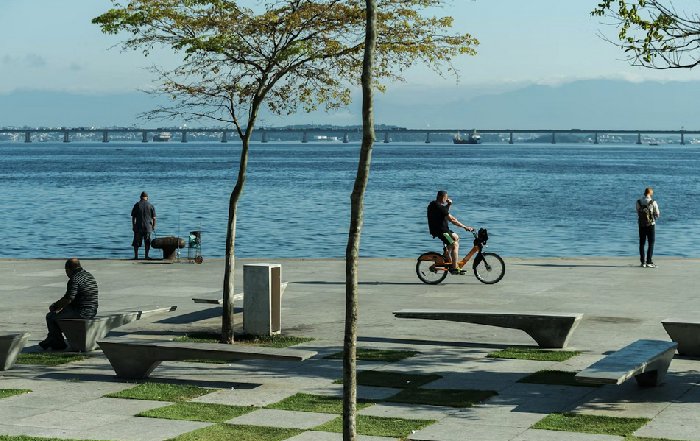
Outdoor Fitness Spaces Redefining Urban Life in 2026
Cities as High-Performance, Open-Air Training Grounds
Now outdoor fitness spaces have shifted from being experimental amenities in a handful of flagship parks to becoming essential components of mainstream urban strategy, influencing how residents across North America, Europe, Asia, Africa and South America move, work, socialize and recover throughout the day. Waterfront calisthenics parks, rooftop running circuits, and community workout trails are no longer outliers; they are now central to how forward-looking cities define quality of life, economic competitiveness and public health. For SportyFusion and its global readership, which engages deeply with fitness, health, technology, business and lifestyle, this transformation is not a passing design trend but a structural reconfiguration of urban living and the sports economy.
The acceleration of this movement has been driven by the lasting behavioural legacy of the COVID-19 pandemic, rising awareness of the health and economic costs of sedentary lifestyles, rapid advances in sports technology and data, and a generational shift in expectations about what cities should provide. Urban residents in the United States, United Kingdom, Germany, Canada, Australia, France, Italy, Spain, the Netherlands, Switzerland, China, the Nordics and beyond increasingly view access to safe, inspiring outdoor training environments as a baseline requirement, comparable to public transport or digital connectivity. As the World Health Organization continues to underline the global burden of physical inactivity and non-communicable diseases, and as leading cities embed movement into zoning codes, transport plans and climate strategies, outdoor fitness spaces have emerged as strategic infrastructure rather than discretionary amenities. In this context, SportyFusion's editorial mission-to connect sport, culture and innovation for a global audience-places the platform in a distinctive position to interpret how these spaces are reshaping urban life in 2026.
Health, Performance and the Science of Training Outdoors
The rise of outdoor fitness is anchored in a substantial and expanding evidence base from sports science, public health and environmental psychology. Guidance from the World Health Organization and national agencies such as the U.S. Centers for Disease Control and Prevention consistently shows that regular physical activity reduces the risk of cardiovascular disease, type 2 diabetes, depression and several cancers, while also improving sleep, cognitive function and workplace productivity. Yet a significant share of adults in regions as diverse as North America, Europe and East Asia still fail to meet recommended activity levels, often constrained by time pressures, long commutes, high membership costs and built environments that privilege cars over people. By embedding training options directly into streetscapes, waterfronts and residential precincts, outdoor fitness spaces remove friction from daily routines, turning commutes, lunch breaks and school runs into opportunities for movement.
Beyond the general benefits of being active, a growing body of research points to distinct advantages associated with exercising in natural or semi-natural outdoor environments. Work highlighted by institutions such as Harvard T.H. Chan School of Public Health and University College London suggests that exposure to greenery and water is associated with lower cortisol levels, improved mood, better attention and higher self-reported well-being, even after short periods. This "green exercise" effect appears to lower perceived exertion, enabling individuals to train at higher intensities while feeling less fatigued, a dynamic that is especially relevant for performance-focused readers who turn to SportyFusion's training and performance coverage for insights on marginal gains.
Global professional bodies such as the American College of Sports Medicine and public health systems including the UK National Health Service now explicitly promote accessible outdoor activity-brisk walking, park-based strength circuits, bodyweight calisthenics and mobility work-as core components of preventive care. The most effective outdoor fitness spaces therefore do not simply replicate indoor gyms in open air; instead, they are designed as inclusive performance ecosystems that accommodate graded intensity, universal access, intuitive wayfinding and perceived safety. This allows a wide spectrum of users-from office workers seeking a 20-minute functional session, to esports athletes cross-training for cognitive endurance, to older adults managing arthritis or cardiovascular risk-to participate in ways that feel both aspirational and achievable. For the SportyFusion audience, which consistently seeks credible, evidence-based guidance, this convergence of health science and public space design reinforces the legitimacy of outdoor training as a foundation for long-term performance.
Design Innovation: From Static Installations to Smart Ecosystems
The design language of outdoor fitness has evolved dramatically since the early 2010s, when many cities installed a handful of static machines on concrete pads, often without shade, programming or clear signage. By 2026, leading municipalities and private developers collaborate with sports scientists, landscape architects and digital product designers to create layered environments that integrate movement, play, recovery and social interaction in a coherent narrative. In Copenhagen, Amsterdam and Melbourne, for example, outdoor fitness zones now combine calisthenics rigs, sprint tracks, plyometric platforms, mobility stations, climbing structures and balance elements, woven into biodiverse planting schemes that support pollinators, manage stormwater and mitigate heat.
Technology is central to this shift. Industry analysis from organizations such as McKinsey & Company and Deloitte documents the rapid expansion of the global wellness economy and the fusion of digital coaching with physical infrastructure. In many new installations, QR codes on equipment link to video tutorials hosted on streaming platforms or city apps, while Bluetooth-enabled sensors track repetitions, time under tension and heart rate, integrating seamlessly with wearables and training platforms. Smart lighting adjusts brightness and color temperature based on time of day and occupancy, and some pilot projects in Europe and Asia use computer vision to monitor usage patterns, informing maintenance cycles and design refinements. For readers who follow sports and technology reporting at SportyFusion, these spaces function as living laboratories for human performance analytics and user-centric design.
The social architecture of these environments is equally important. Research from institutions such as Stanford University and University of Oxford has shown that social support and a sense of belonging significantly increase adherence to exercise programs over time. Contemporary outdoor fitness spaces therefore integrate amphitheater-style steps for group classes, shaded seating for informal gatherings, and adjacent cafés or co-working pods that encourage people to stay before and after sessions. Morning bootcamps, lunchtime mobility breaks for nearby offices and evening calisthenics meetups create rhythms of use that reinforce community identity. In dense cities from New York and Toronto to Tokyo and Singapore, where loneliness and social isolation are increasingly recognized as public health challenges, these spaces serve as civic anchors as much as training venues, a dynamic that SportyFusion continues to track across its social and culture coverage.
The Emerging Outdoor Fitness Economy and Brand Landscape
Outdoor fitness is also reshaping the economic landscape of cities and the strategic priorities of global brands. In major markets including the United States, United Kingdom, Germany and Australia, real estate developers now treat outdoor training infrastructure as a core element of value creation in mixed-use projects, business districts and residential communities. Research and market commentary from firms such as JLL and CBRE indicate that health-centered placemaking-incorporating running loops, active rooftops, pocket gyms and recovery zones-can enhance asset attractiveness, support higher occupancy and contribute to talent retention for corporate tenants.
For global sportswear and equipment companies such as Nike, Adidas, Under Armour and Puma, the proliferation of outdoor fitness spaces both disrupts and expands traditional business models. Consumers increasingly prefer flexible, hybrid routines that blend outdoor sessions, home workouts and boutique studios, challenging legacy gym-centered distribution and marketing strategies. At the same time, the city itself has become a medium for brand storytelling, with companies sponsoring community workout zones, integrating digital coaching platforms into public equipment and using urban fitness events as launchpads for apparel, footwear and connected devices. Readers can explore how these dynamics are reshaping the competitive landscape through SportyFusion's dedicated brands section, where the interplay between physical spaces, digital ecosystems and brand purpose is a recurring theme.
Corporate wellness strategies further amplify demand for high-quality outdoor fitness infrastructure. As employers in sectors ranging from technology and finance to manufacturing and healthcare compete for talent in hubs such as San Francisco, London, Berlin, Singapore and Toronto, proximity to attractive, safe and data-enabled outdoor training environments is increasingly viewed as part of a compelling workplace offer. The World Economic Forum and OECD have repeatedly emphasized the relationship between employee well-being, productivity and macroeconomic resilience, and employers are responding by partnering with municipalities, universities and developers to co-fund or program outdoor fitness zones near offices, campuses and innovation districts. For readers monitoring jobs and workplace trends via SportyFusion, these developments illustrate how talent strategies, urban design and health policy are converging around the shared objective of sustaining high performance in a volatile global economy.
Culture, Identity and the Global Language of Movement
Outdoor fitness spaces have also become cultural stages where local identity and global trends intersect. In cities across Europe and North America, calisthenics parks and street workout zones double as performance arenas where athletes showcase advanced routines that spread rapidly across platforms like YouTube, TikTok and Instagram, influencing youth culture from Los Angeles and New York to Madrid, Stockholm and Amsterdam. These performances blend sport, music, fashion and digital media, turning public spaces into content studios and informal talent incubators, a phenomenon that resonates strongly with SportyFusion's audience at the intersection of sports, culture and lifestyle.
In Asian cities such as Seoul, Tokyo, Singapore and Bangkok, outdoor fitness areas often integrate traditional movement practices with contemporary design and technology. Tai chi zones in Chinese parks, K-pop dance rehearsal areas in Korean plazas, and yoga terraces in Indian and Southeast Asian developments illustrate how public training environments can bridge generations and subcultures while reinforcing local heritage. Organizations such as UN-Habitat and the World Bank have highlighted the role of inclusive public spaces in fostering social cohesion, trust and safety, particularly in diverse, high-density cities. When outdoor fitness zones are co-designed with local communities, programmed with culturally relevant activities and supported by accessible transit, they can become powerful tools for integration rather than exclusion.
In regions such as South Africa, Brazil and parts of Southeast Asia, outdoor fitness initiatives are increasingly linked to youth development and crime prevention strategies. Community-led projects supported by entities like UNICEF, local NGOs and municipal authorities use open-air training zones, football pitches and multi-sport courts as hubs for mentorship, life-skills education and entrepreneurship. These spaces provide young people with alternatives to high-risk environments, connecting them to coaches, role models and pathways into sport, creative industries or social enterprise. For readers following world and news coverage on SportyFusion, such initiatives demonstrate that investment in outdoor fitness infrastructure can deliver returns in social stability, opportunity creation and long-term human capital.
Sustainability and Climate-Resilient Urban Performance
As climate pressures intensify, cities are increasingly designing outdoor fitness spaces as multi-functional environmental assets that contribute to resilience as well as recreation. Leading examples from Paris, Rotterdam, Vancouver and Singapore show how training infrastructure can be embedded within green corridors, stormwater systems and heat-mitigation strategies. Permeable running tracks, shaded calisthenics areas, bioswales and native planting are used to manage flood risk, reduce the urban heat island effect and support biodiversity, while simultaneously providing more comfortable microclimates for year-round exercise. Readers interested in the intersection of sport, climate and urban design can explore SportyFusion's environment reporting for deeper analysis of these integrated approaches.
Global networks such as the C40 Cities Climate Leadership Group and ICLEI - Local Governments for Sustainability advocate for active mobility and outdoor recreation as core components of climate-aligned urban planning. Cycling infrastructure that doubles as commuting and training routes, riverfront promenades that combine flood protection with running and walking paths, and rooftop gardens designed for yoga and functional training all exemplify how fitness infrastructure can support both mitigation and adaptation goals. In Nordic countries including Sweden, Norway, Denmark and Finland, outdoor fitness spaces are increasingly designed for all-season use, with lighting, wind protection and surface technologies that remain safe in rain, snow and ice, thereby sustaining active lifestyles in challenging climates.
From a finance and policy perspective, the integration of health, environment and social outcomes in outdoor fitness projects is attracting interest from green bond issuers, impact investors and multilateral institutions. Organizations such as the World Resources Institute and International Energy Agency have underscored the economic value of compact, walkable and activity-friendly cities in reducing emissions, healthcare costs and infrastructure strain. For the SportyFusion community, which spans business, ethics and lifestyle, this convergence reinforces the view that supporting active, low-carbon urban living is no longer a niche sustainability initiative but a core expectation of responsible leadership.
Connected Training, Data and the AI-Enhanced City
By 2026, the boundary between digital and physical training environments has become increasingly porous, with outdoor fitness spaces functioning as nodes in a broader connected performance ecosystem. Wearables from companies such as Apple, Garmin and Fitbit now integrate advanced heart-rate analytics, GPS, environmental sensors and AI-driven coaching capabilities, enabling users to receive personalized feedback while running through parks, climbing urban staircases or training on waterfront rigs. Platforms like Strava and Zwift continue to blur the line between outdoor and virtual competition, while esports organizations refine cross-training protocols that use outdoor conditioning to enhance cognitive performance, reaction time and resilience, a topic that features prominently in SportyFusion's gaming and performance content.
Urban planners and public health agencies are beginning to harness anonymized data from wearables, mobile apps and connected equipment to understand how, where and when residents move, and to identify inequities in access to high-quality environments. Policy guidance from the OECD and the European Commission stresses the need for robust data governance, privacy protections and transparent frameworks, but when managed responsibly, these insights can guide more equitable investment in underserved neighborhoods, optimize maintenance and inform programming. Heat maps of running routes and equipment usage, for example, can highlight areas requiring improved lighting, safety measures or accessibility, while participation data from community classes can help align schedules with local work and school patterns.
Artificial intelligence is deepening this integration. AI-driven coaching systems increasingly adapt outdoor workouts to individual goals, training history, environmental conditions and even air quality, drawing on data from sources such as AirNow in the United States or the European Environment Agency's monitoring networks. For residents in regions with significant air pollution, including parts of China, India and Southeast Asia, these tools can recommend optimal training times, routes and intensities to minimize exposure risks while preserving performance gains. For SportyFusion, which consistently explores innovation across technology, health and fitness, the emergence of AI-augmented outdoor training underscores a broader shift toward personalized, context-aware coaching at urban scale.
Equity, Ethics and Governance in Public Fitness Infrastructure
As outdoor fitness becomes more central to urban life, questions of equity, ethics and governance have become impossible to ignore. There is a clear risk that high-quality outdoor fitness infrastructure could cluster in affluent districts or premium developments, entrenching disparities in health, safety and access to green space. Organizations such as the World Health Organization, UN-Habitat and the World Bank have repeatedly warned that, without deliberate equity strategies, investments in public realm enhancements may accelerate gentrification or displace vulnerable communities. For SportyFusion, which maintains a strong focus on ethics and social impact, the governance of outdoor fitness is therefore as important as its design.
Ethically robust approaches involve inclusive design for people with disabilities, gender-sensitive planning that addresses safety and cultural norms, transparent public-private partnerships and meaningful community participation in decision-making. Cities such as Toronto, Barcelona and Wellington have begun to institutionalize participatory design processes in which residents help identify locations, test prototypes, co-create programming and establish stewardship models. SportyFusion's social reporting frequently highlights such case studies, where community ownership of outdoor fitness spaces translates into higher usage, better maintenance and stronger civic engagement.
Digital ethics is emerging as a parallel concern. As sensors, cameras and analytics platforms become more prevalent in public environments, cities must navigate complex questions about consent, surveillance, data ownership and algorithmic bias. Organizations such as the Electronic Frontier Foundation and the Future of Privacy Forum emphasize privacy-by-design principles, clear communication with users and independent oversight mechanisms as prerequisites for trust. For business leaders, policymakers and technologists within the SportyFusion readership, the challenge is to harness data and AI to enhance health, safety and performance without compromising fundamental rights or undermining confidence in public institutions.
The Road Ahead: Outdoor Fitness as Core Urban Infrastructure
Looking beyond 2026, outdoor fitness spaces appear set to become even more deeply integrated into how cities are planned, financed and experienced. For countries as diverse as the United States, United Kingdom, Germany, Canada, Australia, France, Italy, Spain, the Netherlands, Switzerland, China, Sweden, Norway, Singapore, Denmark, South Korea, Japan, Thailand, Finland, South Africa, Brazil, Malaysia and New Zealand, the strategic question is no longer whether to invest in outdoor fitness infrastructure, but how to embed it holistically into transport networks, housing policy, educational systems, health services and economic development agendas.
For the global community that turns to SportyFusion-spanning sports, business, world affairs, lifestyle and beyond-this evolution signals a fundamental redefinition of the relationship between individuals and their cities. Urban environments are no longer passive backdrops to private training routines; they are active partners in shaping health, performance, creativity and social connection. The most forward-looking organizations-city governments, employers, sports brands, technology firms and civic groups-are those that treat outdoor fitness not as an optional amenity but as core infrastructure for resilient, competitive and humane urban systems.
As SportyFusion continues to track these developments across continents and cultures from its digital home at sportyfusion.com, one conclusion is increasingly clear: the future of urban living is active, interconnected and, in many respects, outdoors. By 2030 and beyond, cities are likely to be judged not only by their skylines or their digital networks, but by how effectively they enable every resident-from casual walkers to elite athletes, from young gamers to older adults-to move, breathe, connect and thrive in the open air.