

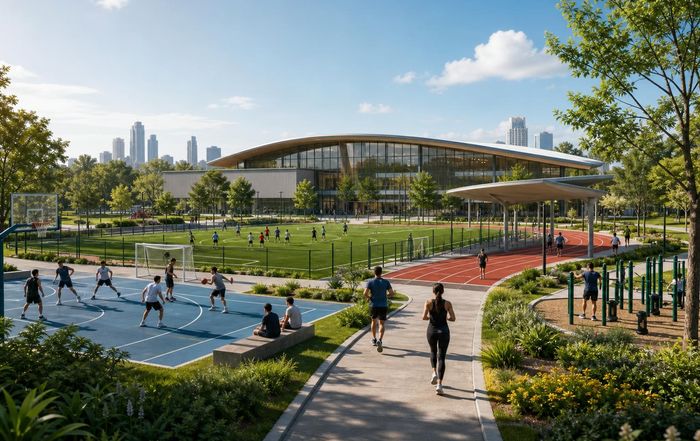
Sports Facilities Designed for Healthier Communities
The New Strategic Role of Sports Infrastructure
Sports facilities are no longer perceived as mere venues for games or training; they have become strategic infrastructure for public health, urban resilience, and community cohesion. Across North America, Europe, Asia, Africa, and South America, city planners, health authorities, and private investors are converging on a shared realization: thoughtfully designed sports environments can measurably improve population health, reduce healthcare costs, support local economies, and foster social inclusion. For SportyFusion, which jumps at the intersection of sport, fitness, health, culture, and business, this transformation is not an abstract policy trend but a lived reality shaping the way readers train, work, consume, and connect in their own communities.
As global organizations such as the World Health Organization highlight the economic and social burden of physical inactivity, leaders in the United States, United Kingdom, Germany, Canada, Australia, and beyond are rethinking how built environments either encourage or inhibit movement. Learn more about how physical inactivity is impacting global health on the World Health Organization website. In this context, sports facilities are being redesigned to serve as multi-functional hubs that integrate fitness, preventive healthcare, education, and digital technology, while aligning with environmental and ethical standards that modern stakeholders increasingly demand.
From Arenas to Ecosystems: A Shift in Design Philosophy
The traditional model of single-purpose stadiums and isolated gyms is giving way to a more holistic concept: sports ecosystems embedded in the daily life of cities and neighborhoods. This shift is evident in major metropolitan centers such as London, New York, Tokyo, Berlin, and Singapore, where local authorities now require new sports facilities to align with wider urban planning objectives, including walkability, active transport, and access to green space. Urban planning guidance from organizations like UN-Habitat underscores the importance of inclusive public spaces that promote physical activity and social interaction; readers can explore these principles further through the UN-Habitat public space resources.
For the SportyFusion audience, which values both performance and lifestyle, this evolution means that a sports complex is increasingly designed as an integrated environment, where a morning strength session might be followed by a health screening, a co-working meeting, or a family cultural event, all within the same connected campus. On SportyFusion's fitness coverage, this integrated approach appears in stories about hybrid training spaces that blend functional fitness, recovery, and social experiences, reflecting a broader movement in facility design that prioritizes human-centered outcomes over purely commercial metrics.
Health-Centric Architecture and Preventive Care
The rise of health-centric sports architecture is one of the most significant trends defining the current decade. Architects and developers are collaborating with sports scientists, physiotherapists, and public health experts to ensure that facilities actively support physical and mental wellbeing. Evidence-based design is used to optimize everything from air quality and natural light to acoustic comfort and circulation routes, with the goal of making movement intuitive and enjoyable for all age groups and abilities. The American College of Sports Medicine has long emphasized the importance of accessible, well-designed environments for increasing physical activity levels; see how the organization frames this in its global initiatives on active cities.
In many leading projects, on-site clinics and screening centers are co-located with sports venues, enabling early detection of lifestyle-related conditions such as hypertension, diabetes, and musculoskeletal issues. This convergence of sport and healthcare is particularly evident in countries like the Netherlands, Sweden, and Singapore, where integrated health and sports campuses are piloting new models of preventive medicine. Health-conscious readers interested in how sport intersects with long-term wellbeing can explore more perspectives on SportyFusion's health section, where the emphasis is on practical strategies to leverage local facilities for sustainable lifestyle change rather than short-term performance alone.
Community Integration and Cultural Relevance
Designing sports facilities for healthier communities requires more than advanced equipment and smart architecture; it also demands cultural sensitivity and authentic community engagement. In diverse urban areas, from Johannesburg to São Paulo to London, sports spaces that succeed over the long term are those that reflect local identities, traditions, and social patterns. Organizations such as UNESCO have highlighted the role of sport in promoting cultural understanding and social inclusion, especially among youth and marginalized groups, which can be further explored through the UNESCO sport and physical education portal.
For SportyFusion.com, which devotes substantial coverage to the intersection of sport and culture on its culture platform, the most compelling examples are facilities that double as cultural venues, hosting music, art, and community events alongside sports programming. In cities such as Berlin, Madrid, and Melbourne, multipurpose arenas are being designed with flexible seating, open plazas, and adaptable indoor spaces that can shift seamlessly between basketball tournaments, esports competitions, local festivals, and educational workshops, thus ensuring that the facility remains active and relevant throughout the year, rather than only during major sporting events.
Global Benchmarks and Policy Frameworks
The international policy environment has become a powerful driver of innovation in sports facility design. The International Olympic Committee and national sports federations now require host cities to demonstrate robust legacy plans, ensuring that Olympic and world championship venues are integrated into long-term community use rather than becoming underutilized monuments. Learn more about how the International Olympic Committee approaches legacy and sustainability on its official sustainability pages. These global standards influence not only mega-events but also regional and local developments, as planners seek to align with best practices and attract funding.
At the same time, public health and urban development frameworks from institutions such as the World Bank and the European Commission are increasingly linking infrastructure investment to measurable health outcomes, social inclusion, and climate resilience. For instance, European cities applying for funding under various urban innovation programs are now expected to demonstrate how new sports facilities will contribute to active mobility, air quality, and social cohesion. Readers interested in the broader policy context can explore the European Union's approach to urban and regional policy through the European Commission's regional policy portal. This policy focus reinforces the strategic importance of sports infrastructure and encourages local authorities and private investors to adopt a longer-term, evidence-based perspective.
Technology-Driven Smart Facilities
The rapid evolution of digital technology has profoundly reshaped how sports facilities are conceived, operated, and experienced. Smart stadiums and training centers now integrate sensors, wearables, and data analytics platforms to monitor usage patterns, optimize energy consumption, and enhance user safety. From Seoul to San Francisco, facility operators are working with technology leaders and sports analytics firms to create environments that are both high-performance and user-friendly. The MIT Sports Lab, for example, showcases how data science and engineering can transform training and facility management; readers can explore these innovations via the MIT Sports Lab website.
For the SportyFusion community, which follows the convergence of sport and innovation through its dedicated technology coverage, smart facilities represent a new frontier where athletes, fans, and casual users benefit from personalized experiences. Mobile apps now allow users to reserve training zones, access real-time occupancy data, receive tailored workout recommendations, and integrate their sessions with wearables for longitudinal performance tracking. At the elite level, clubs and federations employ advanced motion capture, AI-based injury risk assessment, and virtual reality training environments, blurring the boundaries between physical and digital spaces while raising important questions about data privacy, accessibility, and equity that responsible operators must address.
Business Models and Investment Strategies
The business dimension of sports facilities has become more complex and sophisticated, reflecting the diversity of stakeholders involved. Municipal authorities, private developers, sports franchises, health systems, universities, and community organizations frequently form public-private partnerships to finance and operate new projects. In major markets such as the United States, United Kingdom, and Germany, investors increasingly evaluate sports infrastructure through the lens of long-term social impact and environmental, social, and governance (ESG) performance. The Global Reporting Initiative provides widely used frameworks for disclosing ESG metrics, including those relevant to sports and leisure infrastructure; more information is available on the GRI standards portal.
For business professionals and entrepreneurs following developments on the SportyFusion business channel, an important trend is the diversification of revenue streams within sports facilities. Rather than relying solely on ticket sales and event hosting, modern complexes generate income through health and wellness services, coworking and retail spaces, educational programs, esports arenas, and digital content production. This diversified model not only improves financial resilience but also ensures that the facility remains active throughout the day and year, serving a broader demographic and embedding itself into the socioeconomic fabric of its community.
Jobs, Skills, and the Evolving Workforce
The transformation of sports facilities into health and community hubs is creating new employment opportunities and reshaping existing roles. Beyond traditional positions such as coaches, trainers, and facility managers, there is rising demand for data analysts, digital experience designers, sustainability officers, community engagement specialists, and health navigators who can guide users through integrated wellness services. In markets like Canada, Australia, and Singapore, vocational training programs and universities are developing interdisciplinary curricula that combine sports science, public health, technology, and business management.
Readers interested in how these shifts translate into concrete career paths can explore evolving opportunities in the sector through SportyFusion's jobs section, where roles increasingly reflect the blending of sport, health, and digital innovation. International organizations such as the International Labour Organization have noted that the sports and recreation sector is a meaningful contributor to employment and skills development, particularly for young people; further insights can be found on the ILO's work on the sports sector. For communities, this evolving workforce means that sports facilities can become significant local employers and training grounds, especially when inclusive hiring and apprenticeship programs are embedded into project design from the outset.
Brand Leadership and Strategic Partnerships
Global and regional brands are playing a pivotal role in shaping the next generation of sports facilities, not only as sponsors but as co-creators of experiences and ecosystems. Companies such as Nike, Adidas, Under Armour, and Decathlon are investing in community-oriented spaces, test labs, and innovation hubs that allow them to engage directly with consumers, gather real-world performance data, and pilot new products and services. Industry analysis from organizations like Deloitte illustrates how sports brands and rights holders are rethinking their strategies in a rapidly evolving landscape; readers can delve into these dynamics through Deloitte's sports industry outlook.
For SportyFusion.com, which highlights the strategies and responsibilities of leading sports and lifestyle brands on its brands platform, the most relevant examples are those where companies collaborate with municipalities and non-profit organizations to create inclusive spaces that prioritize youth development, gender equity, and environmental stewardship. These partnerships demonstrate that brand leadership in 2026 is judged not only by market share or sponsorship visibility, but by the tangible contribution that companies make to healthier, more resilient communities through the facilities and programs they help bring to life.
Environmental Sustainability and Climate Resilience
No discussion of modern sports infrastructure is complete without addressing environmental performance and climate resilience. As extreme weather events become more frequent across Europe, North America, Asia, Africa, and Oceania, facility designers are under pressure to ensure that stadiums, arenas, and training centers are both low-carbon and robust in the face of climate risks. Leading projects now incorporate renewable energy systems, advanced water management, circular materials, and nature-based solutions such as green roofs and urban forests. The U.S. Green Building Council and similar organizations provide certification frameworks that guide sustainable construction and operation; readers can explore these frameworks through the LEED green building program.
For readers who follow environmental topics on SportyFusion's environment coverage, sports facilities represent a visible and influential arena where climate commitments are translated into concrete action. The sports sector's environmental footprint has been scrutinized by initiatives such as the UN Sports for Climate Action Framework, which encourages clubs, leagues, and event organizers to set science-based emissions targets and report transparently on progress; further information is available on the United Nations climate and sport pages. Facilities that embrace these principles not only reduce their ecological impact but also educate millions of visitors annually about sustainable lifestyles, from active transport to responsible consumption.
Performance, Gaming, and the Hybrid Athlete
The boundaries between traditional sport, performance training, and gaming have blurred significantly by 2026, and facility design is evolving to reflect this convergence. High-performance centers now integrate esports arenas, cognitive training labs, and immersive simulation environments alongside conventional strength and conditioning spaces. For professional and aspiring athletes, this integration supports a more holistic approach to performance that addresses physical, mental, and tactical dimensions in a single environment.
On SportyFusion's performance platform at sportyfusion.com/performance.html, readers can see how elite and grassroots programs are adopting hybrid models where game analysis, virtual reality scenarios, and neurocognitive drills are part of everyday training. Parallel coverage on SportyFusion's gaming section explores how esports organizations and universities are building facilities that prioritize ergonomics, mental health, and physical conditioning, recognizing that competitive gamers also benefit from structured movement, recovery, and social interaction. This convergence illustrates how facility design can support different forms of performance while preserving a shared commitment to health and wellbeing.
Lifestyle, Ethics, and Social Responsibility
As sports facilities become more central to community life, questions of ethics, accessibility, and social responsibility move to the foreground. Issues such as equitable access, pricing models, gender inclusion, disability accommodation, and data privacy are now key considerations for operators who wish to maintain public trust. Ethical frameworks developed by organizations such as Transparency International and sport governance bodies encourage facility owners and managers to adopt clear codes of conduct, transparent governance, and robust mechanisms for addressing harassment, discrimination, and corruption; readers can explore broader integrity issues in sport through the Transparency International sport integrity resources.
For SportyFusion.com, which approaches sport as a social institution as much as a performance domain, these ethical questions are an integral part of top stories across ethics, social issues, and lifestyle. Facilities that succeed in 2026 are those that define clear values and translate them into concrete policies: tiered pricing structures that keep access affordable, inclusive programming for different age groups and abilities, safe reporting channels, and community advisory boards that give local residents a voice in decision-making. These measures strengthen the social license that every major sports facility now requires to operate sustainably.
Training Pathways Across the Lifespan
The most effective sports facilities are designed not merely for elite competition but for training and participation across the entire lifespan, from early childhood to older adulthood. In Japan, the Nordic countries, and New Zealand, for example, community facilities are increasingly organized around life-stage programs that include motor skills development for children, structured youth sport, adult fitness, and active aging initiatives. This approach aligns with research from institutions such as Harvard T.H. Chan School of Public Health, which underscores the long-term benefits of regular physical activity across the life course; readers can review some of this research on the Harvard public health physical activity resources.
On SportyFusion's training channel, the emphasis is on how individuals and organizations can leverage local facilities to build sustainable training habits that adapt to changing life circumstances, from demanding careers to family responsibilities and aging. Facilities that support these transitions through tailored programming, flexible scheduling, and user-friendly digital platforms are better positioned to maintain high engagement levels and deliver on their promise of healthier communities.
The New Need for Now
The global landscape of sports facilities reveals a clear strategic imperative: design and operate spaces that serve as catalysts for healthier, more connected, and more sustainable communities. For investors, and operators across the United States, Europe, Asia, Africa, and South America, this means embracing a multi-dimensional approach that integrates health science, urban planning, digital innovation, environmental stewardship, and ethical governance. For readers of SportyFusion.com, it means recognizing that the quality and accessibility of local sports environments are not secondary conveniences but core components of personal wellbeing, community resilience, and even economic opportunity.
The most successful facilities of this decade will be those that understand themselves not as isolated venues but as dynamic nodes within a broader ecosystem that includes schools, workplaces, healthcare providers, transport networks, and digital platforms. As SportyFusion continues to cover daily changes across sports, health, technology, business, and culture, one theme is likely to remain constant: when sports facilities are designed with experience, expertise, authoritativeness, and trustworthiness at their core, they become powerful engines for healthier communities and more vibrant societies worldwide.