

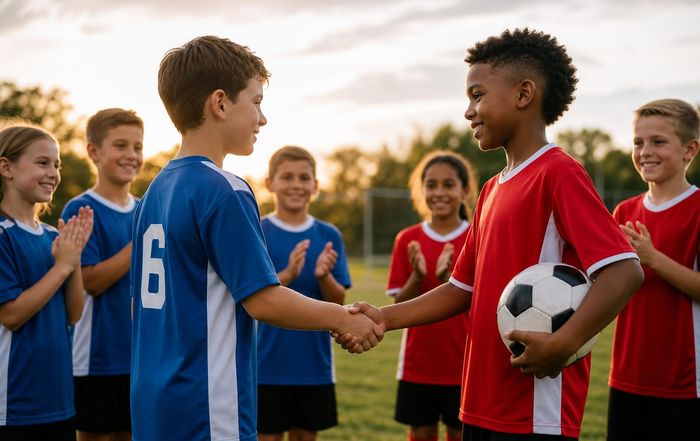
Sportsmanship in Youth Sports: How to Teach Respect and Fair Play That Lasts
Youth sports promise more than scoreboards and trophies. For many young athletes, they are the first real classroom for dealing with pressure, handling conflict, and learning how to treat others when emotions run high. Whether it is a grassroots football league in Europe, a basketball program in the United States, or a school athletics meet in Asia, adults increasingly recognise that what happens around the game can matter more than the result itself. Yet headlines about aggressive parents, abusive coaching, and early burnout suggest that the values of sportsmanship-respect, fair play, humility in victory, and grace in defeat-are not guaranteed outcomes. They must be taught, modelled, and reinforced with intention.
For families and coaches, the core question is no longer whether sports build character, but under what conditions they do so. Research from organisations such as the Positive Coaching Alliance, Aspen Institute's Project Play, and national governing bodies indicates that well-designed youth programs can foster empathy, resilience, and ethical decision-making, but poorly run environments can normalise bullying, cheating, and win-at-all-costs behaviour. In that sense, sportsmanship is not a side topic or "nice-to-have" extra; it is the culture that determines whether sport becomes a lifelong positive influence or a short-lived, stressful experience that drives young people away from physical activity altogether.
This article explores how respect and fair play can be intentionally developed in youth sports, what the evidence says about their impact on children, and how coaches, parents, clubs, and even young athletes themselves can build a healthier sporting culture. It also connects sportsmanship to broader themes of performance, health, and social responsibility that shape the modern active lifestyle.
Why Sportsmanship Matters More Than the Score
Sportsmanship is often defined as a blend of respect (for opponents, officials, teammates, and self), adherence to the rules, fair play, and emotional control under pressure. However, in practice it also includes how young athletes respond to mistakes, how they treat weaker teammates, and whether they see opponents as enemies to be crushed or partners in a shared challenge. Organisations such as the International Olympic Committee and UNESCO highlight these values as central to sport's contribution to education and peace, not just to entertainment.
From a developmental standpoint, sportsmanship matters because youth sport coincides with key phases of social and emotional growth. Studies summarised by the American Psychological Association suggest that children and adolescents are especially sensitive to peer approval, adult feedback, and visible hierarchies such as starting lineups and playing time. In this environment, messages about what is truly valued-effort versus talent, integrity versus winning at any cost-can shape self-esteem and moral reasoning. When coaches and parents praise effort, teamwork, and ethical choices as strongly as they praise goals and points, young athletes are more likely to internalise those standards and carry them into school, friendships, and later work life.
There is also a performance dimension. Research on motivational climates in sport, including work supported by institutions like Harvard University and Stanford University, has found that environments emphasising mastery, learning, and respect tend to reduce anxiety and improve long-term engagement compared with climates that focus narrowly on results and comparison with others. Athletes in supportive, respectful teams are less likely to drop out, more likely to persist through plateaus, and often perform better under pressure because they feel psychologically safe. For readers interested in how this connects to broader athletic development, the role of mindset and environment is also central to high-level performance and training approaches discussed across modern sports science.
Finally, there is a public-health and societal angle. Global bodies such as the World Health Organization warn that physical inactivity is a major risk factor for noncommunicable diseases. Youth sports are one of the most powerful tools to build active habits, but negative experiences-bullying, humiliation, or unsafe environments-can turn children away from sport and exercise for years. Teaching sportsmanship is therefore not just about etiquette; it is about creating inclusive, welcoming spaces that keep more young people moving, which has long-term implications for health, wellbeing, and social cohesion.
The Coach's Role: Culture Architect, Not Just Tactician
In almost every study of youth sport environments, the coach emerges as a central figure in shaping behaviour. Children pay close attention not only to what coaches say, but to how they react to referees, opponents, and mistakes. When a coach berates an official, celebrates a rival's injury, or humiliates a player for an error, they silently communicate that these behaviours are acceptable. Conversely, when a coach calmly accepts a controversial call, praises an opponent's skill, or privately corrects a player while publicly supporting them, they model sportsmanship more powerfully than any pre-game speech.
Several national governing bodies, including USA Hockey, The FA in England, and Basketball Australia, have created coach education frameworks that embed respect and athlete welfare alongside technical instruction. These programs echo similar guidance from the National Alliance for Youth Sports, which stresses that coaches should define success broadly: improvement, enjoyment, and character development, not only wins and losses. For readers interested in the coaching profession or working in sport-related jobs, this shift from pure tactics to holistic development is becoming a core competency.
Practical ways coaches can foster sportsmanship include setting explicit behavioural standards at the start of the season, such as shaking hands with opponents, thanking officials after games, and refusing to argue calls aggressively. Many successful developmental programs adopt "team covenants" co-created with players, where athletes help define how they want to treat each other and how they will handle conflict. When young players help write the rules of their culture, they are more likely to uphold them.
In training sessions, coaches can integrate small habits that reinforce respect: rotating captains so leadership is shared, designing drills that require cooperation rather than only competition, and praising unselfish actions such as an extra pass or supportive communication. On match day, they can ensure all players get meaningful playing time in developmental leagues, signalling that participation and learning matter as much as results. This balance is particularly important in early adolescence, when some coaches are tempted to prioritise short-term winning over long-term development, despite evidence from organisations like FIFA and World Rugby that overemphasis on early selection and specialisation can harm both performance and wellbeing.
Parents on the Sidelines: From Pressure to Partnership
If coaches shape the daily culture, parents often set the emotional climate around it. Surveys from groups like Aspen Institute's Project Play and Sport England indicate that parental behaviour is one of the top factors influencing whether children enjoy or quit sport. Supportive parents who focus on effort, fun, and learning tend to have children who stay involved longer, while those who emphasise scholarships, pro careers, or constant comparison to peers increase stress and fear of failure.
One of the most powerful tools for parents is the so-called "car ride home." Sports psychologists frequently highlight that what adults say immediately after games can either reinforce growth or deepen anxiety. Questions such as "Did you have fun?" "What did you learn?" or "What are you proud of today?" signal that a child's worth is not tied to the scoreboard. In contrast, interrogating mistakes, criticising coaches, or blaming referees can normalise excuse-making and disrespect. Over time, children may internalise that outcomes matter more than integrity, or that poor behaviour is justified when one feels wronged.
Several youth sport organisations now provide parent education resources, such as the Positive Coaching Alliance, Canadian Sport for Life, and national Olympic committees. They encourage parents to adopt roles as "second coaches" in values rather than tactics: modelling calm behaviour, applauding good play from both teams, and avoiding coaching from the sidelines that contradicts the team's strategy. This aligns with broader themes explored in lifestyle and social coverage, where family dynamics and community norms strongly influence young people's relationship with movement and competition.
Practical boundaries can help. Some clubs ask parents to sign codes of conduct, attend preseason meetings about expected behaviour, or stand on the opposite side of the field from the team bench to reduce in-game interference. Others implement "silent sidelines" days where cheering is allowed but instructions and criticism are not, helping children take more ownership of their decisions. While such measures can feel restrictive to some adults, they often lead to calmer environments and clearer communication.
Teaching Respect and Fair Play to the Players Themselves
Ultimately, sportsmanship cannot be imposed solely from above; young athletes must understand and choose it. That means moving beyond slogans to practical, age-appropriate teaching. At younger ages, simple routines such as shaking hands, lining up to thank referees, or sharing equipment fairly create early habits. Coaches and parents can narrate why these actions matter: that opponents and officials are essential for the game to exist, and that respect is owed regardless of the scoreline.
As children grow older, discussions can become more nuanced. For example, teams can talk about "gamesmanship" versus cheating-deliberate time-wasting, feigning injury, or trash talk that skirts the rules. Governing bodies like FIFA, World Rugby, and the NBA have all wrestled with these grey areas, adjusting rules and enforcement to encourage fairer play. Using real-world examples, whether from professional leagues or school competitions, can help young athletes debate what kind of players and teammates they want to be. Linking these conversations to wider themes of ethics and integrity, similar to those examined in ethics coverage, can show that decisions on the field mirror choices in other parts of life.
Role-playing and scenario-based activities can be particularly effective. Coaches might simulate a bad call in practice and challenge the team to respond in different ways, then discuss which responses align with their values. They can also highlight positive moments in games-helping an injured opponent, admitting a ball touched them last, or encouraging a struggling teammate-and publicly praise these actions as strongly as they praise goals. Over time, this shifts the informal "status system" so that being a good teammate is as admired as being the top scorer.
Crucially, children should have safe ways to express frustration and disappointment. Suppressing emotion entirely is neither realistic nor healthy; instead, sportsmanship involves learning to channel strong feelings without harming others. Teaching breathing techniques, brief time-outs, or simple self-talk strategies can help athletes reset after mistakes or conflicts. Sports psychologists and organisations such as the American Psychological Association and Mind (in the UK) offer accessible guidance on emotional regulation in sport, which can be integrated into training just like physical drills.
Designing Leagues and Rules That Reward Good Behaviour
Individual efforts by coaches and parents are powerful, but the structure of competitions also matters. If leagues reward only results, tolerate abuse of officials, or schedule excessive fixtures that leave no time for reflection, they can undermine attempts to teach sportsmanship. In response, many national and regional bodies have begun to adjust formats and rules to prioritise learning and welfare, particularly at younger ages.
Examples include small-sided games in football, rugby, and hockey to ensure more touches and involvement for each player; minimum playing time rules to prevent benching weaker athletes; and modified scoring systems where points are awarded for fair play and respect in addition to match results. Some youth tournaments now have "respect awards" or "spirit of the game" trophies, inspired in part by traditions in sports such as ultimate frisbee, where self-officiating and mutual accountability are central. These structural choices send a clear message: how the game is played matters as much as who wins.
Officials and referees also play a role. Training programs from organisations like FIFA, World Rugby, and FIBA increasingly include modules on communication with young players and de-escalation with adults. When referees explain decisions briefly, stay approachable, and enforce codes of conduct consistently, they can become educators rather than adversaries. Conversely, when abuse of officials is tolerated, it teaches children that authority can be attacked whenever outcomes are unfavourable, a lesson that extends far beyond sport.
For clubs and governing bodies, there is a policy dimension. Clear disciplinary procedures for verbal or physical abuse, transparent reporting channels, and visible sanctions can deter extreme behaviour. At the same time, positive reinforcement-such as public recognition for clubs with strong sportsmanship records-can create healthy competition around culture, not just performance. These approaches align with wider business and governance discussions about values-driven leadership in sport, where brand reputation, sponsorship, and community trust increasingly depend on ethical conduct.
Inclusion, Diversity, and the Ethics of Fair Play
Respect and fair play cannot be fully realised if youth sports environments exclude or marginalise certain groups. Issues of gender, race, disability, and socioeconomic status shape who gets to participate and how they are treated once they do. Global initiatives from bodies like UNESCO, the International Paralympic Committee, and various national equality commissions emphasise that true sportsmanship includes welcoming diversity and challenging discriminatory behaviour on and off the field.
For example, girls in many countries still face fewer opportunities, lower-quality facilities, or subtle discouragement from competitive sport, despite the success of women's leagues and national teams. Young athletes from minority backgrounds may encounter stereotyping, racist language, or unequal expectations. Children with disabilities often struggle to find accessible programs, even though adapted sports and inclusive clubs have shown that mixed-ability environments can benefit everyone. Addressing these gaps is not separate from teaching respect; it is a direct expression of what respect means in practice.
Clubs can take steps such as offering sliding-scale fees or equipment support for low-income families, partnering with schools and community organisations to reach underrepresented groups, and ensuring coaches receive training on unconscious bias and inclusive communication. Governing bodies can set minimum standards for access and anti-discrimination policies, backed by enforcement. These measures connect with broader themes in world and culture coverage, where sport often mirrors larger social debates about equality and representation.
Within teams, inclusive sportsmanship means challenging casual slurs, ensuring all players have a voice in decisions, and celebrating different backgrounds as a strength rather than a problem to be managed. Captains and peer leaders can be empowered to intervene when they witness bullying or exclusion, reinforcing that team culture is everyone's responsibility, not just the coach's. In this way, youth sports can become a microcosm of the respectful, pluralistic societies many communities aspire to build.
Balancing Competition, Performance, and Character
A recurring fear among some adults is that emphasising sportsmanship and wellbeing might "soften" competition or reduce performance standards. However, evidence from elite sport suggests the opposite: high-performing teams often rely on strong internal cultures of respect, clear values, and psychological safety. Professional organisations in football, basketball, rugby, and Olympic disciplines have increasingly invested in culture-building, leadership development, and mental skills training alongside tactical and physical work, recognising that toxic environments may deliver short bursts of success but rarely sustain excellence.
For youth sport, the challenge is to calibrate competition to developmental stage. International guidelines from bodies like the International Olympic Committee, FIFA, and World Health Organization emphasise that early childhood and preadolescence should prioritise fun, variety, and fundamental movement skills, with gradual introduction of competitive structures. Overly intense competition, early talent labelling, and high-pressure selection processes can drive early specialisation, burnout, and dropout. At older ages, more serious competition can coexist with strong sportsmanship if expectations are clear: play hard, respect boundaries, and accept that opponents are necessary partners in pursuing excellence.
For performance-focused readers, it is useful to see sportsmanship not as a separate moral track but as a performance environment variable. Athletes who feel respected by coaches and teammates are more likely to communicate honestly about pain or fatigue, reducing injury risk-a topic frequently explored in fitness and training discussions. Teams that handle conflict constructively can adapt faster under pressure. Players who learn to manage emotions and maintain perspective after setbacks are better equipped for high-stakes moments. In this sense, respect and fair play are not the enemies of competitive fire; they are the conditions that allow it to burn without destroying the people involved.
Building a Lasting Culture of Respect in Youth Sports
Sustaining sportsmanship over time requires more than one-off campaigns or posters about fair play. It calls for alignment across multiple layers: families, coaches, clubs, governing bodies, and the broader media ecosystem that shapes how sport is presented. Coverage from outlets such as BBC Sport, ESPN, and The New York Times increasingly highlights not only results but also debates over behaviour, ethics, and athlete welfare, reflecting changing public expectations. Social media amplifies both positive examples-viral clips of players helping opponents-and negative incidents of abuse or cheating, making culture more visible and contested.
At the local level, clubs can embed respect into their identity by integrating it into mission statements, coach hiring criteria, and evaluation processes. They can celebrate acts of sportsmanship in newsletters and social channels, not just championship wins. They can partner with schools and community organisations to run workshops on topics such as mental health, inclusion, and digital behaviour, recognising that young athletes' lives span far beyond the pitch or court. These efforts connect naturally with broader conversations around environment, brands, and corporate responsibility, as sponsors and institutions increasingly look to support programs aligned with positive social impact.
For individual adults-parents, coaches, volunteers-the starting point is often self-reflection. Asking what messages one's own behaviour sends, being willing to apologise for missteps, and inviting feedback from young athletes can be uncomfortable but transformative. Children notice when adults hold themselves to the same standards they preach. When they see a coach calmly accept a loss, a parent congratulate an opposing team, or a club take firm action against abusive behaviour, they receive a powerful, concrete lesson in what respect and fair play look like under pressure.
Youth sports will always involve emotion, rivalry, and the occasional flash of poor behaviour; they are, after all, human endeavours. The goal is not perfection but direction: steadily moving toward environments where every child, regardless of ability or background, can compete hard, feel safe, and learn to treat others well. When that happens, the benefits extend far beyond the field, shaping how the next generation approaches challenge, conflict, and community in every arena of life.