

The Future of Smart Recovery Technologies
Smart Recovery Enters Its Defining Decade
As sports seasons unfolds, smart recovery technologies have moved from the fringes of elite sport into the center of mainstream performance, wellness, and business strategy. What began as experimental tools in Olympic training centers and professional locker rooms is now shaping how everyday athletes, corporate professionals, and health-conscious consumers around the world understand rest, manage fatigue, and protect long-term health. For SportyFusion.com, whose community spans competitive athletes, fitness enthusiasts, and performance-driven professionals from the United States and Europe to Asia-Pacific and beyond, the evolution of smart recovery is not simply a technology story; it is a story about redefining sustainable performance in sport, work, and daily life.
The convergence of advanced wearables, data platforms, AI-driven insights, and evidence-based recovery protocols has created a new performance ecosystem in which recovery is no longer treated as an afterthought but as a central pillar of training and health. Organizations such as WHO and OECD have increasingly highlighted the global economic cost of burnout, chronic disease, and inactivity, while leading sports science institutions and high-performance centers from the Australian Institute of Sport to UK Sport have emphasized that marginal gains now depend as much on sleep and regeneration as on strength and conditioning. Learn more about how this shift connects to broader health and performance trends that SportyFusion tracks each and every day across regions and disciplines.
From Passive Rest to Intelligent Regeneration
Historically, recovery in sports and fitness was dominated by passive strategies: sleep more, stretch, hydrate, and hope for the best. Over the past decade, however, the rise of connected devices and cloud analytics has transformed recovery into an active, measurable, and increasingly personalized process. Leading wearables from companies such as Garmin, Apple, Whoop, and Oura now track heart rate variability, sleep stages, skin temperature, and respiratory rate, using these biomarkers to estimate readiness and strain. Organizations like NHL, NBA, and Premier League clubs have adopted such tools to guide training loads and travel schedules, while corporate wellness programs in the United States, Germany, and Singapore are integrating recovery metrics into broader employee health strategies.
This shift has been underpinned by advances in sports science and physiology, with institutions such as Harvard Medical School and Stanford Center for Sleep and Circadian Sciences publishing influential work on the impact of sleep quality, circadian alignment, and stress regulation on performance and injury risk. Readers visiting here who follow top coverage of fitness innovation and training science will recognize how quickly these insights have moved from academic journals into the product roadmaps of global brands, reshaping expectations among athletes and consumers alike.
The New Architecture of Smart Recovery Systems
By 2026, smart recovery is less about individual gadgets and more about integrated systems that combine hardware, software, and services into cohesive ecosystems. At the center of this architecture is continuous data collection, typically via multisensor wearables, smart clothing, and connected equipment. Devices from Polar, Suunto, Fitbit, and newer entrants from South Korea, Japan, and China now capture not only heart rate and movement but also neuromuscular load, localized muscle oxygenation, and even biomechanical asymmetries, feeding this data into cloud platforms that can be accessed by athletes, coaches, clinicians, and in some cases, employers.
These platforms are increasingly powered by machine learning models that detect patterns over weeks and months rather than just hours and days. For instance, research published by organizations such as NIH and European Society of Cardiology has informed algorithms that can distinguish normal training fatigue from early signs of overtraining or illness, prompting proactive interventions ranging from modified training plans to targeted recovery modalities. For the SportyFusion fit and active audience that follows performance analysis and training optimization, this system-level view of recovery is becoming the new standard, especially in high-performance environments in the United States, United Kingdom, Germany, and the Nordic countries.
Sleep as the Primary Recovery Technology
Among all recovery modalities, sleep remains the most powerful and irreplaceable, and smart recovery technologies are increasingly organized around optimizing this foundational process. Advances in sensor accuracy and signal processing have made it possible to estimate sleep stages, detect micro-awakenings, and assess sleep regularity with far greater reliability than early consumer trackers. Companies like Philips, ResMed, and Withings are collaborating with sleep researchers and clinical networks to refine algorithms and connect data from consumer devices with medically validated assessments, while organizations such as the National Sleep Foundation and American Academy of Sleep Medicine continue to publish guidelines that inform product design and user education. Those interested in the broader cultural and behavioral dimensions of sleep can explore SportyFusion's coverage of lifestyle and cultural shifts in wellness, which increasingly highlight how attitudes toward rest are changing in high-pressure environments from New York and London to Tokyo and Singapore.
Smart lighting systems, circadian-aware apps, and connected bedroom environments are emerging as the next frontier, using environmental data-light exposure, temperature, noise, and air quality-to dynamically adjust conditions for optimal sleep. In Europe and Asia, building developers and hospitality brands are integrating sleep-optimized rooms into new projects, drawing on research from institutions like MIT Media Lab and Karolinska Institute to justify investments in circadian lighting and noise control. At the same time, SportyFusion's technology coverage has tracked how AI assistants embedded in smartphones and wearables are beginning to act as "sleep coaches," nudging users to adjust evening routines and travel schedules based on chronotype and upcoming performance demands.
Wearable and Nearable Tech: Beyond the Wrist
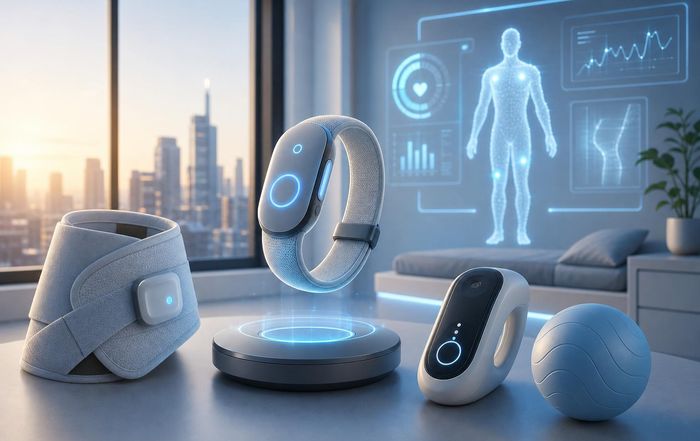
While wrist-worn devices remain dominant, the future of smart recovery is expanding into other form factors that promise richer data and more contextual insights. Smart rings, patches, textiles, and even insoles are being developed by companies and research labs in North America, Europe, and Asia to capture localized muscle fatigue, joint load, and postural stress. Organizations such as Fraunhofer Institute, IMEC, and CSAIL at MIT are working on ultra-low-power sensors and flexible electronics that can be embedded into clothing, enabling continuous monitoring without the friction of traditional wearables. For SportyFusion readers interested in the intersection of sports, fashion, and technology, this trend resonates with ongoing coverage of brands and performance apparel, where the line between gear and device is rapidly blurring.
Nearable technologies-sensors embedded in equipment and environments-are equally important. Smart gym equipment from companies like Technogym and Peloton now tracks technique quality, tempo, and load distribution, feeding data into recovery algorithms that can distinguish between sessions that are biomechanically efficient and those that create excessive stress. On the field, connected boots, balls, and playing surfaces, pioneered by organizations such as FIFA and World Rugby in partnership with technology providers, are generating new streams of data about impact forces and movement patterns, informing recovery strategies for athletes at every level. Learn more about how these innovations are reshaping sports and training ecosystems and influencing coaching philosophies across continents.
AI Coaching and Hyper-Personalized Recovery Plans
The defining characteristic of the next generation of smart recovery technologies is personalization. Rather than relying on generic rules such as "take one rest day per week," AI-driven platforms are building individualized recovery profiles based on genetics, training history, psychological traits, and environmental context. Companies such as WHOOP, Athos, InsideTracker, and a growing ecosystem of startups from Silicon Valley, Berlin, Stockholm, and Seoul are combining biometric data with nutrition, sleep, and mental health inputs to generate dynamic recovery prescriptions. These may include specific cold exposure protocols, compression routines, active recovery sessions, mindfulness practices, or social connection activities, all sequenced across days and weeks to align with competition schedules and life demands.
This approach is supported by emerging research from organizations like McKinsey Global Institute and Deloitte on the economic impact of personalized health and the productivity gains associated with optimized energy management. AI coaching engines, trained on large datasets of athlete and consumer behavior, are learning to adapt recommendations in real time, recognizing that the same training load may be tolerable on a low-stress workday but excessive after a transatlantic flight or a period of psychological strain. SportyFusion's audience, particularly those following business and jobs trends and the future of work, will recognize how these tools are beginning to shape corporate wellness strategies, leadership development programs, and even job design in high-performance organizations.
Recovery in the Age of Hybrid Work and Global Schedules
The rise of hybrid work and global collaboration has introduced new recovery challenges, as professionals in industries from finance and technology to media and consulting navigate irregular hours, cross-time-zone meetings, and blurred boundaries between work and leisure. Smart recovery technologies are responding by integrating calendar data, travel itineraries, and communication patterns into readiness assessments, providing early warnings when cumulative stress and sleep disruption are likely to compromise performance or health. Platforms used by multinational organizations in the United States, United Kingdom, Germany, Singapore, and Australia are beginning to incorporate recovery metrics into team dashboards, not to monitor individuals in a punitive way but to inform scheduling decisions, travel planning, and workload distribution.
This shift raises complex questions about privacy, data governance, and organizational culture, which SportyFusion explores regularly in its coverage of ethics and social impact. Regulatory frameworks such as GDPR in Europe and evolving data protection laws in regions like Asia and North America are forcing companies to balance the potential benefits of recovery data with the need to protect individual autonomy and prevent discrimination. Leading employers are working with organizations such as World Economic Forum and International Labour Organization to develop guidelines that ensure recovery technologies support human well-being rather than simply extracting more output from already stretched teams.
Smart Recovery Meets Mental Health and Cognitive Performance
Another defining feature of the future smart recovery landscape is the integration of mental health and cognitive performance into what was once a purely physical domain. Scientific consensus, reflected in work from American Psychological Association, World Health Organization, and leading universities, has made it clear that psychological stress, anxiety, and social isolation significantly impair recovery, increase injury risk, and reduce performance in both sport and work. As a result, smart recovery platforms are increasingly incorporating mood tracking, cognitive tests, and digital biomarkers of mental strain, such as changes in speech patterns or typing behavior, to build a more holistic picture of readiness.
Mindfulness and breathwork apps, some developed in collaboration with sports psychologists and neuroscientists, are being integrated into wearable ecosystems, offering just-in-time interventions when physiological signals suggest elevated stress. Elite athletes in leagues from the NFL and La Liga to the Bundesliga have begun to treat mental recovery with the same seriousness as physical regeneration, supported by multidisciplinary teams that include psychologists, sleep specialists, and data scientists. SportyFusion's coverage of social and cultural dynamics in sport has highlighted how this broader understanding of recovery is influencing locker room cultures, fan expectations, and youth development programs across continents.
Sustainability, Environment, and the Ethics of Recovery Tech
As with all technology-driven transformations, the future of smart recovery must be evaluated through the lens of environmental impact and ethical responsibility. The proliferation of devices, sensors, and cloud infrastructure raises questions about e-waste, energy consumption, and resource use, particularly as markets in Asia, Africa, and South America expand. Organizations like UN Environment Programme and Ellen MacArthur Foundation are urging hardware manufacturers and platform providers to adopt circular design principles, extend product lifecycles, and improve recyclability, while investors increasingly scrutinize the sustainability credentials of companies in the sports and wellness technology space. Readers interested in the environmental dimension of performance can explore SportyFusion's coverage of sustainability and sport, which tracks how leagues, brands, and cities are aligning performance innovation with climate goals.
Ethically, smart recovery technologies sit at the intersection of health, employment, and personal autonomy, making robust governance essential. Professional sports leagues, national federations, and corporate employers are working with organizations such as WADA, FIFPRO, and Global Reporting Initiative to define standards for data use, consent, and transparency. Questions about who owns recovery data, how long it can be stored, and whether it can be used in contract negotiations or insurance assessments are moving from theoretical debates to real-world policy decisions. SportyFusion's readers, particularly those engaged in leadership roles across sport, business, and technology, are increasingly aware that trust will be a decisive factor in the adoption and long-term success of smart recovery ecosystems.
Opportunities for Athletes, Brands, and Emerging Markets
For athletes-from youth players in Spain and Brazil to masters competitors in Canada and Japan-the rise of smart recovery technologies offers the potential to extend careers, reduce injury risk, and align performance ambitions with long-term health. Grassroots clubs and academies are beginning to adopt simplified versions of the tools used by professional organizations, often delivered via smartphone apps and affordable wearables, democratizing access to high-quality recovery insights. National governing bodies and Olympic committees, including those in France, Italy, and South Africa, are exploring partnerships with technology providers to integrate recovery education and monitoring into talent development pathways, recognizing that sustainable performance is a competitive advantage at the national level.
For brands, the smart recovery space represents a rapidly growing market that spans hardware, software, services, and content. Traditional sportswear companies such as Nike, Adidas, Puma, and Under Armour are investing in sensor-enabled apparel and connected ecosystems, while technology giants like Google, Amazon, and Samsung are expanding their health and fitness platforms to include deeper recovery capabilities. Investment reports from organizations such as PwC and KPMG suggest that the global sports and fitness technology market, including recovery solutions, will continue to grow strongly through 2030, driven by rising health awareness, aging populations, and the normalization of data-driven self-management. SportyFusion's business and jobs coverage has highlighted how this growth is creating new roles in sports data science, human performance coaching, product design, and ethical governance across regions.
Emerging markets in Asia, Africa, and Latin America are particularly important to the future of smart recovery, not only as growth markets but as innovation hubs. Startups in India, Kenya, Brazil, and Malaysia are developing context-specific solutions that address local needs-such as heat stress monitoring for outdoor workers or low-connectivity environments-while leveraging mobile-first ecosystems and community-based health models. International organizations like World Bank and Gates Foundation are exploring how recovery-focused technologies can support broader public health goals, from reducing musculoskeletal disorders to improving mental resilience in high-stress professions. SportyFusion's world and news sections will continue to track how these developments reshape the global map of performance and wellness innovation.
The Role of SportyFusion in a Smart Recovery World
For the global SportyFusion community, the future of smart recovery technologies is not an abstract trend but a lived reality that influences training decisions, lifestyle choices, and career paths. As a platform at the intersection of sports, fitness, health, culture, and technology, SportyFusion.com is uniquely positioned to bridge the gap between cutting-edge research, product innovation, and practical application. Through its dedicated expert coverage of training and performance, lifestyle and health, and technology and business, SportyFusion aims to provide readers with the context and critical insight needed to navigate an increasingly complex recovery landscape.
This involves not only reporting on new devices and platforms but also examining how they fit into broader systems of coaching, healthcare, employment, and culture. It means asking hard questions about equity of access, data rights, and sustainability while highlighting best practices from organizations and individuals who are using smart recovery tools to enhance both performance and well-being. It also means recognizing that technology is only as effective as the habits, relationships, and values that surround it, a theme that runs through SportyFusion's exploration of ethics, social dynamics, and culture in sport and beyond.
Jumping Ahead: Recovery as a Strategic Advantage
As the decade progresses, the organizations, teams, and individuals that thrive will be those that treat recovery not as a passive consequence of training or work but as a strategic capability. Smart recovery technologies, when deployed thoughtfully and ethically, have the potential to transform how athletes train, how companies manage talent, and how societies understand health across the lifespan. They offer a pathway to higher performance that does not depend on pushing the human body and mind to ever more fragile extremes, but instead on aligning ambition with biology, data with wisdom, and innovation with responsibility.
For SportyFusion's healthy and loyal audience in North America, Europe, Asia, Africa, and South America, the challenge and opportunity lie in integrating these tools into coherent, human-centered systems that respect individual differences, protect privacy, and support long-term flourishing. Whether the context is a professional locker room in Los Angeles, a startup hub in Berlin, a cricket academy in Mumbai, or a remote work team spread across London, Toronto, and Sydney, the principles remain the same: measure what matters, recover with intention, and use technology to amplify-not replace-the expertise of coaches, clinicians, and individuals themselves.
In that sense, the future of smart recovery technologies is less about devices and more about a new philosophy of performance, one that SportyFusion will continue to explore, challenge, and help shape as sport, work, and life become ever more intertwined in the years ahead.