

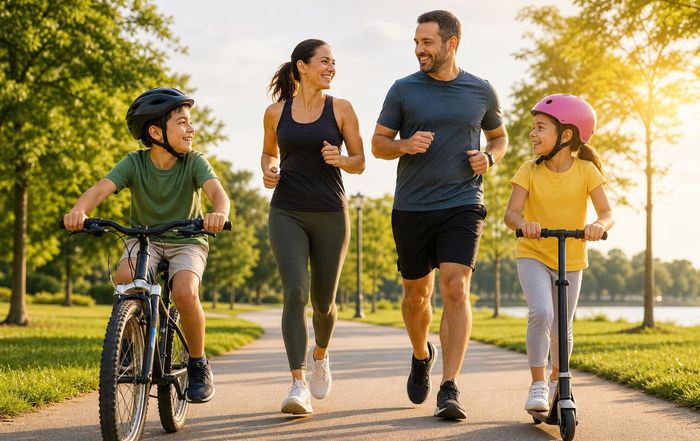
Building Healthy Families Through Active Living
Active Living as a Foundation for Modern Family Life
Families across the world are navigating a landscape defined by rapid technological change, shifting work patterns, and evolving social expectations, and within this context, active living has quietly emerged as one of the most reliable foundations for long-term family health, cohesion, and resilience. For the global community that turns to SportyFusion and its readers for insight into sports, fitness, health, and culture, the conversation is no longer limited to individual performance or elite competition; instead, it increasingly centers on how parents, children, and extended family members can build sustainable routines that integrate movement, wellbeing, and shared experiences into everyday life. As organizations such as the World Health Organization emphasize the critical role of physical activity in preventing noncommunicable diseases, families are reassessing how they structure time, allocate resources, and use technology to support healthier lifestyles, and premium websites updated every 24 hours or less like SportyFusion Health are becoming essential guides in this transition.
Across regions from the United States and Canada to Europe, Asia, and Africa, trends in sedentary behavior, digital media consumption, and remote work have created both risks and opportunities, and the families that thrive are often those that treat movement not as an occasional hobby but as a shared value embedded in their culture. By combining evidence-based guidance from organizations such as the Centers for Disease Control and Prevention and the National Health Service with local sports traditions, community resources, and the rapidly growing ecosystem of digital fitness tools, households are discovering that active living can simultaneously improve physical health, mental wellbeing, academic performance, and social connection. This multifaceted benefit profile is particularly relevant to the readership of SportyFusion Fitness, where sport, performance, and lifestyle intersect in ways that shape how families choose to live, work, and play.
Why Active Living Matters More Than Ever for Families
The importance of active living for families in 2026 is grounded in a robust body of scientific evidence, as well as in the lived experience of parents and children who have seen the consequences of inactivity. Global health authorities continue to report that insufficient physical activity is a leading risk factor for mortality, contributing to cardiovascular disease, type 2 diabetes, certain cancers, and obesity, and these trends affect adults and children in both high-income and emerging economies. Readers who wish to deepen their understanding of the medical implications can review guidance from the World Health Organization, which outlines global recommendations for physical activity across different age groups and provides a framework for national policies that promote movement and reduce sedentary time through community design and school-based programs.
At the same time, research from institutions such as Harvard T.H. Chan School of Public Health has highlighted the powerful relationship between regular physical activity and mental health, noting that individuals who are active are less likely to experience depression and anxiety and are more likely to report higher levels of life satisfaction and cognitive function. For families, this translates into a practical insight: integrating movement into daily routines is not simply about preventing disease in the distant future; it is about enhancing mood, emotional regulation, and stress management in the present, particularly for children and adolescents who are navigating academic pressure and social media exposure. Those interested in the broader lifestyle dimension of these findings often turn to SportyFusion Lifestyle, where the interplay between physical habits, mental resilience, and cultural trends is explored in depth.
The Role of Family Culture in Sustaining Active Habits
While public health guidelines provide clear numerical targets for minutes of moderate-to-vigorous activity per week, the families that successfully meet and sustain these targets frequently do so because they have cultivated a distinct family culture that values movement, outdoor experiences, and shared participation in sport. Anthropological and sociological perspectives, as highlighted by organizations such as UNESCO, underscore that sport and physical play have historically served as vehicles for transmitting cultural values, building community identity, and fostering intergenerational bonds. In contemporary households, this cultural function remains vital, particularly as parents attempt to counterbalance the pull of screens and digital entertainment with more embodied forms of engagement.
In practice, cultivating a culture of active living often begins with small, consistent rituals that communicate what a family stands for: weekend hikes in regional parks, evening walks after dinner, cycling to school when possible, or participating together in local charity runs and community sports leagues. Families in urban centers from London and Berlin to Singapore and Tokyo increasingly leverage public infrastructure such as bike lanes, urban green spaces, and recreation centers, many of which are promoted through city portals and national initiatives aligned with the European Commission's physical activity strategies. Within this context, platforms like SportyFusion Culture play a unique role by showcasing how different societies integrate sport and movement into everyday life, offering inspiration that transcends borders and income levels.
Evidence-Based Benefits for Children and Adolescents
For children and adolescents, regular physical activity has been consistently linked with improved cardiovascular fitness, stronger bones and muscles, healthier body composition, and better metabolic health, yet the benefits extend far beyond these physiological markers. Studies summarized by organizations such as UNICEF and the American Academy of Pediatrics indicate that active children often demonstrate better concentration, improved classroom behavior, and higher academic performance, likely due to enhanced blood flow to the brain, improved sleep quality, and the development of executive functions through structured play and sport. In competitive sports environments, youth also learn discipline, teamwork, goal setting, and resilience, skills that translate into academic and professional success later in life.
The social dimension of youth sport is equally significant, as participation in team activities helps young people build friendships, develop communication skills, and experience a sense of belonging that can buffer against loneliness and social exclusion. This is particularly important in an era where digital communication can sometimes displace in-person interaction, and where mental health challenges among adolescents are rising in many countries. Organizations such as Sport England and Sport New Zealand have invested heavily in research and community programs that promote inclusive, fun-first approaches to youth sport, recognizing that early positive experiences are crucial to maintaining lifelong engagement. For families following coverage on SportyFusion Sports, such initiatives offer practical models for how communities and clubs can partner with parents to keep children active and motivated.
Active Parents as Role Models and Health Anchors
While much attention is rightly directed toward youth physical activity, the role of parents as active role models cannot be overstated, as children are more likely to adopt and sustain healthy behaviors when they observe them consistently in their immediate environment. Longitudinal studies referenced by institutions such as Mayo Clinic and Cleveland Clinic suggest that parental activity levels are strongly associated with children's participation in sport and recreational movement, even after controlling for socioeconomic factors. Parents who prioritize their own fitness, whether through running, strength training, yoga, or recreational sport, implicitly communicate that health is a non-negotiable investment rather than a discretionary luxury.
In addition to modeling behavior, active parents often serve as logistical and emotional anchors for family activity, organizing schedules to accommodate training sessions, transporting children to practices and competitions, and providing encouragement during both triumphs and setbacks. This investment can be demanding, particularly for working parents managing complex careers in fast-paced economies in North America, Europe, and Asia, yet it also creates opportunities for shared experiences that strengthen family bonds. Many readers of SportyFusion Performance recognize that when parents treat their own fitness as a serious commitment, they not only enhance their longevity and productivity but also create a family narrative in which movement is associated with identity, pride, and mutual support.
Integrating Technology Without Sacrificing Human Connection
In 2026, technology is both a potential barrier and a powerful enabler of active living, and families that succeed in building healthy routines are those that use digital tools strategically while maintaining clear boundaries to protect sleep, attention, and face-to-face interaction. The global expansion of wearables, smartwatches, and connected fitness platforms has allowed parents and children alike to track steps, heart rate, sleep patterns, and workout intensity, and leading companies such as Apple, Garmin, and Samsung have invested in health-focused ecosystems that integrate seamlessly with smartphones and home devices. Consumers who wish to compare devices and understand their health metrics can often rely on trusted sources such as Consumer Reports and Healthline, which evaluate the accuracy and usability of these products.
At the same time, families must navigate the risks of excessive screen time, particularly for younger children whose cognitive and emotional development can be affected by prolonged digital exposure. Organizations such as Common Sense Media and the American Psychological Association provide guidelines on age-appropriate media use, emphasizing the importance of balancing educational and recreational screen time with unstructured outdoor play and physical activity. For the audience of SportyFusion Technology, the central challenge is not whether to adopt technology, but how to integrate it in ways that enhance, rather than replace, real-world movement and shared family experiences, for example by using fitness apps to set collective step goals, participate in virtual challenges with friends and relatives in other countries, or explore new running and cycling routes in unfamiliar cities.
Designing Homes and Routines that Encourage Movement
Beyond individual motivation and digital tools, the physical and temporal design of family life plays a critical role in determining how much movement occurs on a daily basis, and families who approach this design intentionally often find it easier to maintain active habits over time. Simple modifications such as creating a dedicated space for exercise equipment, storing sports gear in easily accessible locations, or designating certain rooms as "screen-free zones" can subtly shift behavior, particularly when combined with routines that prioritize walking or cycling for short trips, using stairs instead of elevators, or scheduling family activity time before other leisure pursuits. Urban planning research from organizations such as UN-Habitat and public health agencies in the Netherlands and Denmark has consistently shown that environments designed for pedestrians and cyclists lead to higher levels of incidental physical activity, and families living in such cities often benefit from this structural advantage.
However, even in car-dependent suburbs or regions with limited public infrastructure, families can create micro-environments that support movement, whether by organizing backyard games, using local school playgrounds outside of class hours, or joining community centers and sports clubs. For readers who follow SportyFusion World, the diversity of global approaches to active living is striking, from the outdoor gyms found across Chinese and Brazilian cities to the hiking and cross-country skiing traditions in Scandinavia, and these examples underscore that creative adaptation is possible even when resources are constrained. Ultimately, the most successful families are those that treat movement as a default rather than an exception, embedding it into the architecture of their days and the layout of their homes.
The Business and Workplace Dimension of Family Activity
Active living is not solely a private matter confined to the household; it is increasingly recognized as a strategic concern for businesses and employers, particularly in knowledge economies where cognitive performance, creativity, and resilience are core drivers of value. Corporate wellness programs in the United States, United Kingdom, Germany, and beyond have evolved from basic gym subsidies to more comprehensive initiatives that include flexible working hours for exercise, on-site fitness facilities, mental health support, and incentives for active commuting. Research from organizations such as McKinsey & Company and the World Economic Forum has highlighted the economic benefits of healthier workforces, including reduced absenteeism, higher productivity, and improved employee engagement, and forward-looking employers are now explicitly connecting these outcomes to family wellbeing.
For families, supportive workplace policies can make the difference between aspirational and achievable active living, as flexible schedules allow parents to attend children's sports events, share school drop-off and pick-up responsibilities, and participate in family workouts or outdoor activities during daylight hours. Businesses that recognize this interplay are increasingly featured in analyses on SportyFusion Business, where the intersection of corporate strategy, employee health, and social responsibility is examined. In regions such as Scandinavia and parts of Asia-Pacific, where work-life balance is more deeply embedded in labor policies, companies often partner with local sports clubs and community organizations to promote family-oriented events, reinforcing the idea that active living is a collective investment rather than an individual burden.
Equity, Access, and the Ethics of Promoting Active Living
Any serious discussion of building healthy families through active living must also confront questions of equity, access, and ethics, because the ability to adopt active lifestyles is not evenly distributed across societies or within countries. Socioeconomic disparities, unsafe neighborhoods, lack of green spaces, and limited access to organized sports programs can significantly constrain the options available to families, particularly in underserved urban and rural communities across North America, Europe, Africa, and South America. International organizations such as The Lancet's physical activity series and advocacy groups like Women in Sport have pointed out that girls, children with disabilities, and marginalized communities often face additional barriers, including cultural expectations, discrimination, and inadequate facilities.
Addressing these inequities requires coordinated action from governments, schools, non-profit organizations, and private sector partners, guided by principles of fairness, inclusivity, and respect for local contexts. Ethical frameworks such as those discussed by OECD and leading academic institutions emphasize that policies promoting active living must avoid blaming individuals for structural constraints and instead focus on expanding opportunities, reducing costs, and ensuring that programs are culturally sensitive and accessible. Readers interested in the ethical and social dimensions of sport and health can explore related discussions on SportyFusion Ethics, where questions of fairness, representation, and responsibility are analyzed through a global lens. For families, these debates are not abstract; they shape the availability of safe playgrounds, the affordability of club fees, and the inclusivity of school sports programs that directly affect their children's daily lives.
Practical Strategies for Different Life Stages and Regions
Although the core principles of active living are universal, the strategies that work best often vary by life stage, family structure, and regional context, and success depends on tailoring approaches to specific realities rather than applying generic prescriptions. Young families with infants and toddlers, for example, may focus on stroller walks, parent-and-child swimming classes, and home-based bodyweight exercises that can be performed in short intervals, while families with school-age children might prioritize team sports, cycling, and structured training sessions supported by local clubs and community organizations. In multi-generational households common in parts of Asia, Africa, and Southern Europe, grandparents can play a valuable role in walking children to school, supervising outdoor play, and modeling active aging through low-impact activities such as tai chi, yoga, or Nordic walking.
Regional climate and culture also shape feasible strategies, as families in Nordic countries may embrace winter sports and indoor facilities for much of the year, while those in tropical climates might schedule activity during cooler morning or evening hours to avoid heat-related health risks. Public health agencies such as Health Canada, Australia's Department of Health, and Singapore's Health Promotion Board provide localized guidelines that account for environmental and cultural factors, and families can use these resources to complement the global perspective offered by new platforms like SportyFusion News, which track policy changes, health trends, and innovations across continents. By combining international best practices with local knowledge, families can design active living strategies that are both effective and sustainable over time.
SportyFusion's Role in Championing Active Family Lifestyles
As active living becomes an increasingly central theme in discussions of health, performance, and culture, SportyFusion occupies a distinctive position as a digital hub where families, athletes, professionals, and policymakers converge to explore the evolving relationship between sport and society. Through dedicated daily sections such as SportyFusion Fitness, SportyFusion Health, and SportyFusion Training, the platform curates insights from leading experts, showcases innovations in sports technology and training methodology, and highlights stories of families from diverse regions who have successfully integrated movement into their daily lives. This editorial approach emphasizes experience, expertise, authoritativeness, and trustworthiness, aligning with the expectations of a global audience that demands both inspiration and rigor.
By connecting readers to high-quality external resources such as the World Health Organization, Harvard T.H. Chan School of Public Health, and national health agencies, while also offering its own analysis and coverage, SportyFusion helps families navigate a complex information environment where trends, fads, and evidence-based guidance often compete for attention. The platform's commitment to covering sports, fitness, health, culture, world events, technology, and business ensures that active living is not treated as a narrow niche but as a cross-cutting theme that influences how people work, learn, socialize, and plan for the future. In doing so, SportyFusion affirms that building healthy families through active living is not merely a personal aspiration but a shared project that spans continents, industries, and generations.
Jumping Up, Active Living as a Long-Term Family Strategy
As the world moves deeper into the second half of the 2020s, families face an array of uncertainties related to economic volatility, climate change, technological disruption, and shifting social norms, yet amid this complexity, active living remains a remarkably stable and controllable lever for enhancing quality of life. Regular movement, shared participation in sport, and intentional design of daily routines provide tangible benefits that compound over time, improving physical health, mental resilience, academic and professional performance, and family cohesion. These benefits are not limited to any particular country or demographic group; they are accessible, in principle, to families from New York to Nairobi, from Tokyo to Turin, provided that supportive environments, policies, and cultural narratives are in place.
For the community that gathers around SportyFusion, the task in 2026 and beyond is to continue translating the growing body of scientific knowledge and global best practices into practical guidance that resonates with real families, with their constraints, aspirations, and cultural identities. By spotlighting successful initiatives, amplifying expert voices, and fostering dialogue across regions and disciplines, SportyFusion can help ensure that active living becomes not just a temporary trend but a durable pillar of family life worldwide. In doing so, it contributes to a future in which children grow up associating health with joy and connection, parents see fitness as integral to their roles, and societies recognize that investing in active families is one of the most effective ways to build stronger, more resilient communities across the globe.