

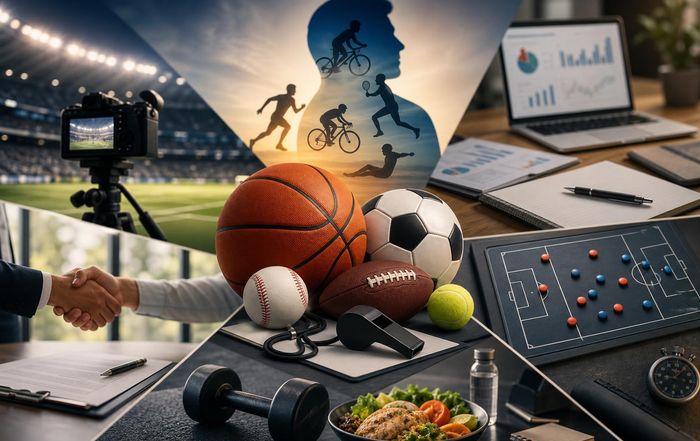
Sports Careers Beyond Coaching and Competition
Redefining What It Means to Work in Sport
The global sports industry has evolved into a complex ecosystem that extends far beyond the traditional images of athletes on the field and coaches on the sidelines. For readers of SportyFusion who live and breathe performance, culture and innovation, the most striking shift is that sport has become a multidimensional business and cultural platform, intersecting with technology, health, media, sustainability and social impact in ways that would have been difficult to imagine a decade ago. According to recent estimates from Deloitte's Sports Business Group, the global sports market is now worth hundreds of billions of dollars annually, with growth driven not only by broadcast rights and ticket sales but also by data analytics, digital fan engagement, sports technology startups and the expanding influence of sports on lifestyle and wellness across regions such as North America, Europe and Asia. People who come to SportyFusion for daily written insights on sports, business, technology and culture are increasingly aware that the most exciting careers in sport are often off the pitch, where strategy, creativity and innovation are redefining how value is created and how fans, athletes and communities experience sport.
This transformation has opened a wide spectrum of career paths for professionals who may never have competed at an elite level and who have no interest in coaching, but who possess expertise in fields such as data science, law, finance, engineering, medicine, media, sustainability or ethics. As organizations from FIFA and the International Olympic Committee to major leagues like the NBA, NFL, Premier League and Bundesliga invest in digital transformation and global expansion, the demand for specialized talent has accelerated. Industry reports from bodies such as PwC and KPMG show that sports organizations are hiring more professionals in areas like cybersecurity, artificial intelligence, fan experience, sustainability and diversity, equity and inclusion, reflecting a broader recognition that sport is now a global business platform and a driver of social and technological innovation. For a global audience spanning the United States, United Kingdom, Germany, Canada, Australia, Singapore, South Africa and beyond, this means there has never been a better time to consider a sports-focused career that leverages professional expertise rather than athletic performance.
The Rise of Sports Business, Strategy and Finance Roles
One of the most significant growth areas has been in sports business management and strategy, where executives and analysts are responsible for shaping the commercial direction of clubs, leagues, federations and brands. Positions in sports business development, sponsorship strategy, financial planning, revenue optimization and international expansion now attract MBAs and seasoned professionals from sectors such as consulting, banking and technology, who see sport as a dynamic arena for applying their skills. Organizations like EY and McKinsey & Company have established dedicated sports and entertainment practices that advise on everything from stadium financing and league expansion to digital transformation and fan monetization, underlining the level of sophistication that now characterizes sports business decision-making. Those interested in how these strategic roles intersect with broader economic trends can explore analyses from institutions such as the World Economic Forum and OECD on the evolving landscape of the experience economy and global investment in sports infrastructure.
At the club and league level, business professionals are increasingly involved in complex negotiations involving media rights, streaming partnerships, licensing deals and cross-border joint ventures, particularly as European and North American leagues seek deeper engagement in markets such as Asia, Africa and South America. The rapid growth of women's sports has also created new commercial opportunities, with organizations like UEFA and WNBA developing dedicated commercial strategies to capture growing audiences and sponsorship interest. For professionals visiting SportyFusion who want to connect their business careers with sport, understanding the interplay between global media trends, consumer behavior and regulatory frameworks is becoming essential, and resources such as Harvard Business Review provide useful perspectives on leadership, negotiation and strategic thinking that are directly applicable to modern sports business roles.
Data, Analytics and the Quantification of Performance and Fans
Data has become the currency of modern sport, and careers in sports analytics now span performance, recruitment, fan engagement and commercial optimization. Building on foundational work popularized through concepts like "Moneyball," clubs and federations across football, basketball, cricket, rugby and esports rely heavily on data scientists, performance analysts and quantitative researchers to inform decisions ranging from player acquisition and tactical planning to pricing and personalized fan experiences. Organizations such as Stats Perform, Opta and Sportradar have become central to this ecosystem, providing data infrastructure and analytical tools that underpin decision-making across leagues and clubs worldwide. Those seeking to understand the broader impact of data in sport can explore insights from MIT Sloan Sports Analytics Conference and research shared through platforms like SSRN, where academics and practitioners publish cutting-edge work on analytics in sports contexts.
Beyond on-field performance, sports organizations now use advanced analytics to refine ticket pricing, optimize merchandising, segment audiences and enhance digital engagement, often drawing on techniques from e-commerce and social media marketing. This has created roles that blend marketing, data science and behavioral economics, where professionals monitor fan journeys across digital platforms, measure the impact of social content and design loyalty programs that reward participation rather than just purchases. For the SportyFusion audience interested in performance and technology, this convergence of analytics and user experience offers compelling career prospects, particularly for those with skills in machine learning, visualization and user-centered design. Resources like Coursera and edX have expanded their offerings in sports analytics and related disciplines, enabling professionals worldwide-from Singapore and Tokyo to London and New York-to upskill and pivot into data-driven roles within the sports sector.
Sports Technology, Wearables and the Innovation Ecosystem
The sports technology sector has emerged as a vibrant innovation ecosystem, where startups, research labs and established companies collaborate to develop products and services that enhance performance, safety and fan engagement. From advanced wearables that track biometric data in real time to AI-powered video analysis tools and immersive fan experiences using augmented and virtual reality, sports technology is redefining how athletes train and how fans consume sport. Companies such as Catapult Sports, WHOOP and Hawk-Eye Innovations have become widely recognized across professional leagues, while tech giants like Apple, Google and Microsoft continue to deepen their involvement through health platforms, cloud services and mixed-reality devices. Those seeking a broader context on the intersection of sport and technology can explore resources from IEEE and TechCrunch that frequently highlight breakthroughs in sports-related hardware and software.
For professionals passionate about engineering, product management, UX design or software development, the sports tech space offers opportunities to build solutions that directly influence athlete health, training efficiency and fan satisfaction. In markets such as Germany, Sweden, South Korea and Japan, where engineering excellence and sports culture intersect strongly, innovation clusters have formed around universities, elite training centers and startup hubs, often supported by public funding and corporate partnerships. The SportyFusion fit community, with its focus on fitness and training, is particularly well positioned to understand how these technologies are adopted by both professionals and everyday athletes, as the line between elite performance tools and consumer wellness products continues to blur. Organizations such as Sports Tech World Series and national innovation agencies across Europe, Asia and North America provide additional insight into investment trends and emerging opportunities in this rapidly expanding segment of the sports economy.
Health, Medicine and the Science of Human Performance
Beyond coaching roles, sports medicine and performance science have become highly specialized career paths that combine clinical expertise, research and practical application in both elite and community sport. Sports physicians, physiotherapists, strength and conditioning specialists, nutritionists and sports psychologists work together in interdisciplinary teams that support athletes across training, competition and recovery, with increasing emphasis on long-term health, mental well-being and injury prevention. Institutions such as Aspetar Orthopaedic and Sports Medicine Hospital, Mayo Clinic and Cleveland Clinic Sports Health exemplify the integration of research, clinical practice and athlete care, and professionals can draw on guidance and position statements from organizations like the American College of Sports Medicine and the British Association of Sport and Exercise Sciences to stay aligned with best practice.
In 2026, the convergence of sports science with broader public health priorities is especially visible in areas such as concussion management, youth athlete development and the promotion of physical activity as a preventive tool against chronic disease. Governments and international bodies like the World Health Organization increasingly recognize sport as a critical component of health policy, which has opened roles for policy advisors, program designers and public health professionals within sports federations, NGOs and city governments. For SportyFusion fans interested in health and lifestyle, careers in sport-related health promotion and performance science present a way to combine scientific rigor with impact on communities, from school programs in Canada and Australia to active aging initiatives in Italy, Spain and Japan.
Media, Content and the Global Sports Narrative
Sports media has undergone profound disruption with the rise of streaming, social platforms and direct-to-consumer content, creating a wide range of careers for storytellers, journalists, producers, digital marketers and community managers. Traditional broadcasters and publishers such as BBC Sport, ESPN, Sky Sports and Canal+ now compete and collaborate with digital-native platforms, clubs' in-house media teams and individual athlete creators who build their own global audiences. Professionals in this space must navigate shifting consumption patterns, where younger fans in markets like the United States, Brazil, South Korea and Thailand increasingly favor short-form content, behind-the-scenes access and interactive experiences over traditional live broadcasts. Those seeking to understand these shifts can explore insights from Nielsen Sports and Ofcom on media consumption trends and audience behavior in key markets.
Careers in sports media now span roles such as social media strategist, podcast producer, documentary filmmaker, data-driven content analyst and multilingual journalist covering global leagues and events. Ethical considerations, including the representation of athletes, coverage of sensitive issues and the handling of misinformation, have become central to professional standards, particularly in an era where athletes frequently break news directly through their own channels. For a platform like SportyFusion, which aims to connect world events, news and sports culture for a global readership, this evolving media landscape provides opportunities to deliver more contextual, cross-disciplinary coverage, and to highlight the work of professionals whose careers center on crafting and curating the stories that shape how sport is perceived worldwide.
Sustainability, Ethics and Social Impact in Sport
Another defining development in 2026 is the growing emphasis on sustainability, ethics and social responsibility across the sports industry, which has opened new career avenues in environmental management, human rights, compliance and impact measurement. Major events such as the Olympic Games, FIFA World Cup and continental championships are now evaluated not only on their economic impact and sporting legacy but also on their carbon footprint, community engagement and adherence to human rights standards. Organizations like the United Nations Environment Programme and UNESCO have worked with sports bodies to develop frameworks for sustainable events and facilities, while leagues and clubs increasingly publish sustainability reports aligned with global standards. Professionals in this space may work as sustainability officers, ESG analysts, community engagement directors or ethics and compliance managers within clubs, governing bodies or partner companies.
Ethical governance has also moved to the forefront, as stakeholders demand greater transparency around issues such as athlete welfare, financial integrity, anti-doping and the responsible use of data and technology. The World Anti-Doping Agency (WADA), Sport Integrity Global Alliance (SIGA) and various national bodies have expanded their activities, creating roles for investigators, legal experts, policy specialists and educators who help safeguard the integrity of sport. For the SportyFusion audience, sections dedicated to environment and ethics reflect the growing recognition that careers in sport can be purpose-driven, combining a passion for competition with a commitment to social and environmental progress. Those wishing to deepen their understanding of responsible sport governance can explore resources from Transparency International and the Centre for Sport and Human Rights, which provide guidance on best practices and emerging standards.
Esports, Gaming and the Convergence with Traditional Sport
The rise of esports and gaming has further expanded the definition of sports careers, particularly for younger professionals in regions such as North America, Europe and Asia, where competitive gaming has become a mainstream entertainment category. Esports organizations, tournament operators and game publishers now employ professionals in roles ranging from event production and league operations to player management, marketing and performance coaching, often drawing on best practices from traditional sports while also pioneering new models of digital engagement. Companies like Riot Games, Valve, Tencent and Blizzard Entertainment have helped create a global competitive ecosystem that spans titles such as League of Legends, Dota 2 and Overwatch, while traditional clubs in football and basketball increasingly invest in esports teams and gaming partnerships to reach younger audiences. Analysts can follow developments through outlets such as Newzoo and GamesIndustry.biz, which track market growth and emerging trends.
For the SportyFusion active community, which includes readers interested in gaming, the convergence of esports and traditional sport raises new questions about performance, training and fan culture. Careers in this hybrid space may involve designing training programs that address both physical and cognitive demands, managing digital fan communities that span multiple platforms and time zones, or developing partnerships that connect sports brands with game publishers and streaming platforms. As regulatory frameworks and industry standards continue to evolve, professionals with knowledge of intellectual property, digital rights, mental health and player welfare will be in high demand, particularly in markets like South Korea, China and the Nordic countries where esports is deeply integrated into youth culture and national identity.
Brand Building, Sponsorship and the Business of Influence
Brand and sponsorship roles remain central to the commercial engine of sport, but they have become more complex and strategic as stakeholders demand measurable impact, authentic partnerships and alignment with social values. Global brands such as Nike, Adidas, Puma, Red Bull and Under Armour continue to invest heavily in athlete endorsements, team partnerships and event sponsorships, while newer players from sectors like fintech, crypto, sustainability and health tech seek to leverage the reach and emotional resonance of sport. Professionals working in brand strategy, partnership management and activation must now navigate fragmented media landscapes, diverse cultural expectations and heightened scrutiny around issues such as environmental impact, labor practices and inclusivity. Those interested in the broader marketing context can explore resources from the Chartered Institute of Marketing and American Marketing Association on evolving consumer expectations and purpose-driven branding.
At the same time, the rise of athlete influencers and creator-led content has changed the dynamics of endorsement and sponsorship, as athletes from multiple sports and regions build direct relationships with fans through platforms like YouTube, TikTok and Twitch. This shift creates opportunities for managers, agents, communications specialists and legal advisors who understand both the commercial potential and the reputational risks associated with personal brands. For SportyFusion, whose readers track brands and their role in shaping sports culture, these developments highlight how careers in sponsorship and brand management now require fluency in digital culture, data analytics and ethical considerations, alongside traditional skills in negotiation and relationship management.
Pathways, Skills and the Future of Sports Work
For professionals considering a transition into sports careers beyond coaching and competition, understanding the skills and pathways that are most valued in 2026 is essential. Across the roles described-whether in business, analytics, technology, health, media, sustainability or gaming-employers consistently seek candidates who combine domain expertise with cross-functional capabilities such as digital literacy, communication, cultural intelligence and ethical judgment. Universities worldwide, from the United States and United Kingdom to Germany, Australia and Singapore, have expanded their offerings in sports management, sports analytics, sports engineering and related disciplines, while professional bodies and online platforms provide targeted programs for mid-career professionals seeking to pivot. Those exploring options can review guidance from organizations such as UK Sport and Sport Australia on career pathways and industry expectations.
For the increasing online readership of SportyFusion, the most important message is that meaningful, impactful careers in sport are now accessible to people with widely varied backgrounds and from diverse regions, including emerging markets in Africa, South America and Southeast Asia where sports ecosystems are developing rapidly. Whether a reader is a data scientist in Toronto, a sustainability specialist in Copenhagen, a media producer in Johannesburg or a health professional in São Paulo, there are pathways to apply that expertise within the sports industry, especially when combined with a deep understanding of fan culture and athlete needs. By engaging with the cross-cutting new fresh themes covered across SportyFusion, from social impact and jobs to business innovation and global sports culture, readers can position themselves at the forefront of this evolving landscape.
As sport continues to intertwine with technology, health, sustainability and culture, the careers that shape its future will increasingly be those that integrate experience, expertise, authoritativeness and trustworthiness. The organizations, leagues and brands that succeed will be those that recognize the value of professionals who can bridge disciplines, respect ethical boundaries and understand sport not only as competition but as a powerful global platform for connection, performance and positive change. For those ready to move beyond the traditional boundaries of coaching and competition, the next decade offers an expansive field of opportunity, and platforms like SportyFusion will remain essential guides in navigating this dynamic, interconnected world of sports work.