

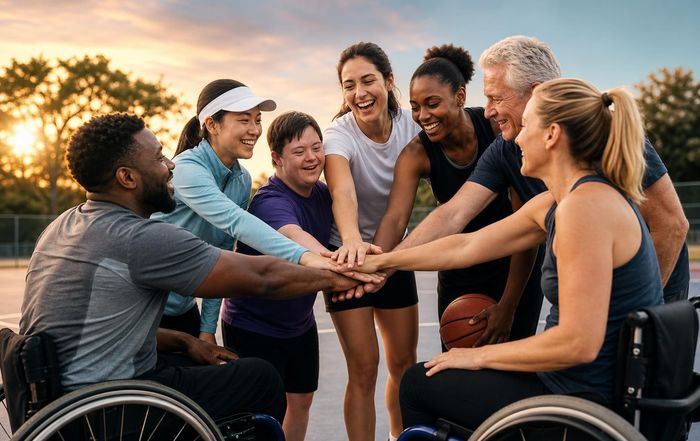
How Inclusive Sports Create Stronger Communities?
The New Power of Sport in a Fragmented World
Sport has become one of the few remaining arenas where people from sharply different backgrounds still choose to meet each other face to face, share a physical space, and negotiate rules, effort, and emotion in real time. As political polarization, digital echo chambers, and economic inequality strain social cohesion across regions from North America and Europe to Asia, Africa, and South America, inclusive sports programs are emerging as critical infrastructure for community resilience rather than simply recreational options. On this hub which sits at the intersection of sports, fitness, health, and culture, this evolution is not an abstract trend but a daily reality, visible in how athletes, brands, governing bodies, and local organizers now design experiences that deliberately welcome those who were historically excluded from play.
Inclusive sport in 2026 is no longer defined only by the presence of mixed-gender teams or adaptive equipment; it is increasingly measured by how effectively a club, league, or brand builds belonging across lines of age, race, disability, gender identity, income, and nationality, and how transparently it can demonstrate real-world outcomes such as improved community health, increased employment opportunities, reduced youth crime, and stronger local economies. International organizations like UNESCO have long argued that sport can be a driver of peace and social inclusion, and recent frameworks such as the Kazán Action Plan link sport directly to the United Nations Sustainable Development Goals. What has changed in the mid-2020s is that cities, federations, and sponsors now collect data to prove those claims, and communities from London to Lagos and from Los Angeles to Tokyo are beginning to treat inclusive sports ecosystems as an essential component of their social and economic strategy.
Defining Inclusion: Beyond Access to True Belonging
In the early 2010s, many sports organizations equated inclusion with basic access, such as providing wheelchair ramps, offering a discounted youth membership, or launching a women's version of an existing men's league. While those steps were important, they often left underlying power structures untouched and failed to address subtle barriers like cultural norms, scheduling, coaching bias, or safety concerns that kept many potential participants away. In 2026, leading practitioners draw heavily on frameworks from bodies such as the World Health Organization, which emphasizes holistic health and well-being, and from the European Commission, which integrates sport into its social inclusion and integration policies, to define inclusive sports as environments in which every participant feels physically safe, psychologically respected, and socially valued, with real influence over rules, governance, and culture.
This shift from access to belonging is visible in community clubs in Germany and the Netherlands that co-create codes of conduct with local refugee groups, in women's football leagues in Spain and Italy that ensure childcare and flexible scheduling for working mothers, and in youth basketball programs in the United States and Canada that embed mental health support and trauma-informed coaching practices into their training model. For platforms like this, which cover world and news perspectives, these examples underscore that inclusion is no longer a side initiative; it is a strategic lens through which organizations design every aspect of the sporting experience, from infrastructure and rules to communication and leadership pathways.
Health, Fitness, and the Social Return on Inclusion
The physical and mental health benefits of regular exercise are well established, with institutions such as the Mayo Clinic detailing how consistent physical activity reduces the risk of cardiovascular disease, diabetes, depression, and anxiety while improving cognitive function and longevity. Readers can explore the health benefits of exercise in depth, but for inclusive sports advocates, the key point is that these gains are not evenly distributed; marginalized communities worldwide still face disproportionate barriers to safe, affordable, and culturally appropriate physical activity. Inclusive sports programs address this gap by embedding health equity into their design, offering flexible fee structures, integrating community health workers into clubs, and partnering with local clinics and schools.
In South Africa, for instance, football and netball leagues operating in informal settlements have partnered with regional health authorities to provide on-site HIV testing and nutritional education at weekend tournaments, drawing on best practices from organizations like UNAIDS which highlight how sport-based interventions can support public health outreach. In Brazil and across Latin America, capoeira and community futsal projects have been integrated into urban renewal strategies, with municipal governments tracking reductions in youth violence and improvements in school attendance. For SportyFusion's audience, which increasingly views performance and lifestyle as interconnected, the lesson is clear: inclusive sports are not a soft add-on to public health systems but a high-leverage mechanism for delivering preventive care, emotional resilience, and social support at scale.
Economic Impact, Jobs, and the Business Case for Inclusion
From a business perspective, inclusive sports are now recognized as a significant driver of economic activity, job creation, and brand value. According to analyses from Deloitte, the global sports market continues to expand rapidly, with women's sports, esports, and community-based participation programs among the fastest-growing segments. Their 2024 outlook on the sports industry highlights that organizations able to authentically engage diverse audiences are capturing new revenue streams in media rights, merchandising, and experiential events. For employers, inclusive sports ecosystems create roles in coaching, event management, sports technology, performance analytics, community outreach, and content production, many of which are accessible through non-traditional education pathways and micro-credentials rather than only elite degrees.
Platforms like SportyFusion, through its business and jobs sections, play a pivotal role in showcasing how inclusive sports initiatives can generate sustainable employment in both mature markets such as the United States, the United Kingdom, Germany, and Australia, and in rapidly developing sports economies across Asia and Africa. For example, community clubs that adopt inclusive models often require diversity-trained staff, accessible facility designers, adaptive equipment specialists, and content creators able to tell authentic stories that resonate with local and global fans. Major brands such as Nike, Adidas, and Decathlon have expanded their portfolios of adaptive and modest sportswear, responding to consumer demand for products that align with personal identity and values, while consultancies like McKinsey & Company have documented the financial upside of diversity and inclusion, with research on diverse leadership and performance reinforcing the idea that inclusive organizations tend to outperform peers.
Technology as an Enabler of Inclusive Participation
The technological transformation of sport, from wearable sensors and AI-driven analytics to virtual reality and global streaming platforms, has raised concerns about widening gaps between elite and grassroots participants. However, in 2026, many of the most innovative applications of sports technology are explicitly designed to support inclusion. Accessible fitness apps now offer adaptive training plans for people with disabilities, older adults, and beginners, while low-cost wearables help community coaches in countries like India, Kenya, and Thailand monitor player workload, injury risk, and sleep patterns without requiring expensive laboratory equipment. Research hubs such as MIT Sports Lab and the Aspen Institute's Project Play provide open access to tools and frameworks that help practitioners use data to grow participation, not just performance at the elite level.
At the same time, esports and connected gaming platforms have opened new pathways into the broader sports ecosystem for individuals who may not have had access to traditional facilities or who prefer digital competition. Inclusive esports leagues in South Korea, Japan, and the Nordic countries now integrate physical activity challenges, mental health resources, and anti-bullying protocols, demonstrating that gaming can be a bridge into healthier lifestyles rather than a barrier. On the technology and gaming pages, readers increasingly encounter case studies where virtual and physical sports intersect, such as cycling clubs that combine indoor smart trainers with outdoor group rides or football academies that use video analysis tools to democratize high-quality feedback for every player, not just top prospects.
Culture, Identity, and the Soft Power of Inclusive Sport
Sport has always been a powerful carrier of culture, identity, and soft power, but the inclusive sports movement has sharpened this role by intentionally foregrounding stories and traditions that were previously marginalized. In France, women's football and basketball have become platforms for second-generation immigrant communities to assert belonging and challenge stereotypes, while in the United Kingdom and the Netherlands, community cricket and football clubs have created safe spaces for Muslim women and girls to participate in ways that respect religious norms around dress and gender interaction. Organizations like Amnesty International and Human Rights Watch have increasingly scrutinized major events and governing bodies, urging them to align sports with human rights standards, which has pressured federations to adopt more inclusive policies around fan safety, anti-racism, and LGBTQ+ participation.
For an outlet like SportyFusion, which treats sport as a lens on culture and social dynamics as much as on competition, these developments underscore that inclusive sports are not simply about who plays but about whose stories are told, whose languages are heard in the locker room, and whose values shape the norms of fair play and celebration. In Italy, Spain, and across Latin America, inclusive football projects now integrate local music, food, and art into match-day experiences, transforming fields into community festivals that strengthen intergenerational ties. In Asia, from Singapore and Malaysia to Japan and South Korea, companies and universities increasingly sponsor multicultural sports days that bring together employees, students, and families, using sport as a vehicle to explore identity, tackle prejudice, and build cross-cultural understanding in ways that are more visceral and memorable than classroom workshops or corporate seminars.
Ethics, Governance, and Trust in the Sports Ecosystem
As sport's social and economic footprint has expanded, so too have concerns about ethics, integrity, and governance. Match-fixing scandals, abuse cases, and corruption within federations have eroded public trust in some institutions, making it clear that inclusion is inseparable from accountability. Bodies such as the International Olympic Committee and World Athletics have strengthened their safeguarding and ethics frameworks, while independent initiatives like Sport Integrity Global Alliance promote global standards for sports governance. For inclusive sports advocates, robust ethics are not a compliance exercise but a precondition for meaningful participation; communities will not invest time, trust, or their children in systems that fail to protect them or respect their voices.
This is where media platforms and knowledge hubs like SportyFusion add particular value. Through its dedicated ethics and news coverage, the site can highlight both positive examples of transparent, community-led governance and failures that demand reform, helping readers distinguish between superficial diversity campaigns and organizations that demonstrate genuine Experience, Expertise, Authoritativeness, and Trustworthiness. In countries such as Norway, Denmark, and Finland, national sports models built on club democracy and volunteer leadership provide compelling templates for how inclusive governance can function in practice, with members having real voting power over budgets, policies, and leadership appointments. These examples are increasingly studied by policymakers in emerging sports markets across Africa and Asia who seek to avoid repeating the mistakes of opaque, top-down structures.
Environment, Facilities, and the Future of Sustainable Play
The climate crisis has forced sports organizations to reconsider everything from travel schedules and facility design to equipment materials and event logistics. Extreme heat in parts of Australia, the United States, and Southern Europe, as well as air pollution in rapidly urbanizing regions of Asia, has made safe outdoor play more difficult, particularly for children, older adults, and individuals with respiratory conditions. Yet this challenge has also catalyzed innovation in sustainable, inclusive infrastructure. Cities like Amsterdam, Vancouver, and Singapore are investing in multi-use, low-carbon sports hubs that combine shaded outdoor courts, green roofs, and energy-efficient indoor arenas, often located near public transport to reduce car dependency. The International Olympic Committee and UN Environment Programme have produced guidelines on sustainable sports facilities, encouraging organizers to integrate accessibility features and community consultation into every stage of design.
For SportyFusion, which covers the intersection of sport and the environment, these developments highlight that inclusive sports cannot be separated from environmental justice. Low-income and marginalized communities are often the first to lose safe play spaces to climate impacts or urban development, and inclusive planning means ensuring that new parks, courts, and trails are equitably distributed and resilient. Brands and federations are starting to link their climate commitments with social inclusion goals, for instance by funding tree-shaded community pitches in heat-vulnerable neighborhoods or by supporting bicycle-to-sport initiatives that reduce emissions while increasing access. Readers interested in how sport can drive broader sustainability efforts can learn more about sustainable business practices that align environmental responsibility with long-term community health.
Performance, High Achievement, and Inclusive Pathways
A persistent misconception has been that inclusion and high performance are in tension, as if widening the talent pipeline or adapting rules for different bodies and abilities would dilute competitive standards. The evidence emerging by 2026 points in the opposite direction: inclusive systems tend to produce deeper, more resilient talent pools and more innovative performance cultures. Studies compiled by organizations such as UK Sport and Australian Institute of Sport indicate that diverse teams often demonstrate superior problem-solving, adaptability, and psychological safety, all of which are critical in high-pressure environments. Resources like Sport England's talent and inclusion guidance offer practical frameworks for federations seeking to widen participation without compromising elite pathways.
On SportyFusion's performance and training verticals, readers increasingly encounter coaches and athletes who view inclusion as a performance asset rather than a constraint. Para-sport innovations in prosthetics, wheelchairs, and classification have driven breakthroughs in biomechanics and materials science that benefit able-bodied sport, while cross-cultural coaching exchanges between clubs in Japan, Germany, and South Africa have introduced new tactical and psychological approaches that challenge entrenched assumptions. Inclusive youth academies that resist early specialization and selection bias are beginning to produce athletes with greater all-round skills, lower burnout rates, and stronger leadership qualities, illustrating that when more people are given the chance to play, entire performance ecosystems become more robust.
Brands, Media, and Storytelling with Responsibility
The role of brands and media in shaping perceptions of inclusive sport cannot be overstated. Global companies such as Nike, Adidas, Puma, and Under Armour have invested heavily in campaigns that celebrate women's sports, LGBTQ+ athletes, and diverse body types, and media outlets like The Guardian, BBC Sport, and ESPN have expanded coverage of women's leagues, para-sport, and community initiatives. Yet audiences have become more discerning, increasingly able to distinguish between one-off marketing moments and sustained, accountable commitments. Reports from organizations like Women in Sport and The Institute for Diversity and Ethics in Sport provide data on representation and equity in sports media, challenging broadcasters and publishers to close gaps in airtime, pay, and leadership.
For SportyFusion, which curates content across brands, sports, and lifestyle, this landscape presents both an opportunity and a responsibility. By prioritizing stories that highlight long-term partnerships between brands and communities, transparent reporting on impact, and the voices of participants rather than only executives, the platform can help set higher standards for authenticity and accountability. This approach aligns with growing expectations from younger audiences in Europe, North America, and Asia who expect sports organizations to align with their values on equality, sustainability, and human rights, and who are willing to shift their attention and spending accordingly.
Building Stronger Communities!
Across continents and cultures, the evidence in 2026 is converging on a clear conclusion: inclusive sports are one of the most powerful, flexible, and cost-effective tools available for building stronger communities. They improve physical and mental health, create jobs and entrepreneurial opportunities, strengthen cross-cultural understanding, foster ethical leadership, and provide a shared language through which people can navigate difference and conflict. From neighborhood futsal courts in Brazil and multi-sport clubs in Germany to skate parks in Canada and running collectives in Kenya, the most resilient communities are often those where inclusive play is embedded into daily life rather than treated as a luxury.
As a growing media site with a distinctly community-oriented lens, we are uniquely positioned to amplify these dynamics. By integrating coverage across fitness, world, business, environment, and social issues, it can help readers see how a local inclusive sports initiative in a Singapore neighborhood connects to broader trends in sustainable urban planning, or how a women's basketball league in Nigeria relates to global debates on gender equity and corporate sponsorship. At the same time, by foregrounding Experience and Trustworthiness-through rigorous reporting, expert analysis, and transparent editorial standards-SportyFusion can serve as a trusted guide for decision-makers in clubs, companies, and city halls who are ready to invest in inclusive sports but need reliable insight on what works.
Looking ahead, the challenge for communities, brands, and institutions is not to prove that inclusive sports matter; that case is increasingly settled by evidence and lived experience from the United States to South Africa and from Sweden to Thailand. The real task is to move from isolated pilot projects to system-wide transformation, ensuring that inclusive principles shape funding models, facility planning, coaching education, media coverage, and digital innovation. In that process, websites like this will continue to play a crucial role, connecting practitioners across regions, surfacing best practices, and reminding the global audience that every time a barrier to participation is removed, the community as a whole becomes stronger, more resilient, and more capable of facing the complex challenges of the twenty-first century.