

Outdoor Sports in Canada: Can Cities Grow Without Squeezing Out Play?
Canada's identity is tightly bound to the outdoors, from community hockey rinks and riverside running paths to backcountry ski lines and mountain bike trails. Yet the same cities that attract people for their quality of life are expanding fast, driving up land values and intensifying competition for space. Municipal planners, sports organizations, and local communities are increasingly wrestling with a core question: how can Canada keep urban growth from eroding access to outdoor sport?
This tension is playing out differently in Vancouver, Toronto, Montreal, Calgary, and mid-sized cities across the country, but the underlying issues are strikingly similar: densification versus field space, infrastructure costs versus public health benefits, environmental protection versus recreational demand. For athletes, parents, coaches, and active residents, the stakes are practical and immediate-field bookings, trail closures, transit time to the nearest pitch or rink-rather than abstract planning theory.
This nature loving story explores how outdoor sports access is being reshaped by urban growth in Canada, what models are emerging to keep people active, and what trade-offs communities will likely face over the coming decade.
Why outdoor sport space is under pressure in Canadian cities
Urban growth in Canada has accelerated, driven by high immigration targets, internal migration into major metros, and economic concentration in a few large regions. According to Statistics Canada data, the country has been adding well over a million residents per year in recent cycles, with much of that growth absorbed by the largest urban centres. That surge has sharpened long-standing tensions over land use: should scarce urban land be used for housing, jobs, transport, or recreation?
Outdoor sports facilities occupy large, contiguous parcels of land-soccer pitches, baseball diamonds, athletics tracks, cricket ovals, and multi-field complexes. In growing cities, those parcels are now some of the most valuable real estate available for infill housing or transit-oriented redevelopment. Municipalities face pressure to rezone under-used or seasonally used fields, particularly where surrounding neighbourhoods are short on housing or where infrastructure like rapid transit is being expanded.
At the same time, participation in outdoor recreation remains high. National surveys by organizations such as ParticipACTION and Sport Canada highlight that walking, running, cycling, and field sports are consistently among the most common forms of physical activity. Many immigrant communities also bring strong sporting cultures-especially soccer, cricket, and basketball-further increasing demand for accessible outdoor facilities in dense neighbourhoods, not just in distant suburbs.
For active residents, this often translates into overbooked fields, long waitlists for league play, and a growing reliance on informal or improvised spaces-school yards, parking lots, and shared-use paths-to stay active. The result is a growing disconnect: Canadian cities market an outdoor lifestyle, but the lived reality for many urban athletes is constrained access and long commutes to play.
Urban density versus field space: the planning dilemma
Municipal planners across Canada are pivoting toward higher-density, transit-oriented development to address housing shortages and climate goals. That shift is visible in intensifying mid-rise corridors in Toronto, transit village plans in Metro Vancouver, and mixed-use redevelopment projects in cities like Ottawa and Edmonton. Densification, however, rarely expands ground-level open space; more residents are added to roughly the same land base, and sports fields do not multiply automatically.
Traditional planning standards-such as a fixed number of hectares of parkland or a set number of fields per thousand residents-are being stretched. Some cities are struggling to meet their own benchmarks, particularly in older, already built-out neighbourhoods where acquiring new land is expensive and politically challenging. While new suburban communities often include sports fields in their master plans, those facilities may be far from where demand is greatest and poorly served by transit, limiting access for lower-income residents and youth who do not drive.
The Canadian Parks and Recreation Association and similar bodies have argued that open space should be treated as critical infrastructure, akin to roads or sewers, rather than discretionary "nice-to-have" amenities. That framing is important in budget debates, where recreation projects often lose out to more obviously utilitarian infrastructure. Yet translating this rhetoric into zoning decisions is difficult when councils face intense pressure to approve more housing or commercial development on the same parcels.
For outdoor sports, this means that the default trajectory of densification-if not actively managed-tends to squeeze out large playing surfaces or push them to the urban fringe. The challenge for planners is to reimagine how sport can be integrated into a denser urban fabric without relying solely on sprawling single-use complexes.
Climate, seasons, and the Canadian twist on outdoor access
Canada's climate adds another layer of complexity. Long winters, freeze-thaw cycles, and heavy precipitation in many regions shorten the practical outdoor season for grass fields and can damage natural surfaces under heavy use. Municipalities must balance the desire to maximize access with the need to protect fields from overuse that leads to closures or costly repairs.
In many cities, winter is both a constraint and an opportunity. Outdoor rinks, cross-country ski loops, fat bike trails, and snowshoe networks transform parks into seasonal sports hubs. Cities like Ottawa, Calgary, and Winnipeg have invested in winter-specific infrastructure, often working with local clubs and volunteers. Yet climate change is altering these patterns: warmer winters and more variable conditions have shortened outdoor skating seasons and disrupted predictable snow cover in some regions, putting pressure on both winter and shoulder-season sport planning.
Organizations such as Environment and Climate Change Canada and the Intergovernmental Panel on Climate Change (IPCC) have highlighted how warming trends are likely to affect snowpack, freeze-thaw cycles, and extreme weather. For outdoor sports, this means planning for more heatwaves that limit mid-summer play, more intense rain events that flood fields and trails, and shifting seasons that make historical schedules less reliable.
One response has been the expansion of artificial turf fields, which can handle higher usage and recover more quickly after rain. However, these surfaces raise their own environmental and health questions, including heat island effects and microplastic concerns. They also require significant capital investment and specialized maintenance. Balancing natural and synthetic surfaces, and ensuring equitable distribution of both, is becoming a strategic question for city recreation departments and sports organizations.
Equity and who actually gets to play
Access to outdoor sport is not evenly distributed across Canadian cities. Income, geography, gender, disability, and cultural background all shape who participates and who benefits from public investment. Research supported by Canadian Women & Sport and Sport Canada has shown persistent gender gaps in participation and leadership, while community groups and academic studies have highlighted barriers faced by racialized youth, newcomers, and people with disabilities in accessing safe, nearby places to be active.
Urban growth can amplify these inequities. As property values rise, lower-income households are often pushed to peripheral neighbourhoods with fewer high-quality facilities and less frequent transit. When centrally located fields are privatized, redeveloped, or increasingly booked by organized leagues, casual and informal users-who may rely on drop-in play rather than structured clubs-can be displaced. For many, especially teenagers and young adults, informal games of soccer, basketball, or cricket on local fields are a primary avenue into sport and community.
Equity also intersects with the cost of organized participation. Field shortages can push leagues to raise fees to cover higher rental costs, making sport less accessible. When municipalities prioritize revenue-generating bookings, unstructured public access can shrink. In some cities, this has sparked debates over prime-time allocation, with calls to reserve certain hours for free community use or to prioritize youth and equity-deserving groups.
For readers interested in the social dimensions of sport, these dynamics connect directly with broader questions of inclusion and fairness that are central to active urban lifestyles. They also intersect with public health, as highlighted by organizations like the World Health Organization, which emphasizes that physical inactivity is a major global risk factor for noncommunicable diseases. Ensuring that outdoor sport remains accessible is not just a leisure issue; it is a health equity issue.
Creative models: how cities are making space for sport
Despite the pressures, Canadian cities are experimenting with ways to maintain or even expand access to outdoor sports as they grow. Several strategies are emerging that may shape the next generation of urban sport infrastructure.
One approach is multi-use and layered design. Instead of single-sport facilities, many new parks combine soccer pitches with overlapping ultimate frisbee fields, surrounding running loops, outdoor fitness zones, and multi-court hard surfaces that can host basketball, ball hockey, or pickleball. This kind of design maximizes utility per square metre and can be especially effective in dense neighbourhoods where land is scarce. Linking these spaces to broader cycling and walking networks helps support active transportation as well as recreation, an approach aligned with guidance from organizations like Velo Canada Bikes and international bodies such as UN-Habitat.
Another model is vertical or rooftop sport infrastructure. While still relatively rare in Canada compared with some dense Asian and European cities, there are growing examples of rooftop courts and small-sided pitches integrated into school roofs, parking structures, or commercial buildings. These facilities cannot replace full-size fields but can provide valuable training and casual play space close to where people live and work, especially for sports like futsal, basketball, and tennis.
Joint-use agreements between municipalities and school boards are also critical. Many Canadian communities already rely on school fields for evening and weekend sports. Formalizing and expanding these arrangements-potentially including shared funding for upgrades, lighting, and accessibility-can significantly increase functional field capacity without acquiring new land. For active families juggling school, work, and training, having reliable access to well-maintained school grounds can be the difference between regular participation and dropping out.
Some cities are also turning under-utilized or transitional spaces into temporary sport hubs. Vacant lots awaiting development, decommissioned industrial land, and even closed streets have been repurposed for pop-up courts, pump tracks, or seasonal multi-sport spaces. While temporary, these installations can test new ideas, serve fast-growing sports like skateboarding or urban cycling, and demonstrate public demand in neighbourhoods that have historically lacked facilities.
Readers interested in performance and training can see how these new spaces align with broader trends in functional and urban fitness, often complementing more traditional gym-based training with outdoor conditioning and skills work. Linking these spaces with resources on training, performance, and lifestyle can help athletes make the most of limited time and space.
Nature, trails, and the edge of the city
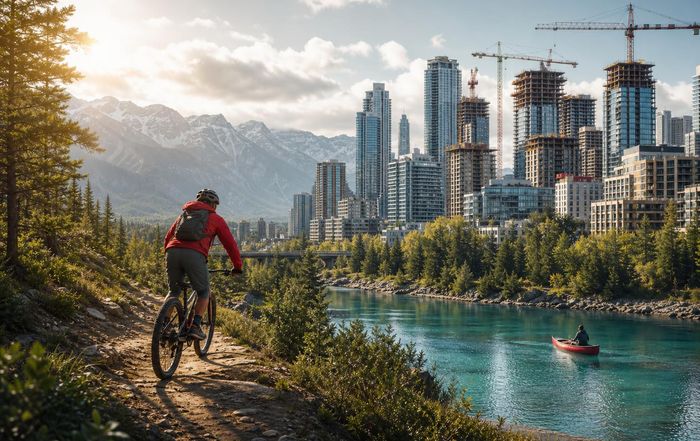
Not all outdoor sport happens on lined fields. Trail running, mountain biking, gravel cycling, paddling, and cross-country skiing depend on greenbelts, river corridors, and peri-urban forests that often sit at the edge of expanding cities. As metropolitan regions grow outward, these landscapes face fragmented ownership, habitat loss, and increasing user conflicts.
In western Canada, growth around cities like Vancouver, Calgary, and Kelowna has intensified debates over trail access and environmental protection. Mountain bike associations, trail running clubs, and conservation groups are working with land managers to formalize trail networks, manage erosion, and protect sensitive ecosystems. National and provincial parks agencies such as Parks Canada and BC Parks have developed strategies to handle rising visitation, including seasonal closures, permit systems, and trail realignments.
Similar pressures exist in central and eastern Canada, where urban expansion intersects with river valleys, wetlands, and agricultural land. Multi-use trail systems that support cycling, running, and walking are often celebrated as lifestyle assets and sustainable transport corridors, but their creation and expansion can be complex, involving negotiations with multiple levels of government, private landowners, and Indigenous communities. Organizations like Trans Canada Trail advocate for a continuous national network, yet local implementation is where competing priorities become most visible.
For active residents, the key question is often one of proximity and connectivity: can they reach high-quality trails or waterways without relying on long car trips? Integrating trailheads with urban transit, bike networks, and neighbourhood greenways can significantly enhance accessibility. Linking outdoor sport coverage with resources on environment, world, and sports also highlights how these local issues connect to global discussions about sustainable cities and recreation.
The role of Indigenous rights and reconciliation
Any discussion of land use and outdoor access in Canada must acknowledge that cities and recreation infrastructure often sit on unceded or treaty lands. Indigenous communities have long-standing relationships with many of the rivers, forests, and shorelines that urban residents now use for sport and leisure. As reconciliation efforts deepen, Indigenous rights and perspectives are increasingly shaping how outdoor spaces are planned and governed.
Court decisions and policy developments have affirmed the duty to consult Indigenous nations on projects that affect their lands and rights. This has implications for new trail systems, waterfront redevelopment, and even the management of existing parks and conservation areas. Collaborative models-such as co-management agreements or Indigenous-led parks-are emerging in various regions, reflecting a shift away from purely municipal control over outdoor spaces.
Indigenous sport and physical activity initiatives, supported by organizations such as the Aboriginal Sport Circle and provincial/territorial bodies, also highlight how outdoor environments can support cultural resurgence and community health. Incorporating traditional games, land-based learning, and Indigenous-led programming into urban parks and sport facilities can broaden the meaning of "access" beyond simply having a field or a trail.
For planners, recreation professionals, and sports organizations, engaging Indigenous partners early and meaningfully can help avoid conflicts, enrich programming, and ensure that outdoor sport infrastructure respects cultural and legal realities. For athletes and teams using these spaces, awareness of whose land they are on-and how that land is being stewarded-can deepen their connection to place and community.
Health, economics, and the case for investing in play
Outdoor sport infrastructure is often framed as a cost centre in municipal budgets, but a growing body of research suggests that its benefits extend well beyond recreation. Public health agencies, including the Public Health Agency of Canada and international bodies like the World Health Organization, consistently emphasize that regular physical activity reduces the risk of chronic diseases, improves mental health, and supports social cohesion. When outdoor spaces make it easier and more appealing to be active, they effectively function as preventive health infrastructure.
There is also an economic dimension. Local sports tourism-tournaments, regattas, trail races, and cycling events-can bring significant spending into host communities. Well-designed parks and sport facilities can enhance property values and make cities more attractive to residents and employers, contributing to broader economic development strategies. Organizations such as Sport Tourism Canada have highlighted how even mid-sized events can generate meaningful local impact when facilities and volunteer networks are strong.
For policymakers, these arguments matter when weighing whether to convert a field into housing, invest in new multi-use complexes, or protect peri-urban green space. Quantifying the full value of outdoor sport is challenging, but integrating health, social, and economic benefits into cost-benefit analyses can shift decisions. For readers engaged in the business and policy side of sport, these discussions intersect with themes covered under business, jobs, and social, where sport is increasingly recognized as part of a broader urban ecosystem rather than an isolated sector.
Technology, data, and smarter use of limited space
As Canadian cities look for ways to stretch limited sport infrastructure, technology is playing a larger role. Online booking systems, open data on field usage, and GPS-based trail counters are helping municipalities understand when and how facilities are used. This can reveal under-utilized time slots, seasonal patterns, and gaps in provision across neighbourhoods.
Wearable devices and fitness apps, produced and supported by companies like Garmin, Strava, and Apple, are also generating vast amounts of anonymized movement data. When properly aggregated and privacy-protected, these datasets can show which routes are most popular for running and cycling, where people are already active despite limited infrastructure, and how behavior changes when new facilities open. Some cities have started to incorporate such data into active transportation and recreation planning, complementing traditional surveys and manual counts.
Digital platforms can also democratize access. Transparent booking systems that show real-time availability can help smaller clubs and informal groups find time on fields that were previously dominated by a few large organizations. Community-driven tools, such as local sport forums or neighbourhood social networks, can coordinate pick-up games, volunteer maintenance days, or advocacy campaigns to protect threatened spaces.
However, technology is not a cure-all. It can amplify existing inequities if only well-resourced organizations or tech-savvy users benefit. Ensuring that digital tools support, rather than replace, community engagement and on-the-ground observation is essential. For athletes and coaches, combining digital training tools with knowledge of local facility constraints can help optimize preparation, a theme that connects naturally with resources on fitness and technology.
What a balanced future might look like
Balancing outdoor sports access with urban growth in Canada will not hinge on a single policy or design innovation. It will require a mosaic of approaches: protecting key green spaces, rethinking how sport fits into dense neighbourhoods, investing in multi-use and seasonal infrastructure, and centring equity and reconciliation in planning decisions.
In practical terms, a more balanced future could mean mid-rise corridors with rooftop courts and nearby pocket fields instead of isolated towers; transit stations that double as gateways to river trails and cycling routes; schoolyards that serve as evening sport hubs through robust joint-use agreements; and peri-urban greenbelts protected not just for biodiversity, but as essential spaces for trail-based sport.
For athletes, parents, and active residents, the most effective form of influence often starts locally-participating in public consultations, joining or forming sport associations, collaborating with environmental and community groups, and articulating the value of outdoor sport in terms that resonate with planners and councillors. For cities, the challenge is to see outdoor sport not as a luxury that can be trimmed when land gets tight, but as a foundational part of a healthy, resilient urban life.
As Canadian urban regions continue to grow, the question is less whether there is room for outdoor sport and more how intentionally that room is protected, designed, and shared. The choices made now-about fields, trails, rinks, and riverfronts-will shape not just how people play, but how they experience city life for decades to come.