

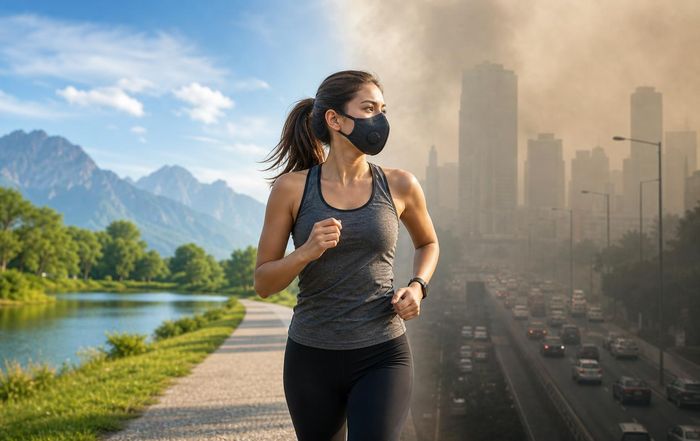
The Impact of Air Quality on Outdoor Exercise
Outdoor Performance in a Changing Atmosphere!
You might have noticed that outdoor exercise has become both more popular and more complex. Runners, cyclists, footballers and everyday walkers across North America, Europe, Asia and beyond increasingly track not only distance, pace and heart rate, but also particulate matter, ozone levels and wildfire smoke indices. For a happy and active community of readers who follow us for insights at the intersection of sport, health, culture and technology, the question is no longer whether air quality affects performance and long-term wellbeing, but how to train, compete and live well in an era of atmospheric uncertainty.
As governments refine air quality standards and cities from Los Angeles to London and Singapore to Stockholm confront the health and economic burden of pollution, athletes and active professionals are reassessing when, where and how they exercise outdoors. The rise of sophisticated wearable sensors, hyperlocal air monitoring networks and real-time data platforms has made environmental conditions as central to training decisions as weather forecasts once were. This evolution is reshaping fitness habits, business strategies in the sports and wellness sectors, and public expectations of what safe urban environments should provide.
Understanding Air Quality: What Athletes Are Really Breathing
To appreciate the impact of air quality on outdoor exercise, it is necessary to understand what is actually in the air that active individuals inhale when they train, commute or compete. Agencies such as the World Health Organization explain that air pollution is a complex mixture of gases and particles, including fine particulate matter (PM2.5), larger particles (PM10), ground-level ozone, nitrogen dioxide, sulfur dioxide and carbon monoxide. These pollutants arise from sources as varied as vehicle exhaust, industrial emissions, power generation, domestic heating, agriculture and increasingly frequent wildfires. Learn more about the global health burden of air pollution at the World Health Organization.
For athletes and fitness-oriented readers of SportyFusion, the most critical pollutants are the fine and ultrafine particles that can penetrate deep into the lungs and enter the bloodstream, as well as ozone, which is formed when nitrogen oxides and volatile organic compounds react in sunlight. Organizations such as the European Environment Agency have documented how these pollutants vary by region and season, with higher ozone levels in warm, sunny conditions and elevated particulate levels in congested urban corridors and during winter heating seasons. Readers can explore regional air quality trends across Europe through the European Environment Agency.
Because outdoor exercise increases both breathing rate and depth, active individuals inhale significantly more air-and therefore more pollutants-than sedentary individuals in the same environment. This multiplier effect makes the quality of outdoor air a performance variable rather than a passive background condition, particularly in densely populated cities in the United States, United Kingdom, Germany, China, India and rapidly urbanizing regions of South America and Africa.
Physiological Effects: When Training Meets Polluted Air
The physiological consequences of exercising in polluted air are now better understood than ever, thanks to research synthesized by organizations such as the U.S. Environmental Protection Agency and leading academic institutions. During moderate to vigorous physical activity, ventilation can increase up to twenty times compared with rest, and mouth breathing becomes more common, reducing the natural filtration that nasal passages provide. This means that more particles and irritant gases reach the lower respiratory tract and alveoli, where gas exchange occurs. The U.S. Environmental Protection Agency provides accessible overviews of these mechanisms on its air quality and health pages.
In the short term, exposure to elevated levels of PM2.5 and ozone during exercise can cause airway irritation, coughing, wheezing, chest tightness and reduced lung function, particularly in people with asthma or other pre-existing respiratory conditions. Studies summarized by the American Lung Association show that even healthy athletes can experience measurable declines in lung function and aerobic capacity during high-pollution events, with decreased time to exhaustion and impaired recovery. Further details can be found via the American Lung Association.
Over the long term, repetitive exposure to polluted air while training may contribute to chronic inflammation, accelerated decline in lung function, increased risk of cardiovascular disease and potentially higher susceptibility to respiratory infections. The American Heart Association has highlighted links between particulate matter exposure and increased incidence of heart attacks and strokes, a concern that extends to middle-aged recreational athletes who train extensively outdoors in polluted environments. Readers can review cardiovascular research summaries at the American Heart Association.
For elite endurance athletes, where marginal gains matter, even small decrements in oxygen transport, lung function or cardiac efficiency can translate into meaningful performance losses. At the same time, recreational runners in cities such as Delhi, Beijing, Mexico City or Johannesburg may face a trade-off between the cardiovascular benefits of exercise and the harms of chronic pollutant exposure, especially on days when the air quality index (AQI) reaches unhealthy levels.
Performance, Recovery and the Competitive Edge
From a performance perspective, air quality acts through several intertwined pathways. First, pollutants can limit oxygen uptake by inflaming airways and reducing the efficiency of gas exchange. Second, systemic inflammation triggered by particulate matter can impair muscle recovery and increase perceived exertion. Third, oxidative stress induced by pollutants may interact with the oxidative stress generated by intense exercise, potentially compounding fatigue and prolonging recovery times.
Organizations such as World Athletics have become increasingly concerned with how ambient conditions affect competition safety and fairness, particularly for endurance events held in urban centers. World Athletics has published guidance for event organizers on monitoring heat and air quality, and its broader environmental and health initiatives are outlined on the World Athletics sustainability pages. For marathon organizers in cities like New York, London, Berlin and Tokyo, integrating air quality assessments into race planning is now as essential as managing hydration stations and medical support.
Sports medicine experts at institutions such as the Mayo Clinic have begun advising athletes to incorporate air quality into their training periodization. On days when AQI is elevated, sessions may be moved indoors, shifted to lower-intensity work, or rescheduled to early morning or late evening when ozone levels are typically lower. Guidance on safe exercise in polluted environments is increasingly available through resources such as the Mayo Clinic's exercise and air quality information.
For readers here, this convergence of environmental science and sports performance underscores a broader trend: the definition of "optimal training conditions" is expanding beyond temperature and altitude to include invisible atmospheric variables that can shape both short-term output and long-term health.
Global Patterns: Wildfires, Urbanization and Regional Risk
The impact of air quality on outdoor exercise is not uniform across countries and regions. In North America, the United States and Canada have experienced a marked increase in wildfire-related smoke events, with plumes affecting cities thousands of kilometers away from the fires themselves. Agencies such as Environment and Climate Change Canada now provide detailed smoke forecasts that endurance athletes and outdoor workers routinely consult before planning activities. These forecasts are available through the Government of Canada's air quality portal.
In Europe, cities in Germany, France, Italy, Spain, the Netherlands and the United Kingdom have made progress in reducing certain pollutants through stricter emissions standards, but localized hotspots around major roads and industrial zones remain. The UK Health Security Agency and similar national bodies across Europe offer public health advice during high-pollution episodes, and athletes increasingly rely on such guidance when deciding whether to train in central urban districts or seek cleaner air in parks and peri-urban trails. Current UK guidance can be explored via UK government air pollution information.
Across Asia, rapid urbanization and industrialization have created some of the world's most challenging air quality environments, particularly in megacities in China, India and Southeast Asia. National monitoring networks in countries such as China and Singapore provide detailed real-time data, while regional initiatives supported by organizations like UN Environment Programme aim to harmonize standards and improve public access to information. Readers can explore regional initiatives through the UN Environment Programme air quality pages.
In the Southern Hemisphere, cities in Australia, New Zealand, South Africa and Brazil face a mix of vehicle emissions, seasonal biomass burning and dust. The catastrophic Australian bushfires of recent years have made athletes in Sydney, Melbourne and Canberra acutely aware of smoke risks, prompting sports federations and clubs to develop clear protocols for cancelling or relocating training sessions and competitions when particulate levels exceed safe thresholds.
This global mosaic of risk and response shapes how SportyFusion's international audience-from runners in Boston and Berlin to cyclists in Copenhagen, Johannesburg and São Paulo-thinks about the viability of outdoor exercise as a daily habit and a vehicle for performance excellence.
Technology, Data and the New Training Toolkit
One of the most significant shifts between 2020 and 2026 has been the integration of air quality data into the everyday digital ecosystem of athletes and fitness-minded consumers. Where early adopters once consulted static government websites, today's runners and cyclists routinely check smartphone apps and wearable dashboards that display hyperlocal AQI, PM2.5 and ozone levels alongside weather and route information.
Global platforms such as IQAir and BreezoMeter (now part of Google) aggregate readings from governmental monitoring stations, satellite data and low-cost sensors to deliver neighborhood-level forecasts, while navigation services integrate pollution data into route planning. Users can, for example, choose a running route that avoids major traffic corridors or adjust their training window to coincide with predicted cleaner air. To understand how consumer technology is incorporating environmental data, readers can explore the Google environmental insights initiative.
Wearable device manufacturers, including Garmin, Apple and Samsung, are gradually expanding their health metrics to reflect environmental context. While most devices do not yet include high-precision onboard pollution sensors, they increasingly pull in AQI data based on location and time, enabling more informed post-workout analysis and long-term planning. The Apple Heart and Movement Study, for example, reflects a broader trend toward integrating contextual health data into performance analytics, and more information about these initiatives is available through the Apple health research pages.
For a platform like this, which explores how technology reshapes training and lifestyle, these developments create new opportunities to guide readers on using data intelligently rather than reactively. Articles in the technology section of SportyFusion increasingly emphasize how to interpret AQI scales, how to correlate subjective feelings of breathlessness or fatigue with objective pollution metrics, and how to avoid over-correcting by abandoning beneficial outdoor activity on days when conditions remain within acceptable ranges.
Business, Brands and the Economics of Cleaner Air
The business implications of air quality for the sports, fitness and wellness industries are profound. As awareness of pollution risks grows, demand for products and services that mitigate exposure or provide alternatives to outdoor training has expanded. Manufacturers of high-efficiency particulate air (HEPA) purifiers, performance masks and indoor training equipment have seen sustained interest, particularly in regions prone to wildfire smoke or chronic urban smog.
At the same time, global sportswear and equipment companies such as Nike, Adidas and Puma face rising expectations from consumers and investors to address their own contributions to air pollution and climate change through supply chain decarbonization, cleaner logistics and sustainable materials. Organizations such as the World Economic Forum have documented how environmental, social and governance (ESG) criteria influence brand valuation and capital flows, and readers can learn more about sustainable business practices via the World Economic Forum's climate and health content.
For city governments and tourism boards in destinations that market themselves as outdoor sports hubs-ranging from Colorado and British Columbia to the Alps, Scandinavia and New Zealand-maintaining high air quality has become a strategic economic priority. Poor air quality not only deters visiting athletes and events, but also undermines the broader narrative of healthy, active lifestyles that many regions use to attract talent and investment. This dynamic is increasingly reflected in policy debates covered in the business section of SportyFusion, where environmental performance is treated as a core competitiveness factor rather than a peripheral concern.
Culture, Lifestyle and the Psychology of the Skies
Beyond physiology and economics, air quality exerts a subtle but powerful influence on culture and lifestyle. For many readers of SportyFusion, outdoor exercise is not simply a means to improve fitness, but a cornerstone of mental health, social connection and urban identity. When smog or smoke forces the cancellation of group runs, football matches or cycling club rides, the impact is felt not only in missed workouts but in frayed community ties and diminished quality of life.
Psychological research highlighted by organizations such as the American Psychological Association suggests that chronic exposure to environmental threats, including pollution, can contribute to anxiety, helplessness and reduced motivation to engage in outdoor activities. Insights into these mental health dimensions are explored by the association on its climate change and health pages. For active individuals in cities where high-pollution days are becoming more frequent, the decision to exercise outdoors can involve a complex emotional calculus that balances the joy and stress relief of movement against concerns about invisible harm.
This tension is reflected in cultural narratives that SportyFusion covers in its culture section, where athletes, artists and community organizers in places as diverse as Los Angeles, Beijing, London and Johannesburg are using sport as a platform to advocate for cleaner air and more equitable urban environments. Street-level running crews, cycling collectives and grassroots fitness movements are increasingly vocal about environmental justice, emphasizing that low-income and marginalized communities often bear the brunt of pollution while having fewer alternatives for safe exercise.
Practical Strategies for Safer Outdoor Training
For a global audience spanning professionals in New York, students in Berlin, entrepreneurs in Singapore and families in Melbourne, the practical question remains how to continue enjoying the benefits of outdoor exercise while minimizing air pollution risks. Health authorities such as the U.S. Centers for Disease Control and Prevention recommend a combination of monitoring, timing, location choice and intensity adjustment. Their guidance on physical activity and environmental conditions is available through the CDC physical activity resources.
In practice, this means checking the AQI before heading out, favoring early morning or evening sessions when ozone levels are lower, choosing routes that avoid high-traffic roads, and being prepared to move workouts indoors when pollution reaches unhealthy levels for sensitive groups. For those with asthma, cardiovascular disease or other chronic conditions, consultation with healthcare professionals is essential, and organizations such as Asthma + Lung UK and the Canadian Lung Association provide condition-specific advice on exercising safely in varying air quality conditions. More information for people with lung conditions can be found through Asthma + Lung UK.
Online here, these strategies intersect with broader discussions in the health section and the fitness section, where contributors explore how to design training plans that are resilient to environmental variability. This includes building flexible weekly structures that allow for indoor cross-training on poor-air days, incorporating strength and mobility work that does not depend on outdoor conditions, and using technology to identify micro-environments-such as riverside paths, parks and forest trails-where pollution levels may be lower than in surrounding streets.
Ethics, Equity and Responsibility in the Air We Share
The intersection of air quality and outdoor exercise also raises ethical questions that resonate strongly with SportyFusion's commitment to examining the broader social context of sport and health. Clean air is a shared resource and a fundamental determinant of public health, yet exposure levels vary dramatically by neighborhood, occupation and socioeconomic status. Those who work outdoors-delivery riders, construction workers, street vendors-often have far less control over their exposure than recreational athletes who can choose when and where to train.
Organizations such as Human Rights Watch and Amnesty International have framed severe and persistent air pollution as a human rights issue, particularly where regulatory failures or industrial activities disproportionately harm vulnerable communities. Their analyses, available through the Human Rights Watch environment section, highlight the moral dimension of policy decisions that affect air quality and, by extension, the ability of people to move, play and exercise safely in public spaces.
For brands, leagues and clubs featured in the brands section of SportyFusion, this ethical lens implies a responsibility not only to protect their own athletes but also to use their influence to advocate for cleaner air and more equitable urban design. This may involve supporting low-emission transport policies, investing in green infrastructure around training facilities, or partnering with local communities to create safe, accessible spaces for physical activity in neighborhoods historically burdened by pollution.
The Paths and SportyFusion's Place in a Cleaner, Fitter Future
Looking toward the second half of the 2020s, the relationship between air quality and outdoor exercise is likely to become even more central to how individuals, organizations and cities define health and performance. Climate change is expected to exacerbate many pollution drivers, from heat-driven ozone formation to wildfire frequency, while continued urbanization in Asia, Africa and South America will test the capacity of governments and businesses to deliver clean air alongside economic growth.
For us, whose readers normally span continents and whose editorial focus cuts across sports, health, technology, business and culture, this evolving landscape presents both responsibility and opportunity. By curating evidence-based guidance in its world section, highlighting innovative technologies in its performance coverage, and exploring environmental and ethical dimensions via its environment and ethics sections, the platform can help a global community of active individuals make informed, nuanced decisions about how they move through the world.
Ultimately, the impact of air quality on outdoor exercise is not a story of retreat from the streets, trails and pitches that define so much of contemporary sport and lifestyle. It is a story of adaptation, advocacy and innovation, in which athletes, policymakers, technologists and citizens collaborate to ensure that the simple act of going for a run, a ride or a game in the park remains not only a source of personal fulfillment and performance, but also a reflection of collective progress toward healthier, more livable cities. As SportyFusion continues to chronicle these changes, the message to its fans is clear: the air they breathe is as much a part of their training as the miles they log, and understanding that connection is a crucial step toward a future where fitness and clean air advance together.