

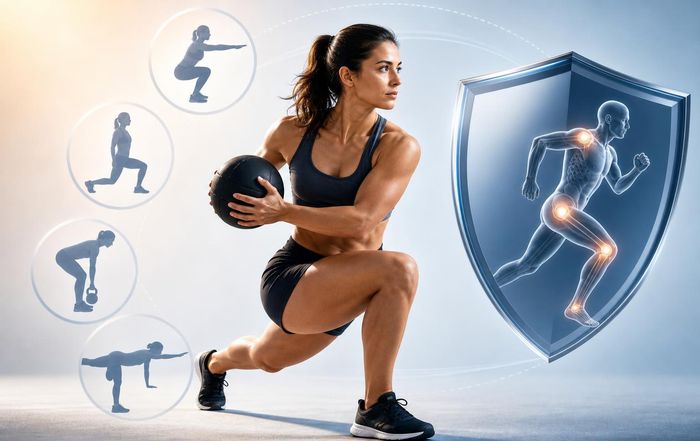
Why Functional Movement Reduces Injury Risk in a High-Performance World
Functional Movement in the 2026 Performance Landscape
By 2026, athletes, fitness enthusiasts and active professionals across the world have become increasingly aware that performance is no longer measured solely by speed, strength or endurance in isolation, but by the quality, control and resilience of the way the body moves under real-world demands. Within this context, functional movement has emerged as a central pillar in training philosophies from New York to Tokyo, shaping how coaches, sports scientists and healthcare professionals approach performance, longevity and injury prevention. For readers of SportyFusion, where sport, culture, technology and business intersect, functional movement is not a passing trend but a foundational concept that influences how organizations design training systems, how brands build products and how individuals manage their long-term health and careers.
Functional movement can be described as the coordinated, efficient execution of fundamental movement patterns such as squatting, hinging, lunging, pushing, pulling, rotating and gait, performed in a way that reflects the physical demands of life and sport rather than isolated muscle actions. This perspective aligns with the shift in modern sports science away from training muscles in isolation and toward training integrated movement systems. As high-performance environments in the United States, United Kingdom, Germany and across Asia-Pacific become more data-driven, functional movement has become a critical lens for understanding why some athletes remain robust while others, despite similar workloads and talent, experience recurring injuries that derail careers and diminish organizational value.
The Science of Movement Quality and Injury Mechanisms
To understand why functional movement reduces injury risk, it is necessary to examine how injuries typically occur and how the body is designed to move under load. Most non-contact injuries in sport and fitness are not the result of a single catastrophic event, but the culmination of accumulated micro-stress, poor mechanics, fatigue and compensatory patterns that overload specific tissues. Research from organizations such as the American College of Sports Medicine and resources like NIH's MedlinePlus have consistently highlighted that inadequate mobility, impaired neuromuscular control and asymmetry between limbs are significant contributors to overuse injuries, particularly in the knee, hip, lower back and shoulder.
Functional movement training addresses these mechanisms by focusing on the kinetic chain rather than isolated joints. When an athlete performs a lunge with proper alignment, core engagement and controlled tempo, the ankle, knee, hip and trunk share the load in a coordinated fashion, reducing excessive stress on any single structure. When a worker in a logistics role learns to hinge from the hips and brace the core while lifting, forces are distributed across the posterior chain, reducing strain on the lumbar spine. This systems-based approach is supported by biomechanical insights from institutions like Harvard Medical School, which explains how proper body mechanics reduce joint stress and protect connective tissue over time.
Furthermore, functional movement enhances proprioception and motor control, which are essential for reacting to unexpected perturbations, such as a sudden change in direction on a wet football pitch or a slip on a crowded commuter stairway. By integrating multi-planar movement patterns that challenge balance and coordination, athletes and active individuals improve the nervous system's capacity to stabilize joints in real time. This is one reason why professional organizations and national federations across Europe, North America and Asia have integrated neuromuscular training and functional assessments into their injury-prevention protocols, drawing from evidence summarized by bodies such as the World Health Organization, which outlines the importance of physical activity for musculoskeletal health.
From Muscle Isolation to Movement Integration
Historically, many training programs in gyms and even professional clubs were dominated by machine-based, single-joint exercises that emphasized hypertrophy and maximal strength over integrated movement quality. While such training can build muscle mass and force production, it often fails to teach the body how to express that strength in the complex, unpredictable environments where injuries actually occur. This disconnect has led performance specialists to re-evaluate how they design programs, shifting toward compound, free-weight and bodyweight movements that mirror sport-specific and daily life demands.
Functional training does not reject traditional strength work; rather, it reframes it within a hierarchy that places movement competency at the base. Squats, deadlifts and presses, when executed with proper technique and appropriate load, provide a robust stimulus for building resilient tissues and strong movement patterns. However, in the functional paradigm, these lifts are integrated with unilateral work, rotational patterns, anti-rotation core exercises and dynamic balance drills that prepare the body for the asymmetrical, multi-directional forces common in sports like football, basketball, tennis and skiing. Resources such as ExRx.net and the National Strength and Conditioning Association provide detailed guidance on evidence-based strength programming.
Readers of SportyFusion's training coverage will recognize that this movement-centered approach is now visible in elite environments from Bundesliga academies to NBA performance centers, where force plates, motion-capture systems and wearable sensors are used to assess not just how much force an athlete can produce, but how efficiently and symmetrically they move. As technology becomes more accessible, this same philosophy is filtering into community gyms in Canada, Australia, Singapore and South Africa, where coaches and physiotherapists are educating clients on movement literacy as a prerequisite for heavy lifting, high-intensity intervals or advanced plyometrics.
Functional Screening and Data-Driven Risk Reduction
One of the most significant developments in the last decade has been the widespread adoption of structured movement screening tools to identify risk factors before injury occurs. Platforms inspired by the Functional Movement Screen (FMS) and other assessment systems have given coaches and clinicians a common language for evaluating mobility, stability and pattern quality across populations, from youth athletes in Italy and Spain to corporate wellness participants in Japan and Brazil. These screens typically involve a series of fundamental tasks-such as overhead squats, hurdle steps and rotational movements-that reveal compensations, asymmetries and limitations that may not be apparent during traditional strength testing.
The business and high-performance communities have embraced this approach because it aligns with the broader trend toward predictive analytics and proactive risk management. Just as organizations use data to forecast market shifts or supply chain vulnerabilities, performance teams now use movement data to forecast injury risk and intervene earlier. Leading sports medicine centers and performance institutes documented in resources like the British Journal of Sports Medicine and PubMed have reported that targeted corrective programs based on movement assessments can reduce the incidence of certain non-contact injuries, particularly in youth and collegiate athletes.
For a platform such as SportyFusion, which covers both sports and business, the implications are clear: functional movement screening is not only a medical or coaching tool, but a strategic asset. Clubs, federations and companies investing in functional assessments are effectively protecting their human capital, reducing time lost to injury, limiting medical costs and extending the productive lifespan of athletes and active employees. In a global marketplace where talent is scarce and competition is intense, this approach becomes part of a broader resilience strategy that encompasses physical, mental and organizational health.
Functional Movement and Load Management
Functional movement alone does not eliminate injury risk; it must be integrated with intelligent load management that respects the body's capacity to adapt. However, when movement patterns are efficient and symmetrical, the body can tolerate higher training volumes and intensities with less wear and tear. Efficient hip hinging, for example, allows posterior chain muscles to absorb and redistribute forces during sprinting and jumping, reducing the burden on the knees and lower back. Similarly, a stable scapular and thoracic spine position during overhead movements protects the rotator cuff and shoulder capsule from excessive strain.
Sports scientists and strength coaches now combine functional movement analysis with monitoring tools such as session RPE, GPS tracking, heart rate variability and wellness questionnaires to calibrate training loads. Organizations like FIFA and World Rugby have published guidelines on injury-prevention and load management that emphasize the interplay between movement quality and training volume. When an athlete demonstrates deteriorating movement patterns under fatigue-such as valgus knee collapse during late-game decelerations-coaches can adjust workloads, modify drills or introduce targeted corrective exercises to restore alignment and control.
This integration of functional movement with load management is particularly relevant in regions such as Scandinavia, the Netherlands and New Zealand, where national federations have invested heavily in sports science and holistic athlete development. It is also increasingly visible in professional leagues in North America and Asia, where franchises recognize that the cumulative cost of soft-tissue injuries can run into tens of millions of dollars per season. By embedding functional movement principles into their performance ecosystems, these organizations are moving from a reactive model of injury treatment to a proactive model of injury risk reduction.
Cross-Cultural Adoption and Global Best Practices
The global audience of SportyFusion's world and culture sections reflects how functional movement has transcended borders and sporting codes. In the United States, the influence of physical therapists, chiropractors and performance specialists who champion integrated movement has reshaped collegiate and professional strength programs. In the United Kingdom and Germany, football academies have incorporated movement literacy into their talent pathways, recognizing that early exposure to quality patterns reduces the likelihood of chronic issues in later professional careers. In China, Japan and South Korea, where youth training systems are often highly structured, there is a growing emphasis on balancing technical skills with foundational movement capacity to avoid overuse injuries in early specialization.
Global health organizations and leading universities have contributed to this shift by publishing accessible guidance on the benefits of movement diversity and functional strength. Resources from the Mayo Clinic, for example, explain how functional fitness improves everyday performance and reduces fall risk, while the Cleveland Clinic provides detailed overviews of common sports injuries and prevention strategies. These insights resonate not only with elite athletes but also with active professionals, older adults and youth participants across Europe, Africa, South America and Oceania, where participation in recreational sports and fitness continues to grow.
Cultural differences do influence how functional movement concepts are implemented. In Nordic countries such as Sweden, Norway, Denmark and Finland, outdoor activity traditions and a strong public health infrastructure support movement-rich lifestyles that complement structured training. In rapidly urbanizing regions of Asia and Africa, where sedentary work and long commutes are more common, functional training often serves as a counterbalance to daily inactivity, helping individuals maintain joint health, posture and metabolic function. Across these diverse contexts, the underlying principle remains the same: training the body to move well under realistic conditions is the most sustainable path to reducing injury risk and preserving long-term performance.
Technology, Wearables and the Future of Movement Analysis
Technological innovation has accelerated the adoption and refinement of functional movement strategies. Motion-capture systems, force platforms and high-speed cameras, once limited to elite laboratories, are now integrated into training facilities and even consumer devices. Wearable sensors from companies like Garmin, Apple and Whoop track metrics such as ground contact time, asymmetry, variability in stride and joint angles, providing real-time feedback on movement quality. Platforms that leverage artificial intelligence and computer vision can analyze simple smartphone videos to flag potential risk factors, democratizing access to biomechanical insights that were previously reserved for national teams and professional clubs.
For a technology-conscious readership, SportyFusion's technology coverage has highlighted how these tools, when used responsibly, can support more precise and individualized functional training. Machine learning models trained on large datasets from athletes in North America, Europe and Asia can identify patterns associated with injury, such as subtle changes in deceleration mechanics or landing strategies. When combined with subjective reports and clinical assessments, this information allows practitioners to fine-tune corrective programs, track progress and validate the impact of interventions over time.
However, experts caution that technology must serve the principles of functional movement, not replace them. Data without context can be misleading, and an overemphasis on metrics may distract from the fundamental coaching process of teaching body awareness, alignment and control. Leading organizations like UK Sport and the Australian Institute of Sport, which share resources on high-performance innovation and athlete welfare, emphasize that technology is most effective when integrated into a holistic framework that prioritizes movement quality, communication and athlete education.
Functional Movement as a Strategic Health and Business Imperative
Beyond the training hall, functional movement has become a strategic concern for businesses, insurers and policymakers. Musculoskeletal injuries and disorders remain a leading cause of lost workdays and disability worldwide, with significant economic implications for employers in the United States, Canada, France, Italy and beyond. By incorporating functional movement principles into workplace wellness programs, ergonomic design and occupational health policies, organizations can reduce the incidence of back pain, repetitive strain injuries and falls, thereby improving productivity and reducing healthcare costs.
Corporate wellness initiatives that include functional assessments, movement education and tailored exercise programs are increasingly common in sectors ranging from technology and finance to manufacturing and logistics. Resources from the U.S. Centers for Disease Control and Prevention outline effective workplace health promotion strategies, many of which align with the functional movement paradigm. When employees learn to hinge, squat, reach and lift with proper mechanics, they are not only safer at work but also more capable of pursuing active lifestyles outside the office, which further reinforces physical and mental resilience.
For brands featured in SportyFusion's business and brands sections, this evolution presents both a responsibility and an opportunity. Sportswear and equipment companies are designing footwear, apparel and training tools that support natural movement patterns, while digital fitness platforms are integrating functional training content into their offerings. Organizations that demonstrate genuine commitment to movement health and injury prevention can build trust and long-term loyalty among consumers who increasingly prioritize evidence-based, sustainable approaches to performance and wellbeing.
Integrating Functional Movement into Everyday Life
While functional movement is often discussed within elite sport and corporate performance, its most profound impact may be felt in everyday life, where small improvements in movement quality can accumulate into significant reductions in pain, injury and functional decline. For readers navigating busy careers in London, Berlin, Toronto, Sydney, Singapore or Cape Town, incorporating functional principles into daily routines can be as simple as practicing a few controlled squats and hip hinges before a long day at the desk, choosing stairs over elevators with mindful posture, or adding a short bodyweight circuit to evening habits.
Educational resources from organizations like ACE and NASM, along with public health sites such as NHS Live Well, provide accessible guidance on integrating functional strength and mobility work into weekly schedules. When combined with balanced nutrition, adequate sleep and stress management-topics regularly explored in SportyFusion's health and lifestyle coverage and lifestyle features-functional movement becomes part of a comprehensive strategy for long-term wellbeing. This holistic approach is particularly important as populations in Europe, Asia and North America age, and as individuals seek to remain active, independent and engaged well into later life.
The Role of Media and Education: SportyFusion's Perspective
As functional movement continues to shape the future of sport, fitness, health and work, media platforms play a critical role in translating complex scientific insights into practical, trustworthy guidance. For SportyFusion, this responsibility involves curating evidence-informed stories that connect performance science with culture, technology, ethics and social impact, ensuring that readers in New York, Munich, Seoul, Bangkok, São Paulo and Auckland can make informed decisions about how they train, compete and live.
By highlighting best practices from leading performance centers, showcasing innovations in movement technology, examining the business implications of injury prevention and exploring the cultural dimensions of active lifestyles, SportyFusion aims to bridge the gap between elite expertise and everyday application. The platform's integrated coverage across fitness, performance, environment and social impact reflects an understanding that functional movement is not only a biomechanical concept but a lens through which to view human potential, sustainability and community wellbeing.
In 2026, the evidence is compelling: when individuals, teams and organizations prioritize functional movement, they do more than reduce injury risk. They invest in a way of moving that supports longevity, adaptability and high performance across the many arenas of modern life. For a global, performance-focused audience, that investment is no longer optional; it is a defining characteristic of sustainable success in sport, business and beyond.