

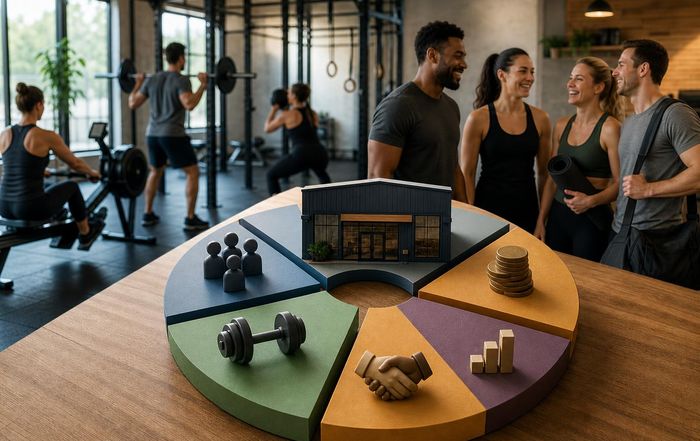
The Business Model Behind Community Fitness Studios
Independent, community-focused gyms and studios sit in an awkward space between big-box chains and boutique franchises. They promise personal connection, local culture, and flexible training options-but they still have to pay the rent, buy equipment, and compete with low-cost memberships, home workout apps, and global brands. Understanding how these studios actually make money explains why prices look the way they do, why certain classes dominate schedules, and why some spaces thrive while others quietly close.
This article breaks down the core economics of community fitness studios: how they generate revenue, where the costs really sit, what makes the model fragile or resilient, and how owners are adapting in an era of hybrid training, digital platforms, and shifting member expectations.
What makes a "community fitness studio" different?
Community fitness studios sit somewhere between a neighborhood gym and a boutique concept. They are usually independently owned or part of a very small local group, rather than a large franchise or multinational chain. Many focus on a specific training style-such as functional fitness, strength and conditioning, yoga, Pilates, or small-group personal training-but the defining feature is the emphasis on relationships: members typically know coaches by name, coaches know members' goals and injuries, and the space often doubles as a social hub.
Unlike big-box gyms that rely on thousands of low-cost memberships with relatively low attendance, community studios generally operate on higher-touch, higher-price models with smaller member bases. They tend to offer coached sessions rather than open access, prioritize quality of instruction, and lean heavily on local word-of-mouth. This makes them attractive to people who want structure and accountability in their training, but it also means the business model is more exposed to fluctuations in attendance and local economic conditions.
Because these studios are often embedded in local culture, their value proposition extends beyond workouts. They may host charity events, local sports team fundraisers, or educational seminars on topics like training, nutrition, and mental health. That broader role in an active lifestyle is part of the appeal-but it also requires thoughtful financial planning to keep community initiatives sustainable rather than purely charitable side projects that strain already tight margins.
Core revenue streams: more than just class passes
At the heart of almost every community fitness studio is a recurring revenue engine. Owners know that predictable income is essential to cover rent, payroll, and equipment leases, so the primary business model usually revolves around one or more of the following:
Monthly memberships remain the backbone for many operations. Members pay a flat fee for unlimited or tiered access to group classes or open gym time. This model smooths out cash flow and allows owners to forecast revenue more reliably. However, it requires careful capacity management: if too many members actually attend at peak times, the experience deteriorates; if too few attend, perceived value drops and cancellations rise. Studios often use tiered plans (for example, 8 classes per month vs. unlimited) to balance usage and perceived fairness.
Class packs and drop-ins help capture revenue from people who cannot or will not commit to a membership. These are priced higher per session to compensate for their unpredictability and the lack of long-term commitment. Many studios find that a significant share of new clients first experience the space through trial offers or intro packs before converting to recurring plans, making this a key part of the acquisition funnel rather than just a side revenue stream.
Personal training and small-group coaching are crucial margin drivers. One-on-one or semi-private sessions command a higher price point and can be scheduled during off-peak hours when the space would otherwise sit idle. For coaches, these sessions offer higher earning potential; for the business, they diversify income and deepen relationships with committed clients. Certifications from organizations such as the American Council on Exercise (ACE) or National Academy of Sports Medicine (NASM) often underpin the credibility of these services.
Many studios also monetize specialty programs and challenges: 6-week transformations, beginner strength courses, pre- and post-natal training blocks, or sport-specific conditioning for runners and team athletes. These time-bound offerings create urgency and can bring in both current members (paying a supplement) and new participants. When integrated with broader performance tracking-body composition tests, fitness assessments, or benchmark workouts-they can reinforce member engagement and justify premium pricing.
Secondary revenue streams-such as branded apparel, supplements, equipment, and healthy snacks-typically represent a smaller share of total income but can be important for profitability. Retail margins can be attractive, especially when studios partner directly with manufacturers or distributors. However, retail requires upfront inventory costs and savvy merchandising, so many owners keep it deliberately lean or focus on pre-orders to avoid tying up cash.
Cost structure: where the money really goes
While the revenue side often looks promising on paper, the cost structure of a community fitness studio is unforgiving. Fixed costs are high, and variable costs can creep up quickly as the business grows. Rent is usually the single largest fixed expense. Prime urban locations with good foot traffic and accessibility command high prices, and landlords may require long leases or personal guarantees. Even in less central areas, industrial units suitable for lifting platforms or functional training rigs can be costly once utilities, maintenance, and insurance are factored in.
Staffing is the other major expense. Qualified coaches, especially those with recognized certifications from bodies like ACE, NASM, or the National Strength and Conditioning Association (NSCA), expect competitive pay. Many studios rely on a mix of part-time contractors and a small core of full-time staff for coaching, programming, and operations. The trade-off is delicate: underpay coaches and turnover will be high, damaging member experience; overpay relative to revenue and the business becomes unsustainable. Some owners also invest heavily in continuing education-sending staff to conferences or courses run by organizations such as CrossFit (https://www.crossfit.com/) or USA Weightlifting (https://www.usaweightlifting.org/)-which improves quality but adds to costs.
Equipment and facility build-out represent substantial upfront capital expenditure: flooring, rigs, cardio machines, free weights, audio systems, and changing facilities. Many studios finance this through loans or leases, creating ongoing monthly obligations. Maintenance is often underestimated; barbells need replacing, cardio machines break, and high-traffic spaces require frequent repairs and cleaning. Safety expectations, shaped in part by guidelines from organizations like the World Health Organization (WHO) and national health agencies, also push studios to maintain high hygiene standards, particularly after the COVID-19 pandemic.
On top of these, there are marketing expenses, booking and customer management software subscriptions, payment processing fees, accounting and legal services, local business taxes, and increasingly, digital tools for hybrid training (such as video platforms or app integrations). Taken together, these costs mean that even a studio with seemingly healthy top-line revenue can operate on thin margins, especially in the first few years.
Pricing strategy and perceived value
Because costs are high and capacity is limited, community studios cannot compete purely on price with low-cost gyms or free outdoor options. Instead, they compete on perceived value: coaching quality, community atmosphere, results, and convenience. Pricing strategy therefore becomes as much about communication as arithmetic.
Many studios adopt a premium-pricing approach, positioning themselves as expert-led, results-focused spaces. They justify higher monthly fees by emphasizing personalized coaching, small class sizes, and programming tailored to different ability levels. Clear explanation of what members receive-such as movement assessments, progress tracking, and access to coaches outside class hours-helps align expectations. Some also incorporate lifestyle education, linking training to broader health outcomes in areas like sleep, stress management, and nutrition, drawing on guidance from organizations such as the World Health Organization and national bodies like the U.S. Centers for Disease Control and Prevention (CDC).
Tiered pricing is common. Studios might offer off-peak memberships at lower rates, premium tiers with extra personal training sessions or specialty classes, and corporate or family packages. This segmentation allows them to serve different budgets while protecting capacity in high-demand slots. Intro offers-discounted first month, free trial week, or low-cost on-ramp courses-are widely used to reduce the barrier to entry, but owners must ensure these promotions convert into sustainable memberships rather than training people to wait for the next discount.
Transparency around contracts and cancellation policies is increasingly important. Consumer expectations, shaped by subscription models in entertainment and digital fitness, lean toward flexibility. Studios that lock members into long-term contracts without clear value risk reputational damage. On the other hand, purely month-to-month models can create revenue volatility. Many owners try to balance this by offering small discounts for longer commitments while keeping exit routes clear and fair.
The role of community: retention, referrals, and culture
"Community" is not just a marketing slogan; it is a central economic asset for these studios. High retention reduces acquisition costs, stabilizes revenue, and allows member lifetime value to grow. Strong social bonds-between members and coaches, and among members themselves-are one of the most effective retention tools available.
Studios invest in this social fabric in various ways: post-class coffees, member events, internal competitions, charity fundraisers, and online groups where people share progress and challenges. These activities may not generate direct revenue, but they deepen engagement. Many studios see a large share of new sign-ups come via member referrals, which are often rewarded with discounts, free sessions, or branded gear. This word-of-mouth engine can be more cost-effective and authentic than paid advertising, particularly in dense urban neighborhoods or tight-knit suburban communities.
Culture also shapes who stays and who leaves. Some studios emphasize performance and competition, targeting athletes and highly motivated individuals. Others focus on inclusivity, accessibility, and body-neutral messaging, helping newcomers who might feel intimidated elsewhere. Aligning culture with the local demographic-age, income, interests, and broader lifestyle patterns-is critical. Misalignment can lead to churn, even when the training itself is well designed.
The COVID-19 pandemic highlighted the resilience of strong communities. Studios that had built deep relationships were better able to pivot to online classes, outdoor sessions, or hybrid memberships while retaining a significant portion of their base. Many members continued paying full or partial fees to support their local gym, illustrating how community can act as an informal insurance policy during crises.
Digital and hybrid models: opportunity and complexity
The rise of connected fitness platforms, on-demand apps, and wearable technology has reshaped expectations about how and where people train. For community studios, this presents both competitive threats and new business opportunities. Competing directly on content volume or production quality with large platforms like Peloton (https://www.onepeloton.com/) or Apple Fitness+ (https://www.apple.com/) is unrealistic. However, studios can leverage digital tools to extend their unique strengths: personal connection, accountability, and tailored coaching.
Many studios now offer hybrid memberships that combine in-person sessions with access to live-streamed or recorded classes, remote coaching, or app-based training plans. This can increase the value of memberships, support members who travel frequently, and open up new markets beyond the immediate neighborhood. For coaches, remote programming allows them to serve more clients without adding peak-time class slots, though it demands new skills in communication, video content creation, and digital program design.
Wearables and tracking platforms also integrate into this model. Members may share data from devices linked to ecosystems like Garmin (https://www.garmin.com/), Strava (https://www.strava.com/), or WHOOP (https://www.whoop.com/), enabling coaches to refine training loads, recovery strategies, and performance goals. This data-rich approach aligns with broader trends in sports performance and appeals particularly to tech-savvy clients.
However, digital expansion adds complexity: new software subscriptions, content production time, customer support for tech issues, and potential cannibalization if online offerings are priced too low relative to in-person services. Successful studios tend to treat digital as an extension of their coaching relationship rather than a standalone product, ensuring that the human element remains central.
Location, demographics, and local economics
The viability of a community fitness studio is closely tied to its local context. Urban centers with high population density, strong public transport, and a concentration of professionals often support premium pricing and niche concepts. However, competition is also intense, with multiple studios, big-box gyms, and corporate wellness options vying for the same clients. In these markets, differentiation through brand, coaching quality, and community becomes essential.
Suburban and smaller-city locations may offer lower rents and less direct competition but can suffer from lower population density and more dependence on car travel. Studios in these areas often position themselves as multi-purpose hubs for families, offering youth classes, adult training, and sometimes allied services like massage or nutrition coaching. Aligning schedules with school and work patterns is crucial, as is understanding local culture around sport and activity-whether that means catering to runners, cyclists, team-sport athletes, or people simply looking to stay healthy.
Local economic conditions also matter. During downturns, discretionary spending on fitness can come under pressure, especially at higher price points. Studios that have built strong perceived value and flexible options (such as lower-frequency memberships or temporary holds) may retain more members. Some also tap into corporate wellness budgets, partnering with local businesses to provide classes or discounted memberships to employees. This can create a more stable revenue base and connect the studio to broader business networks in the area.
Regulation and public health policy-shaped by national and local authorities and informed by organizations like the WHO and CDC-can affect operating conditions, from capacity limits and ventilation requirements to hygiene protocols. Owners must remain agile in interpreting and implementing such guidance, balancing safety, member experience, and financial viability.
Staffing, ownership models, and career pathways
Behind every successful community studio is a team of coaches and operators whose incentives and career paths shape the business. Ownership structures vary widely: sole proprietors who coach most classes themselves; partnerships between trainers and investors; cooperatives where coaches hold equity; and small local chains run by experienced operators. Each model influences decisions about pricing, reinvestment, and growth.
Coaches are both service providers and culture carriers. Their technical competence, communication style, and consistency directly impact retention. Many studios invest in ongoing education through bodies such as ACE, NASM, NSCA, CrossFit, and specialized yoga or Pilates schools. However, career sustainability can be a challenge: part-time or contractor roles may lack benefits and predictable income, leading to burnout or turnover. Studios that offer clearer progression-such as pathways to senior coach roles, programming responsibilities, or revenue-sharing opportunities-often build more stable teams.
Some owners experiment with profit-sharing or performance-based compensation, tying coach income to member retention, class attendance, or personal training sales. This can align incentives but must be handled carefully to avoid creating pressure that undermines ethical coaching or inclusivity. Transparent policies, clear expectations, and regular feedback help maintain trust.
The pandemic accelerated another trend: hybrid careers in which coaches split time between in-person sessions, online coaching, and content creation. For studios, supporting these hybrid roles-while ensuring that brand standards are upheld-can expand reach and improve staff satisfaction, but it requires thoughtful agreements on intellectual property, scheduling, and client ownership.
Risks, resilience, and what success looks like
Despite the appeal of "doing what you love" in fitness, community studios face significant risks. Cash-flow crunches are common, especially in the first two to three years when loans, fit-out costs, and brand-building collide. Seasonality-new-year surges, summer slowdowns, holiday dips-can strain finances if not anticipated. Overreliance on a single star coach, a narrow niche, or a few large corporate clients can also create vulnerability.
External shocks, from pandemics to economic downturns, highlight the need for resilience. Studios that maintain adequate cash reserves, flexible cost structures, and diversified revenue streams are better positioned to weather disruption. Strong digital infrastructure, clear communication channels, and a loyal member base further enhance resilience, turning what might otherwise be a purely transactional business into a relationship-driven ecosystem.
Success, therefore, is not just about full classes or social media buzz. Sustainable studios typically show consistent member retention, manageable staff turnover, healthy (even if modest) profit margins, and the ability to reinvest in equipment, education, and space improvements. They contribute positively to local health and social cohesion, aligning with broader public-health goals championed by organizations like the WHO and national agencies, while remaining financially grounded.
For athletes, everyday exercisers, and aspiring owners, understanding this business model clarifies why community studios look and feel the way they do-and why supporting them often means paying for more than a place to sweat. It is an investment in coaching, connection, and a local ecosystem that helps keep active lifestyles not just aspirational, but genuinely sustainable.