

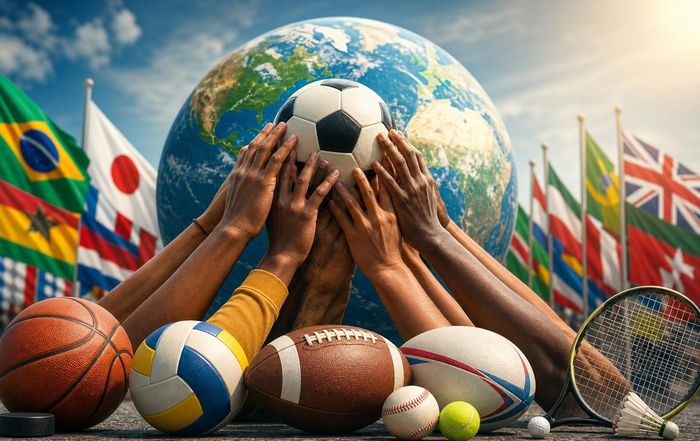
How Sports Bring Cultures Together Worldwide
The Global Arena: Sport as a Shared Human Language
As geopolitical tensions, economic uncertainty and rapid technological change continue to reshape societies, sport remains one of the few arenas where people across continents still gather around a common narrative, a common rhythm and a common emotional vocabulary. From football pitches in São Paulo and Johannesburg to basketball courts in New York and Shanghai, the global sports ecosystem has evolved into a powerful cultural connector that transcends language, ideology and borders, and the hard-working editorial team at SportyFusion has witnessed this transformation first-hand through its coverage of world sport and society. While the commercialisation of elite competitions and the influence of powerful stakeholders such as FIFA, UEFA, the International Olympic Committee (IOC) and major media conglomerates have raised legitimate questions about equity, access and ethics, the underlying capacity of sport to bring cultures together remains remarkably resilient, and in many ways is stronger than at any previous time in modern history.
The universality of sport is not accidental; it is rooted in shared human experiences of play, competition, cooperation and physical expression that pre-date modern nation states and global markets. Contemporary research from organisations such as UNESCO shows how sport can foster inclusion, dialogue and peace-building across divided communities, and readers can explore these frameworks in more detail by reviewing the latest guidance on sport as a driver of peace and development. For a premium site updated every single day like SportyFusion, which sits at the intersection of sports, culture and health, the question is no longer whether sport connects cultures, but how that connection is being shaped, who benefits from it, and what responsibilities fall on athletes, brands, media and fans in sustaining a truly inclusive global sporting culture.
Mega-Events and the New Geography of Cultural Exchange
International mega-events such as the Olympic Games, the FIFA World Cup and the Rugby World Cup remain the most visible expressions of global sporting culture, drawing billions of viewers and creating temporary hubs where flags, languages and traditions collide in a compressed, high-intensity environment. The forthcoming 2026 FIFA World Cup in the United States, Canada and Mexico is a clear illustration of this phenomenon; it will be the first World Cup hosted across three countries, and it comes at a time when North America is renegotiating its own internal debates on migration, identity and social justice. Analysts at SportyFusion have been following how city organisers, local communities and international stakeholders are preparing for the tournament, and how they are leveraging sport-driven tourism, cultural festivals and fan zones to stimulate dialogue between visiting supporters and local residents. Those interested in the broader economic and social implications can explore how global tournaments impact labour markets and urban development through resources such as the World Bank's analysis of sports and development.
The Olympics continue to occupy a unique place in this landscape, not only as a showcase of elite performance but as a carefully curated narrative of global unity that attempts to balance national pride with a sense of shared human achievement. The IOC has increasingly framed the Games as a platform for intercultural understanding and sustainability, with host cities expected to demonstrate legacy plans that extend beyond stadiums to include community sport, environmental stewardship and cultural programming; further information on these evolving standards can be found through the IOC's own materials on Olympic legacy and sustainability. For audiences in Europe, Asia, Africa and the Americas, these events represent more than just competition; they are moments when different cultural expressions of fandom, fashion, food, music and social norms become visible and negotiated in real time, both on the ground and across digital platforms.
However, mega-events also reveal the tensions inherent in globalised sport. Questions about who gets to host, who can afford to travel, and whose cultural narratives are foregrounded remain central concerns for stakeholders committed to equitable global engagement. Organisations such as Human Rights Watch have documented the human and labour rights issues associated with large-scale sports infrastructure projects, and readers can review their latest assessments of major sporting events and human rights. For SportyFusion, which maintains a dedicated and unbiased lens on ethics and responsibility in sport, the challenge is to examine how cultural connection can be fostered without ignoring the complex power dynamics that shape who participates and on what terms.
Grassroots and Community Sport: Local Fields, Global Lessons
Beyond the glare of stadium floodlights, the deepest and most durable forms of intercultural connection often emerge from grassroots and community sport, where children, families and local clubs create microcosms of global society in neighbourhood parks and school gyms. In cities such as London, Berlin, Toronto and Sydney, football and basketball leagues bring together migrants, refugees and long-standing residents, creating informal spaces where cultural stereotypes are challenged through the shared discipline of training, the emotional highs and lows of competition and the simple rituals of shaking hands before and after a match. Initiatives supported by organisations like the UN High Commissioner for Refugees (UNHCR) demonstrate how sport can help displaced young people rebuild confidence, learn new languages and form friendships in host communities, and further insights into these programmes can be found in UNHCR's overview of sport and refugee inclusion.
Grassroots sport also offers a powerful counter-narrative to the commercial logic of elite competition, emphasising participation, enjoyment and social connection over profit and spectacle. In many European and Asian cities, community-based clubs run by volunteers serve as cultural hubs where local traditions are preserved while new hybrid identities are formed; a Saturday morning training session might feature children of Turkish, Polish, Nigerian and Swedish backgrounds wearing the same jersey, learning not only how to pass and move but how to communicate across cultural and linguistic differences. This everyday, embodied interaction builds a form of practical intercultural competence that cannot be replicated by formal diversity training alone, and it is one reason why institutions such as the European Commission continue to invest in cross-border grassroots sport initiatives under its Erasmus+ Sport programme.
For SportyFusion, whose readers track both high-performance sport and community wellbeing through sections such as training and social impact, the stories emerging from grassroots fields are increasingly central to understanding how sport shapes cultural landscapes. Community coaches, local organisers and small non-profits may never appear on global television, yet their daily work of bringing children together, mediating conflicts and modelling respect for difference is arguably one of the most important engines of cultural cohesion in contemporary societies.
Health, Fitness and the Shared Pursuit of Wellbeing
While competition and fandom are often the most visible aspects of sport, the global boom in health and fitness culture over the past decade has created a parallel ecosystem where people connect across borders through shared routines, challenges and aspirations for physical and mental wellbeing. The post-pandemic period accelerated the adoption of digital fitness platforms, wearable technology and hybrid training models, enabling individuals in New York, Singapore, Johannesburg and Stockholm to follow the same high-intensity interval workout, yoga flow or strength programme in real time. Global health authorities such as the World Health Organization (WHO) have consistently highlighted the role of physical activity in preventing non-communicable diseases and improving mental health, and readers can explore the latest recommendations in WHO's guidance on physical activity and health.
This convergence of sport, fitness and health has important cultural implications. Fitness communities organised around running, cycling, CrossFit, climbing or functional training often develop their own micro-cultures of language, clothing, nutrition and social norms, yet they are increasingly global in their reach, sharing training data, personal stories and motivational content across social networks. Platforms such as Strava and Nike Run Club have normalised transnational challenges where participants in Tokyo and São Paulo can compete in the same virtual 10K, compare performance metrics and exchange encouragement, creating a sense of belonging that transcends national borders. For SportyFusion, which regularly covers innovations in fitness and performance, this phenomenon underscores how the pursuit of personal health has become a new form of soft diplomacy, subtly reshaping how people perceive and interact with cultures different from their own.
At the same time, the globalisation of fitness culture raises critical questions about inclusivity, body image and cultural sensitivity. Western-centric ideals of athleticism and aesthetics have often dominated global media, sometimes marginalising traditional movement practices from Asia, Africa and Latin America or overlooking the needs of older adults, people with disabilities and those from lower-income communities. Organisations such as Public Health England (now part of the UK Health Security Agency) and Health Canada have stressed the importance of culturally adapted health promotion strategies, and those interested in evidence-based approaches can review resources on inclusive physical activity promotion. For a platform committed to nuanced coverage, SportyFusion recognises that celebrating the unifying power of fitness must go hand in hand with scrutinising whose bodies and stories are visible in the global wellbeing narrative.
Technology, Media and the Digital Fabric of Global Fandom
The convergence of high-speed connectivity, streaming platforms and social media has fundamentally altered how sports fans experience and interpret cultural difference. A teenager in Nairobi can follow the NBA with the same immediacy as a fan in Los Angeles, while a supporter in Seoul might watch live coverage of the Premier League alongside tactical analysis from local commentators who interpret the game through distinct cultural lenses. The explosion of over-the-top streaming services, including offerings from ESPN, DAZN and national broadcasters, has democratised access to international competitions, though questions about affordability and digital divides persist; readers can explore broader debates on digital access and inclusion through organisations such as the International Telecommunication Union (ITU), which provides data on global connectivity trends.
Social media platforms have amplified this transnational connectivity, enabling fans to engage directly with athletes, clubs and each other in real time, often bypassing traditional media gatekeepers. Hashtags, memes and fan-created content circulate across languages, creating hybrid spaces where cultural references from Brazil, Japan, France and South Africa intersect in a single highlight reel or reaction video. For SportyFusion, whose coverage of sports technology and digital culture tracks these shifts closely, the rise of athlete-driven media channels on platforms like YouTube, Twitch and Instagram has been particularly significant, as it allows players to present more nuanced aspects of their identity, including their cultural heritage, community commitments and personal values.
At the same time, the digitalisation of fandom has introduced new challenges. Online abuse, racism and misogyny directed at athletes and fans from marginalised communities have become pressing issues that threaten the inclusive potential of sport. Organisations such as Kick It Out in the United Kingdom and Fare Network across Europe have documented patterns of online discrimination linked to football and other sports, and those seeking deeper understanding can review their reports on tackling discrimination in sport. For platforms like SportyFusion, which are committed to responsible sports journalism, there is a growing responsibility to moderate comment spaces, highlight positive cross-cultural interactions and provide context that counters polarising narratives.
Business, Brands and the Ethics of Global Sports Marketing
The commercial dimension of global sport is impossible to ignore, as multinational corporations, media companies and governing bodies invest billions of dollars in sponsorship, broadcasting rights and merchandising that depend on cross-cultural appeal. Brands such as Adidas, Nike, Puma and Under Armour have built complex global marketing strategies that seek to resonate simultaneously with fans in the United States, China, Germany, Brazil and South Africa, often using athletes as cultural ambassadors who embody aspirational narratives of resilience, creativity and community. Those interested in the evolving landscape of sports business can explore industry analyses from organisations such as Deloitte, which publishes an annual review of football finance and commercial trends.
For SportyFusion, whose business coverage examines the intersection of sport, finance and culture, the key question is how these commercial activities influence cultural connection. On one hand, global sponsorships can fund grassroots programmes, women's leagues and social impact initiatives that genuinely expand access and inclusion. On the other hand, the search for global marketability can sometimes lead to homogenised imagery, tokenistic representation or campaigns that celebrate diversity in advertising while failing to address inequities in supply chains, labour practices or leadership structures. Organisations such as the Institute for Human Rights and Business (IHRB) have developed frameworks for responsible sports sponsorship and event management, and interested readers can learn more about these principles through IHRB's work on sporting chance and human rights.
The rise of athlete activism has added another layer of complexity to this landscape. High-profile figures such as LeBron James, Megan Rapinoe, Lewis Hamilton and Naomi Osaka have used their platforms to speak out on racial justice, gender equality and mental health, often prompting both solidarity and backlash across different cultural contexts. Their willingness to foreground identity and values has forced brands and governing bodies to confront the tension between apolitical marketing narratives and the inherently political realities of global sport. For audiences of SportyFusion, who track both performance and principle, this shift underscores the need to evaluate not only what sport sells but what it stands for in a fragmented world.
Esports, Gaming and the New Frontiers of Cultural Convergence
While traditional sports continue to dominate global viewership, the rapid growth of esports and competitive gaming has created new spaces where cultural exchange unfolds in virtual arenas. Titles such as League of Legends, Counter-Strike 2, Fortnite and Valorant attract professional players and fans from South Korea, China, Europe, North America and beyond, with international tournaments organised by companies such as Riot Games and Valve generating audiences that rival major traditional events. For those unfamiliar with the scale of this ecosystem, organisations like Newzoo provide market intelligence on global esports and gaming trends, illustrating how digital-native generations increasingly experience sport-like narratives through screens rather than stadiums.
Esports communities often operate with their own norms, languages and rituals, yet they are inherently transnational, as teams routinely feature rosters composed of players from multiple countries communicating in shared in-game vocabularies. For SportyFusion, whose gaming coverage explores the convergence of digital play and athletic performance, the cultural significance of esports lies not only in its entertainment value but in its capacity to bring together young people who might never have met in physical spaces, collaborating and competing in real time across continents. The crossover between traditional sports clubs and esports, with organisations like FC Barcelona, Paris Saint-Germain and Schalke 04 launching their own gaming divisions, further blurs the boundaries between physical and digital sporting cultures.
However, the inclusivity of esports is not automatic. Gender imbalances, toxic behaviour and regional infrastructure disparities can limit who participates and how they are treated. Initiatives by groups such as Women in Games and AnyKey seek to create safer and more equitable environments in competitive gaming, and readers can explore their guidelines on inclusive gaming cultures. As with traditional sport, the challenge for stakeholders is to harness the connective potential of esports while actively addressing the structural and cultural barriers that prevent it from realising its full promise as a global bridge between communities.
Environment, Sustainability and Shared Responsibility
In recent years, environmental sustainability has emerged as a critical dimension of global sport, revealing yet another way in which athletic cultures intersect across borders. Large-scale events, international travel and stadium construction carry significant carbon footprints, while climate change itself is beginning to affect the scheduling and safety of competitions, from heatwaves impacting marathons to changing snowfall patterns disrupting winter sports. Organisations such as the United Nations Environment Programme (UNEP) have partnered with sports bodies to promote greener practices, and readers can explore these initiatives through UNEP's programme on sport and the environment.
For SportyFusion, whose environment section examines the ecological implications of athletic culture, the intersection of sport and sustainability is also a cultural story. Fans in Europe, Asia, Africa and the Americas increasingly expect their clubs and events to demonstrate environmental responsibility, and this shared expectation has created new forms of cross-border collaboration, from knowledge-sharing on sustainable stadium design to joint campaigns encouraging low-carbon travel to matches. The emergence of athlete-led environmental advocacy, with figures such as Greta Thunberg inspiring endurance athletes, surfers and climbers to highlight climate risks, further reinforces the idea that sport can be a powerful platform for collective action on global challenges that affect all cultures.
The environmental dimension also prompts a rethinking of what it means to be a global sports fan in an era of climate awareness. Questions about long-distance travel to tournaments, the lifecycle of merchandise and the energy consumption of streaming services are becoming part of broader ethical conversations about consumption and responsibility. Platforms like SportyFusion are increasingly tasked with providing readers not only with match results and performance analysis but with insights into how their sporting choices intersect with planetary boundaries, encouraging a form of fandom that is both passionate and informed.
Looking Ahead: SportyFusion's Role in a Connected Sporting World
As 2026 unfolds, the role of sport in bringing cultures together is both more visible and more contested than ever. From mega-events that stage choreographed narratives of unity, to community clubs that quietly weave everyday intercultural bonds, to digital platforms that enable fans and players to interact across continents, sport has become one of the primary sites where globalisation is felt, negotiated and reimagined. The editorial vision at SportyFusion is shaped by this reality; the platform's integrated top coverage across sports, health, culture, performance and lifestyle reflects a conviction that understanding sport today requires a holistic view of how bodies, technologies, economies and identities intersect.
For business leaders, coaches, athletes and fans who turn to SportyFusion for independent and fresh insight, the central takeaway is that sport's capacity to connect cultures is not an automatic by-product of competition or entertainment; it is an outcome that must be actively cultivated through ethical governance, inclusive participation, responsible media narratives and sustained investment in grassroots infrastructure. Global organisations from UNESCO and WHO to UNEP and the IOC provide frameworks and guidelines, but their effectiveness ultimately depends on how they are interpreted and implemented at local levels, in community clubs, schools, federations and media outlets.
In this context, the mission of SportyFusion is both journalistic and civic. By highlighting stories of cross-cultural collaboration, interrogating instances where sport reproduces exclusion or injustice, and providing nuanced analysis of trends in technology, business and health, the platform aims to help readers navigate a complex global sporting landscape with clarity and critical insight. As new generations in the United States, the United Kingdom, Germany, Canada, Australia, France, Italy, Spain, the Netherlands, Switzerland, China, Sweden, Norway, Singapore, Denmark, South Korea, Japan, Thailand, Finland, South Africa, Brazil, Malaysia, New Zealand and beyond continue to find their place in this evolving ecosystem, sport will remain one of the most powerful arenas in which they encounter, contest and ultimately reshape what cultural connection means.
In the end, the enduring power of sport to bring cultures together lies not in the spectacle of medals and trophies but in the countless, often unnoticed moments of shared effort, respect and recognition that unfold in stadiums, streets, gyms and digital spaces around the world. By documenting and analysing these moments for a global audience, SportyFusion affirms its commitment to an informed, ethical and interconnected sporting culture-one in which the games people play continue to offer a rare and valuable glimpse of what a more cooperative world might look like.