

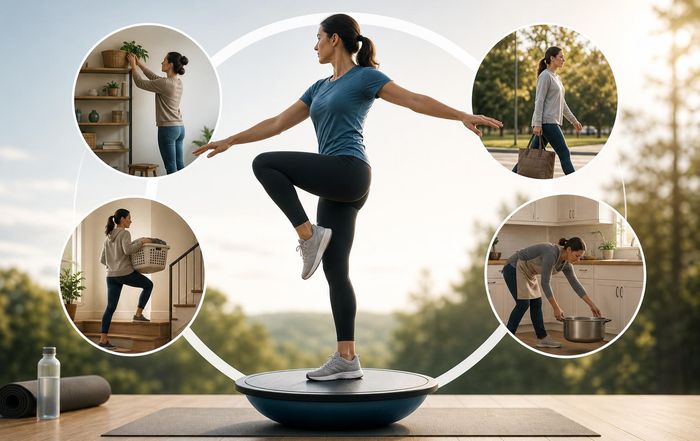
Why Balance Training Improves Everyday Movement!
The New Foundation of Functional Fitness
Do you see that balance training has moved from the margins of athletic conditioning into the center of mainstream fitness, health, and performance conversations. What was once viewed as a niche concern for older adults or elite athletes recovering from injury is now recognized as a decisive factor in how effectively people move, work, compete, and age. For the global audience of SportyFusion-from recreational runners in the United States to cyclists in Germany, office professionals in Singapore, and multi-sport enthusiasts in Brazil-balance training has become a practical, evidence-based way to enhance everyday movement and long-term wellbeing.
As daily life blends hybrid work, digital entertainment, and increasingly sedentary routines, the body's natural balance systems are underused and, in many cases, deteriorating faster than in previous generations. Organizations such as the World Health Organization highlight that physical inactivity remains a leading risk factor for noncommunicable diseases, and a growing body of research shows that balance is a critical, often overlooked, component of physical literacy. Learn more about global physical activity guidelines at the World Health Organization. For a daily updated premium website like SportyFusion, which integrates fitness and performance perspectives with culture, technology, and business, balance training is not a passing trend but a structural pillar of modern movement.
Understanding the Science of Balance in Everyday Life
Balance is not a single skill but a complex, integrated system that draws on the visual, vestibular, and proprioceptive senses, as well as muscular strength, joint stability, and neuromuscular coordination. According to research compiled by the National Institutes of Health, balance depends on the brain's ability to rapidly interpret sensory inputs about body position and adjust muscle activation in real time. Explore foundational information about balance and the nervous system from the National Institutes of Health.
In everyday movement, this system operates continuously, whether an office worker navigates a crowded subway in Tokyo, a parent carries groceries up icy steps in Canada, or a football fan in the United Kingdom weaves through stadium crowds. Small postural adjustments that most people never consciously notice are the result of highly sophisticated neural processing, and when these systems are trained deliberately, they become more efficient, more resilient under stress, and more capable of supporting complex movement patterns. Here, where health and performance insights are curated for a global readership, this deeper understanding of balance helps reframe it from a "stability exercise" to a core performance asset.
Neuroscientists at institutions such as Harvard Medical School have emphasized the brain's lifelong plasticity, noting that targeted physical challenges can enhance neural networks that support coordination, posture, and reaction time. Readers can explore how exercise shapes the brain through resources like Harvard Health Publishing. Balance training leverages this plasticity by presenting the nervous system with controlled instability, prompting it to refine movement strategies that are later deployed automatically in real-world situations, from sudden changes in terrain to rapid directional shifts during sports or commuting.
Balance Training as a Performance Multiplier in Sport
For athletes and serious enthusiasts, balance training has become synonymous with performance efficiency. Top clubs in football, basketball, and rugby across Europe, North America, and Asia now integrate balance drills into warm-ups, strength sessions, and recovery protocols. Organizations such as FIFA and World Rugby have developed injury-prevention programs that emphasize neuromuscular control and dynamic stability, demonstrating that better balance reduces the risk of non-contact injuries such as ACL tears and ankle sprains. Learn more about sport-specific injury prevention at FIFA's medical resources and World Rugby's player welfare initiatives.
From the perspective of the hard-working, editorial team, whose fans follow global sports developments and performance trends, balance training is increasingly seen as a "force multiplier." A runner who improves single-leg stability can translate that into a smoother stride, reduced energy leakage through the hips and core, and better economy over long distances. A basketball player in the United States or Spain who trains balance under fatigue can maintain shooting mechanics and defensive footwork late in games. A skier in Switzerland who practices dynamic balance on variable surfaces can react more effectively to changes in snow conditions and terrain.
Sports science institutes such as Aspetar in Qatar and the Australian Institute of Sport have published guidance on neuromuscular training, underlining how balance and proprioception contribute to joint alignment, landing mechanics, and agility. Readers interested in the science behind these protocols can explore resources from the Australian Institute of Sport and the Aspetar Sports Medicine Journal. As these findings filter into professional and amateur training environments, balance drills are evolving from simplistic static holds into multi-planar, sport-specific challenges that mirror the demands of competition.
Everyday Movement: From Commuting to Remote Work
Although elite sport grabs headlines, the most profound impact of balance training is unfolding in everyday movement. In 2026, millions of people worldwide split their time between remote workstations and occasional office visits, often in cities that demand complex navigation-crowded sidewalks in London, slippery winter streets in Stockholm, or uneven public transport access in Johannesburg. For this audience, balance training is less about vertical jump height and more about safety, confidence, and energy efficiency in daily tasks.
Ergonomics experts from organizations such as the U.S. Occupational Safety and Health Administration have highlighted how prolonged sitting, limited movement variability, and poorly designed workstations contribute to musculoskeletal strain and reduced postural control. Learn more about workplace ergonomics at OSHA's official site. When core and hip stabilizers are underused, the body relies more heavily on passive structures such as ligaments and spinal discs, which over time can compromise balance and increase the risk of falls or sudden strains during routine movements like reaching, bending, or carrying.
For followers of SportyFusion, the connection between work, lifestyle, and movement is particularly relevant. A simple regimen of balance-focused exercises-such as single-leg stands, controlled step-downs, or dynamic weight shifts-can restore functional strength and proprioception, making it easier to climb stairs, step off curbs, or navigate crowded spaces without excessive tension. The benefits extend beyond physical safety; people who feel stable and agile in their bodies often report greater confidence in social and professional settings, which in turn influences how they participate in culture, travel, and recreational sport.
Balance, Aging, and Long-Term Health Outcomes
Demographic trends in Europe, Asia, and North America show rapidly aging populations, and health systems are increasingly focused on reducing fall-related injuries, which carry enormous personal and economic costs. Public health agencies such as the Centers for Disease Control and Prevention in the United States report that falls are a leading cause of injury among older adults, with significant implications for independence and quality of life. Readers can review fall-prevention data at the CDC's falls and older adults section.
Balance training is now recognized as a cornerstone of healthy aging strategies, not only in clinical settings but also in community fitness programs and home routines. Studies summarized by The Lancet and other leading medical journals indicate that multi-component exercise programs combining balance, strength, and functional mobility can substantially reduce fall risk and improve gait stability. Those interested in the clinical evidence can explore overviews of fall-prevention interventions at The Lancet.
For SportyFusion, which covers world and health developments with a performance lens, this shift has a cultural dimension as well. In countries such as Japan, Sweden, and Singapore, where longevity is high and active aging is a policy priority, balance training is being integrated into community centers, corporate wellness programs, and even public spaces designed for low-impact movement. Balance-focused Tai Chi sessions in parks, guided stability classes in corporate gyms, and digital programs delivered through connected fitness platforms are helping older adults maintain the capacity to walk confidently, travel, care for grandchildren, and participate in social life.
The messaging is changing from "fall prevention" to "movement independence," a reframing that resonates strongly with readers who see physical capability as a form of freedom. On SportyFusion, articles that connect fitness, culture, and social engagement show that balance training is not simply about avoiding injury; it is about preserving the ability to live an active, self-directed life across decades.
The Role of Technology and Data in Modern Balance Training
Technological innovation has transformed how balance is assessed, trained, and monitored. In 2026, wearable sensors, motion-capture systems, and AI-driven coaching platforms provide real-time feedback on stability, weight distribution, and movement symmetry. Companies such as Apple and Garmin incorporate balance-related metrics into wearables, allowing users to track gait variability, stance time, and asymmetries that may signal early mobility issues. Learn more about wearable health metrics through resources like Apple's health features overview and Garmin's performance science insights.
Sports science organizations and research labs, including those affiliated with MIT and ETH Zurich, are experimenting with smart floors and pressure-sensitive platforms that quantify balance under different conditions, from quiet standing to rapid directional changes. Readers can explore how engineering and biomechanics intersect at MIT's sports technology research pages and ETH Zurich's health sciences initiatives. For athletes, this data informs individualized training plans; for everyday users, it highlights subtle deficits that can be addressed before they evolve into injuries.
Online today, where technology and performance coverage intersects with health and lifestyle, these developments are particularly relevant. Balance training apps now use smartphone cameras and computer vision to estimate joint angles and sway patterns, providing accessible guidance without requiring specialized equipment. Virtual reality experiences challenge users with immersive balance tasks, such as navigating virtual trails or reacting to simulated perturbations, making training more engaging and context-specific. At the same time, responsible platforms emphasize data privacy and ethical use of biometric information, aligning with the values articulated in SportyFusion's own ethics and business reporting.
Business, Brands, and the Balance Economy
As balance training gains prominence, it is reshaping the business landscape across fitness, health, and sportswear. Global brands such as Nike, Adidas, and Lululemon are incorporating balance-focused narratives into product design and marketing, highlighting footwear stability, proprioceptive feedback, and multi-directional traction. Readers can explore how major brands frame performance and stability through sites like Nike and Adidas. Equipment manufacturers are expanding beyond traditional balance boards to develop modular platforms, inflatable cushions, and smart devices that integrate with apps and coaching ecosystems.
Health insurers and corporate wellness providers in countries such as Germany, Canada, and Australia are beginning to recognize the cost-saving potential of fall prevention and movement optimization, offering incentives for employees who participate in validated balance training programs. Global consulting firms like McKinsey & Company have reported on the economic impact of musculoskeletal disorders and the growing market for preventive health solutions, which includes digital and in-person balance training interventions. Learn more about the business case for preventive health at McKinsey's health system insights.
For SportyFusion, which tracks business, brands, and jobs in the sports and fitness sector, this emerging "balance economy" presents both opportunity and responsibility. There is a need for clear communication that distinguishes evidence-based products and programs from superficial trends, as well as for critical analysis of how balance training is positioned in different markets. Coverage that connects brands and performance culture can help readers evaluate whether a product genuinely enhances stability and movement quality or simply leverages balance-related language for marketing purposes.
Culture, Gaming, and the Gamification of Stability
Balance training is also permeating culture and entertainment, particularly through gaming and immersive digital experiences. Motion-controlled games, exergaming platforms, and mixed-reality sports incorporate stability challenges that appeal to younger demographics in regions such as South Korea, Japan, and the United States. Companies like Nintendo and Meta have released titles and hardware that encourage users to shift weight, maintain posture, and react to virtual obstacles, turning balance into a form of interactive play. Readers can explore how game design and movement intersect via resources like Nintendo's fitness-oriented titles and Meta's VR experiences.
Esports and gaming communities, which news and research team covers through its gaming and performance content, are beginning to acknowledge that physical stability and posture influence reaction time, precision, and endurance during long sessions. Simple balance and core routines, integrated into warm-ups or breaks, can reduce musculoskeletal strain and improve cognitive sharpness, blurring the line between traditional athletic preparation and digital competition. This convergence reflects a broader cultural shift in which movement quality is recognized as valuable across domains, not only on the pitch or in the gym.
Moreover, balance training is being woven into artistic and cultural expressions, from dance and contemporary performance in France and Italy to outdoor fitness festivals in Brazil and South Africa. These events often highlight the aesthetic dimension of balance-graceful transitions, controlled lines, and expressive movement-alongside its functional benefits. For SportyFusion, whose culture coverage explores how sport and art intersect, this reinforces the idea that balance is both a physical skill and a cultural language.
Practical Integration: Making Balance Training Part of Everyday Routines
For readers who want to translate these insights into action, the most important principle is integration. Balance training is most effective when woven into existing routines rather than treated as a separate, occasional add-on. Strength sessions can incorporate unilateral exercises that challenge stability; cardio workouts can include agility drills and directional changes; daily habits such as brushing teeth or waiting for public transport can become opportunities for brief, low-intensity balance practice.
Health organizations such as the American College of Sports Medicine recommend that adults include balance and neuromotor exercises in their weekly activity plans, particularly for older adults and those at risk of falls. Readers can review these recommendations at the ACSM's official site. For a global audience with diverse environments and resources, adaptability is critical: a runner in New Zealand might use trail terrain to challenge balance naturally, while an office worker in the Netherlands may rely on simple home-based drills between video meetings.
On SportyFusion, practical guides in areas such as training, fitness, and performance emphasize progressive overload, movement quality, and safety. Beginners can start with stable surfaces and slow, controlled movements, gradually introducing variables such as reduced visual input, softer surfaces, or external loads. More advanced users can integrate reactive drills that mimic sport or daily-life demands, always prioritizing control over spectacle. The aim is not to perform risky stunts on unstable devices but to cultivate reliable, transferable stability that supports real-world movement.
Trust, Skill, Content, Updates and Expertise
In a digital landscape crowded with fitness advice, SportyFusion positions itself as a trusted guide by emphasizing experience, expertise, authoritativeness, and trustworthiness in its coverage of balance training and everyday movement. This means grounding articles in established science, highlighting insights from credible institutions, and presenting nuanced, context-aware analysis for readers from the United States to Singapore, from the United Kingdom to South Africa.
The editorial approach integrates cross-disciplinary perspectives: sports science, neurology, ergonomics, public health, and business strategy, reflecting the interconnected interests of active individuals who follow news, technology, environment, and lifestyle trends through a performance lens. It also means acknowledging uncertainty and ongoing research, particularly as new technologies and training methodologies emerge. By curating information from reputable sources such as the World Health Organization, National Institutes of Health, Centers for Disease Control and Prevention, Harvard Medical School, Australian Institute of Sport, and leading global brands and research institutions, SportyFusion helps readers navigate the evolving landscape with clarity and confidence.
Ultimately, balance training is not a niche topic but a unifying theme that connects sport, health, culture, and business. It affects how people move through cities, perform in workplaces, participate in communities, and express themselves through physical activity and play. For the global audience of SportyFusion, the message in 2026 is clear: investing in balance is investing in the quality, safety, and enjoyment of everyday movement, today and over the long arc of an active life. Readers can continue exploring these interconnections across the platform's home page and core sections, where balance is treated not as a trend, but as a fundamental dimension of human performance.